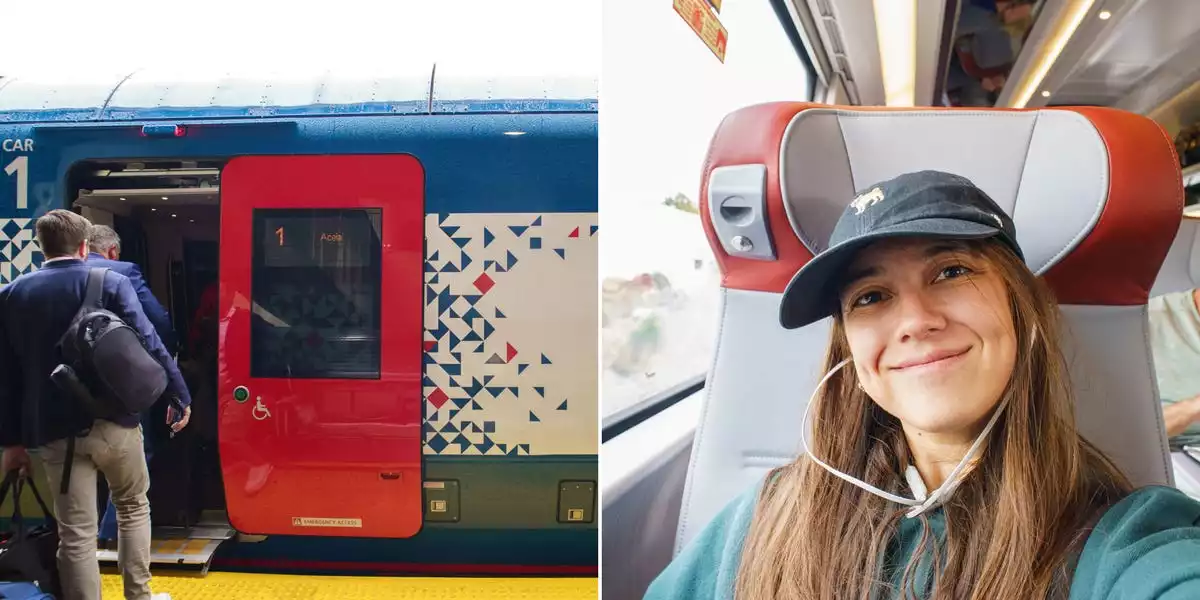

Engineering Velocity: The NextGen Acela’s Leap Beyond American Rail Convention
The debut of Amtrak’s NextGen Acela marks a rare inflection point in U.S. passenger rail—a technological and symbolic acceleration for a nation long defined by its highways and airways. Topping out at 160 mph, the new Acela is not just the fastest train in American history, but a showcase of European-grade innovation adapted to the unique constraints of the Northeast Corridor (NEC). The Alstom Avelia Liberty trainsets, with their active tilt systems and lightweight composite bodies, are engineered to sustain high speeds even on the NEC’s legacy curves—an achievement that sidesteps the need for wholesale track replacement.
Under the hood, the digitalization of rail is equally transformative. Advanced signaling (ACSES II), condition-based monitoring, and predictive maintenance protocols promise to minimize downtime and maximize throughput—vital for a corridor where every minute of reliability is fiercely contested. Passenger-facing upgrades, from touchless lavatories to redundant Wi-Fi and high-output power, reflect a global shift: in premium mobility, comfort and connectivity are no longer luxuries but expectations. This is an American train that finally competes on the world stage, at least in terms of engineering.
Pricing, Perception, and the Economics of Speed
Yet the NextGen Acela’s technological bravado collides with a more prosaic reality: the economics of premium rail in the United States remain fraught with tension. The stark $270 fare differential between Business and First Class—$180 versus $450 for a Washington DC–New York City ticket—has become a live experiment in price elasticity. Early field tests, including those by independent consumer reporters, suggest that the incremental value of First Class is perceived as marginal at best. The amenities—roomier seats, enhanced meal service, and quieter cabins—are appreciated, but not enough to justify the premium for most travelers.
This pricing conundrum is not just a matter of customer preference; it reverberates through the financial architecture of high-speed rail. Each Avelia Liberty trainset represents a $70 million capital outlay, with the total program cost approaching $2.5 billion. If First Class fails to deliver the projected revenue lift, Amtrak faces a longer payback period and heightened dependence on federal subsidies. The broader risk is strategic: as airlines ramp up countermeasures—no-change-fee tickets, loyalty perks, and lounge partnerships—Amtrak’s premium service must offer more than speed and a hot meal to retain and grow its market share.
Mobility’s New Class Divide and the Policy Crossroads
The lukewarm reception to Acela’s First Class is emblematic of a broader shift in the mobility landscape. Across transportation sectors, from electric ride-hailing to transcontinental business-class flights, operators are recalibrating what “premium” means in a post-pandemic, inflation-aware world. Travelers are scrutinizing the functional utility of every dollar spent, and the old playbook—simply offering more space and better food—no longer guarantees loyalty or revenue.
This shift comes at a critical policy juncture. The Bipartisan Infrastructure Law allocates $66 billion for rail, but these funds are fiercely contested among maintenance, freight, and new corridor projects. Flagship programs like NextGen Acela are under pressure to demonstrate clear, quantifiable returns on investment. A perceived misalignment between cost and delivered value could embolden competing interests in aviation and highway infrastructure, threatening the momentum of U.S. rail modernization.
At the same time, sustainability imperatives are reshaping corporate travel. Companies with Science-Based Targets are nudging employees toward lower-carbon options, making high-speed rail an attractive proposition for sub-500-mile journeys. If First Class fails to attract sufficient demand, Amtrak may need to reimagine its premium offering—pivoting toward corporate block-booking, subscription models, or dynamic cabin reconfiguration to better align with enterprise ESG mandates and predictable revenue streams.
Rethinking the Premium Rail Proposition
For decision-makers, the lessons of NextGen Acela’s launch are clear and urgent:
- Dynamic Cabin Flexibility: Modular interiors could allow real-time shifts between First and Business Class, matching supply to fluctuating demand.
- Corporate Partnerships: Bundled, carbon-accounted travel packages—complete with productivity guarantees and lounge access—could unlock new revenue channels.
- Ancillary Revenue Innovation: Tiered memberships, curated food and beverage partnerships, and in-seat retail can diversify income beyond traditional fares.
- Data-Driven Scheduling: Real-time analytics should guide both pricing and frequency, decoupling premium fares from static ladders and maximizing profitability.
The NextGen Acela is a testament to what American rail can achieve when technology, ambition, and public investment align. Yet its early stumbles in premium differentiation are a clarion call: the future of high-speed rail will be won not by speed alone, but by reimagining value, experience, and economic sustainability for a new era of mobility.

 By
By
 By
By
 By
By
 By
By
 By
By


 By
By