
Agile Hardware: Ukraine’s Drone Interceptors Rewrite the Rules of Air Defense
In the crucible of Eastern Europe, Ukraine’s defense sector has become a living laboratory for what military technologists now call “Agile Hardware.” Where once the defense industry moved at a stately, glacial pace—years of design, decades of procurement—Ukrainian engineers and operators have collapsed that timeline to mere weeks. This is not just an incremental improvement; it is a paradigm shift, one that NATO strategists and defense industrialists are watching with rapt attention.
Six-Week Sprints in the Theater of War
- Ukrainian firms, leveraging real-time telemetry from the front, have adopted a DevOps-inspired model: every six weeks, new hardware iterations roll off micro-factory lines.
- This relentless cadence is not theoretical. Each redesign draws directly from combat data, creating a feedback loop that compresses the distance between battlefield need and technological response to hours, not quarters.
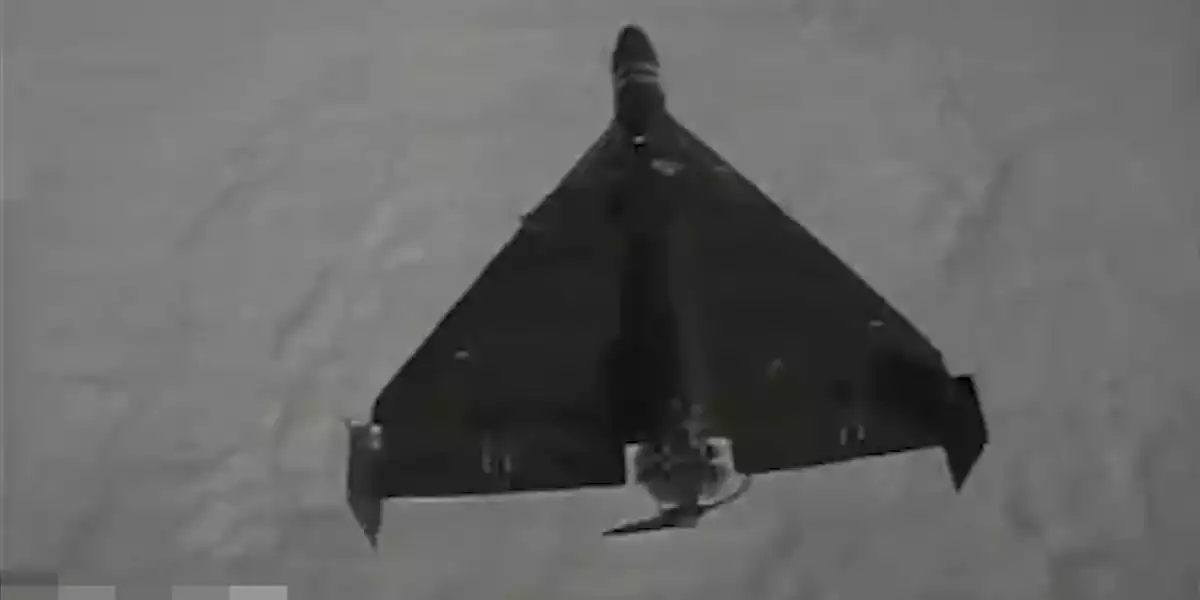
- The results are tangible: interceptors capable of 300 km/h speeds and 6,000-meter ceilings, rapidly supplanting the legacy heavy machine guns that once formed the backbone of Ukraine’s air defense.
Cost Asymmetry as Strategic Leverage
- Perhaps most striking is the inversion of the cost-per-kill equation. At $2,500 apiece, Ukrainian interceptors are not just cheaper—they are radically so, undercutting Russian drones by factors of four to forty.
- This economic asymmetry is more than a budgetary footnote. It is a strategic lever, forcing adversaries to expend resources at unsustainable rates, and upending the traditional economics of air defense, long dominated by expensive surface-to-air missile systems.
- The integration of commercial off-the-shelf sensors, AI-driven target recognition, and robust data links further blurs the line between military and civilian tech, hinting at a future where the divide between counter-UAS systems and light manned aircraft grows ever thinner.
Micro-Factories and the New Industrial Geography of War
Ukraine’s distributed manufacturing model—micro-factories scattered across the country—has quietly rewritten the industrial logic of defense production.
Resilience Through Distribution
- Small-footprint sites mitigate the risk of single-point failures, while simultaneously fostering regional economic participation.
- This approach is not just about resilience; it is an implicit industrial policy, one that delivers both jobs and security.
- The demand ripple for drone-grade chips, batteries, and lightweight composites is tightening global supply chains already stretched by the electric vehicle and consumer electronics sectors.
Competitive Innovation as a Force Multiplier
- Internal competition among Ukrainian vendors—such as the rivalry between Wild Hornets and their peers—has accelerated innovation and prevented the ossification typical of defense oligopolies.
- British co-production, now matching Ukrainian monthly output, signals the emergence of a transnational defense ecosystem, with intellectual property flowing east as much as west.
Fiscal Sustainability in an Era of Attrition
- The low unit cost of these interceptors enables Ukraine to sustain high-volume losses without threatening the integrity of its defense budget—a lesson not lost on NATO states facing their own fiscal ceilings.
Strategic Reverberations: Redefining Deterrence and Doctrine
The success of Ukraine’s interceptor drones is rippling far beyond its borders, prompting a reevaluation of air-defense doctrine across Europe.
Layered Defenses and Shifting Procurement Priorities
- The demonstrated effectiveness of these man-portable interceptors may reduce reliance on ultra-expensive systems like the Patriot, redirecting procurement toward swarming, layered defenses.
- NATO’s keen interest suggests a future where a standardized interceptor drone layer becomes as integral to European defense as radar or missile shields.
Deterrence and the Psychology of Air Superiority
- By neutralizing thousands of Russian drones, Ukraine has not only blunted a tactical threat but also eroded the psychological dominance that Russia’s drone blitz once conferred.
- This forces Moscow to contemplate costlier alternatives, such as manned sorties or investment in counter-counter-UAS technologies, fundamentally altering the calculus of the conflict.
The Double-Edged Sword of Proliferation
- The low barrier to entry for such systems raises the specter of non-state actors adopting similar tactics, prompting Western governments to consider tighter export controls on AI modules and secure communications hardware.
From Battlefield to Boardroom: Lessons for the Next Industrial Revolution
The implications of Ukraine’s agile drone revolution extend well beyond the military sphere, touching the very fabric of industrial and technological strategy.
Cross-Sectoral Convergence and ESG Opportunities
- The same agile frameworks now powering Ukraine’s drone defense mirror those driving industrial IoT and autonomous vehicles, suggesting an impending convergence in over-the-air hardware updates and system resilience.
- Lightweight composites and battery reliance are nudging defense procurement toward greener, more sustainable supply chains—aligning, perhaps unexpectedly, with emerging ESG mandates.
Human Capital and the New Talent Frontier
- The overlap between gaming, UAV piloting, and AI model tuning is reshaping recruitment pipelines, with civilian tech talent now a strategic asset for national defense.
For decision-makers, the message is clear: the future of air defense—and perhaps of industrial innovation itself—will be written by those who can iterate fastest, integrate widest, and adapt most nimbly. The lessons of Ukraine’s agile drone revolution are not merely tactical; they are a clarion call for a new era of technological and strategic imagination.

 By
By
 By
By

 By
By
 By
By

 By
By
 By
By