
A False Alarm at Buckley: Revealing the New Frontlines of Space Security
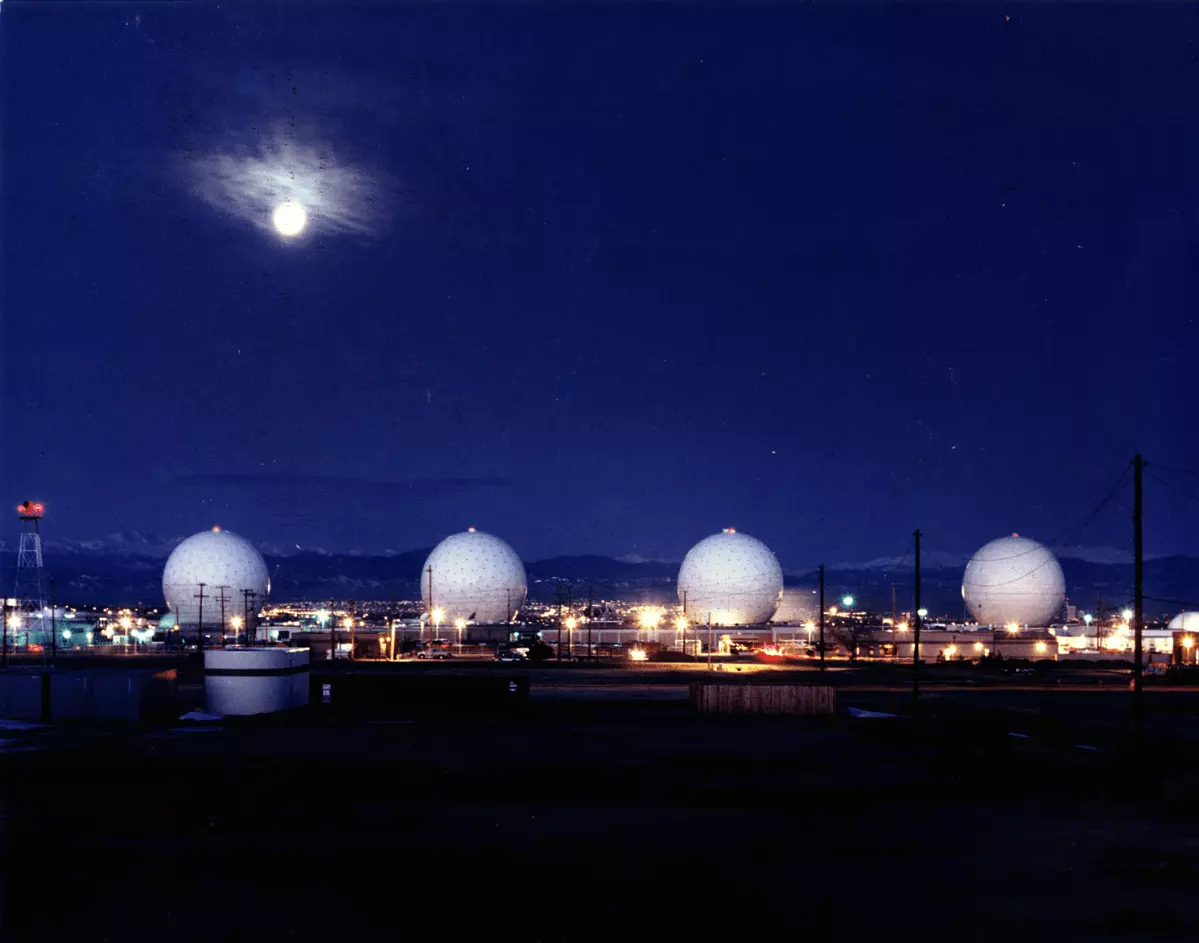
The recent explosives alert at Buckley Space Force Base in Aurora, Colorado, unfolded as a textbook example of crisis choreography: swift multi-agency mobilization, cordoned streets, and a tense four-hour window before the all-clear was sounded. Though ultimately a false alarm, the episode serves as a prism through which the evolving realities of space defense—and its entanglement with terrestrial vulnerabilities—come sharply into focus.
Buckley’s mission is foundational to U.S. deterrence: missile warning and satellite command-and-control. In an era when space is not merely a domain but a contested battlespace, even a fleeting disruption tests the resilience of protocols designed for a future where orbital assets are prime targets for both kinetic and non-kinetic aggression.
The Expanding Attack Surface: Where Physical and Digital Worlds Collide
The incident’s origin—a maintenance garage, far from the base’s high-profile command centers—highlights a critical shift in threat perception. Modern adversaries, notably near-peer competitors like China, increasingly probe the “soft edges” of military infrastructure: construction sites, logistics depots, and unclassified networks. These seemingly mundane vectors are now recognized as potential gateways for more sophisticated incursions.
Buckley’s rapid, all-hands response reflects an emerging doctrine: every physical anomaly is treated as a potential cyber-physical vector. The convergence of physical and digital security is no longer theoretical. Defense planners are investing heavily in:
- Sensor fusion to integrate disparate surveillance feeds and environmental data
- AI-driven anomaly detection capable of flagging and contextualizing unusual activity in real time
- Digital twin models that simulate the ripple effects of localized breaches on critical orbital infrastructure
This integrated approach is not only reactive but anticipatory, reflecting a world where the boundary between physical sabotage and cyber intrusion has all but dissolved.
Economic Reverberations: Budget Velocity, Insurance, and Supply Chain Resilience
The fiscal implications of even a resolved threat are profound. The FY 2024 defense budget earmarks nearly $30 billion for space programs—a 27% increase over FY 2021. Incidents like Buckley’s, however benign in outcome, validate the urgency of these investments, accelerating capital flows to satellite constellations, launch services, and counter-unmanned-air-system (C-UAS) vendors.
Key economic dynamics include:
- Insurance premiums for space-adjacent facilities are climbing 8–12% annually, with each alert adding actuarial pressure and spurring the development of new risk-transfer products focused on cyber-physical correlation losses.
- The Denver-Aurora aerospace corridor, dense with primes like Lockheed Martin and Raytheon, experienced a brief but telling logistics disruption. Regional planners are now prioritizing redundant transport nodes and secure routes for classified materials—a subtle but significant shift in supply chain strategy.
- For commercial launch providers, robust base security is now table stakes. Any perception of vulnerability invites scrutiny of supply-chain provenance, favoring vendors with transparent, U.S.-centric manufacturing footprints.
Hidden Currents: Workforce, ESG, and the Quantum Horizon
Beyond the visible scramble of emergency vehicles and cordons, the Buckley incident surfaces several less obvious but strategically vital currents:
- Workforce clearance bottlenecks: The effectiveness of rapid response is constrained by the availability of cleared personnel. With security clearance adjudication averaging 74 days, there is growing demand for interim clearance mechanisms and automated vetting—an investable niche for technology innovators.
- ESG inversion: Traditionally, defense exposure has been a red flag for ESG-minded investors. Yet, as space-based assets increasingly support climate monitoring, disaster response, and secure communications, the narrative is shifting. Strengthened base security now safeguards dual-use assets, subtly reframing the industry’s ESG profile.
- Quantum-resilient cryptography: False physical alarms often coincide with cyber probing. As quantum computing looms on the threat horizon, the imperative for post-quantum encryption—across both terrestrial and orbital links—becomes a procurement priority for specialized semiconductor and software firms.
Strategic Inflection: The New Mandate for Integrated Security
For defense and aerospace executives, the Buckley episode signals a new era of integrated base defense, where RFPs increasingly demand turnkey “security stacks” that blend physical, cyber, and supply-chain protections. Technology leaders are called to develop AI models that fuse video, telemetry, and open-source intelligence, delivering sub-five-minute threat validation with auditable decision paths. Investors and policymakers, meanwhile, will be tracking incident frequency at space installations as a leading indicator for budget reallocation and legislative action.
The Buckley false alarm, operationally routine yet strategically instructive, underscores a simple truth: in the age of contested space, resilience is measured not by the absence of threats, but by the speed and sophistication of the response. This lesson will reverberate across the space-industrial complex, shaping capital allocation, technology roadmaps, and policy priorities for years to come.

 By
By
 By
By
 By
By


 By
By
 By
By
 By
By