
The Barbell Economy of Coffee: Navigating a Market Split by Price and Premium
Coffee, that most democratic of luxuries, now finds itself at the epicenter of a global economic drama. Over the past year, coffee prices have surged more than 40%, a spike that is reshaping the American consumer’s morning ritual and forcing the industry’s hand on everything from supply chain logistics to digital loyalty engineering. The result is a market that looks less like a bell curve and more like a barbell: value-seekers on one end, premium devotees on the other, with little left in between.
Shifting Consumer Allegiances: Private-Label Ascent and Premium Resilience
The American coffee aisle has become a battleground for consumer loyalty and price sensitivity. Store-brand coffee—once a fallback for the frugal—has emerged as a formidable force, capturing 22% of total coffee spend, up from 19% in just three quarters. This pace, if sustained, would mark a seismic shift in category share within a few short years. Club stores like Costco and Sam’s Club are accelerating this trend, leveraging closed-loop data to optimize bulk, value-driven offerings that resonate with inflation-weary shoppers.
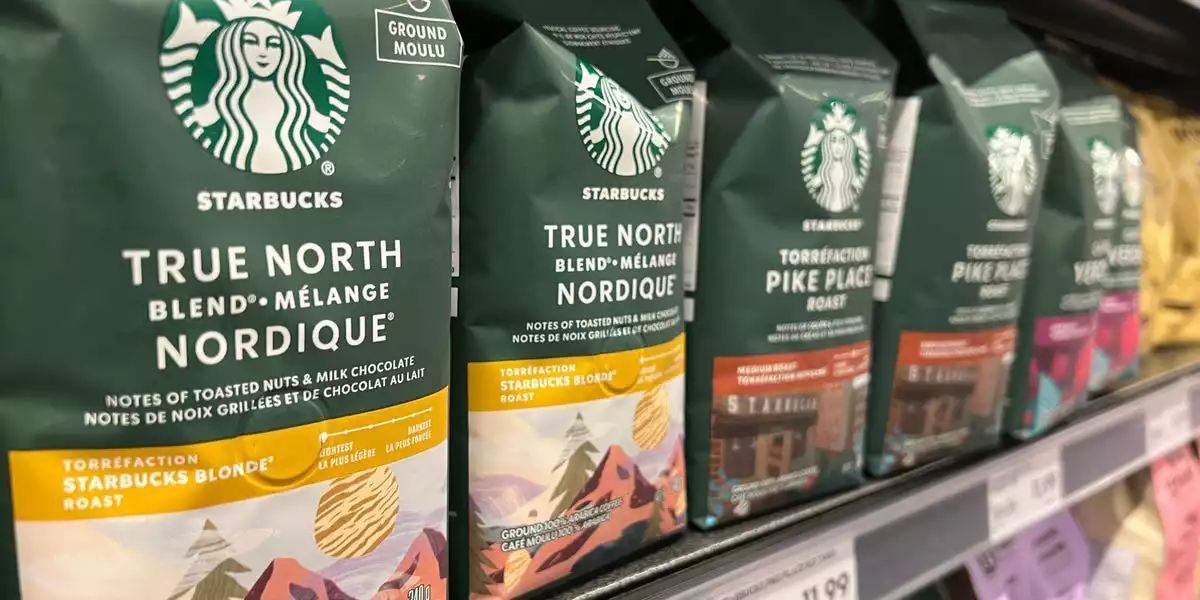
Yet, the allure of the premium persists. Starbucks, the undisputed titan of grocery coffee, continues to command a 30–60% price premium over the average bean. For many households, the brand functions as an “affordable indulgence”—a small, daily luxury that remains insulated from broader economic shocks, at least for now. The persistence of Starbucks’ market share, even as prices climb, underscores the enduring power of brand equity in a bifurcating market.
Climate, Tariffs, and the New Supply-Side Calculus
Behind the retail shelf, the forces driving this barbell effect are as complex as they are relentless. Climate volatility is now a permanent feature of the coffee supply chain. Brazil, the world’s largest arabica exporter, is grappling with rainfall levels 25% below normal. Satellite imagery shows vegetative health indices already echoing the stress seen in 2016/17—a precursor to a 35% global price spike. With El Niño probabilities exceeding 80% for early 2024, the prospect of further yield contraction looms large.
Layered atop these climatic challenges are geopolitical tremors. The specter of new U.S. tariffs on Colombian coffee, retaliation for steel duties, threatens to add 5–7 cents per pound at port—a cost magnified through roasting, packaging, and distribution. For retailers and branded manufacturers alike, the imperative is clear: re-tool supply chains, hedge against volatility, and brace for a potential 12–18% further escalation in retail prices within the next few quarters.
Technology as Lifeline: Precision Ag, Digital Transparency, and AI Loyalty
The industry’s response to these converging pressures is increasingly technological. On the ground in Brazil, sensor-driven irrigation and AI-powered yield modeling are gaining traction among large estates, though the vast majority of smallholders remain locked out—an opportunity ripe for fintech-enabled micro-lending and upstream investment. For global players like Starbucks and Nestlé, each incremental improvement in yield translates to tens of millions in retained gross profit, making origin-side tech adoption not just a hedge, but a necessity.
Further along the value chain, blockchain-backed traceability is moving from pilot to prerequisite. Retailers are eager to certify sustainability and justify premium pricing, while digital supply-chain transparency is fast becoming essential for tariff compliance and agile inventory management. Cloud-native ERP systems and end-to-end visibility are no longer optional—they are the new cost of doing business.
Perhaps most intriguing is the rise of AI-driven loyalty economics. As consumers oscillate between value and premium, machine-learning models that optimize promotional cadence on an individual level are supplanting the old paradigm of blanket discounting. Starbucks, with its robust digital loyalty ecosystem, is uniquely positioned to flex personalized offers that cushion the impact of higher bean costs without eroding brand perception.
Strategic Inflection: The Future of Coffee in a Volatile World
The next 12–24 months will test the mettle of every player in the coffee value chain. The baseline scenario—modest tightening of global supply, a further 10–12% retail price hike, and continued private-label share gains—remains the most likely. But the range of outcomes is wide: accelerated adoption of climate-smart agritech and tariff deferrals could moderate inflation, while a “perfect storm” of severe El Niño and enacted tariffs could push prices to psychologically daunting highs.
For executives, this is not merely a commodity crisis—it is a catalytic moment. The winners will be those who modernize supply chains, embrace technology-enabled transparency, and reimagine customer engagement for a market where volatility is the new normal. As Fabled Sky Research’s analysis suggests, the coffee category now embodies the K-shaped recovery: simultaneous migration to value and premium, with the middle ground eroding fast. In this landscape, strategic resilience is not just prudent—it is existential.

 By
By
 By
By
 By
By
 By
By
 By
By

 By
By