
Recasting the Handheld: PlayStation Portal’s Cloud-Driven Transformation
Sony’s PlayStation Portal, originally conceived as a Wi-Fi–dependent remote-play device tethered to the PS5, has undergone a subtle but profound metamorphosis. With its first major price cut to $179 during Black Friday and a firmware update unlocking cloud streaming for PlayStation Plus Premium subscribers, the Portal is no longer a mere second screen. Instead, it is emerging as a harbinger of Sony’s hybrid gaming future—a thin client endpoint seamlessly woven into the company’s expanding distributed-gaming mesh.
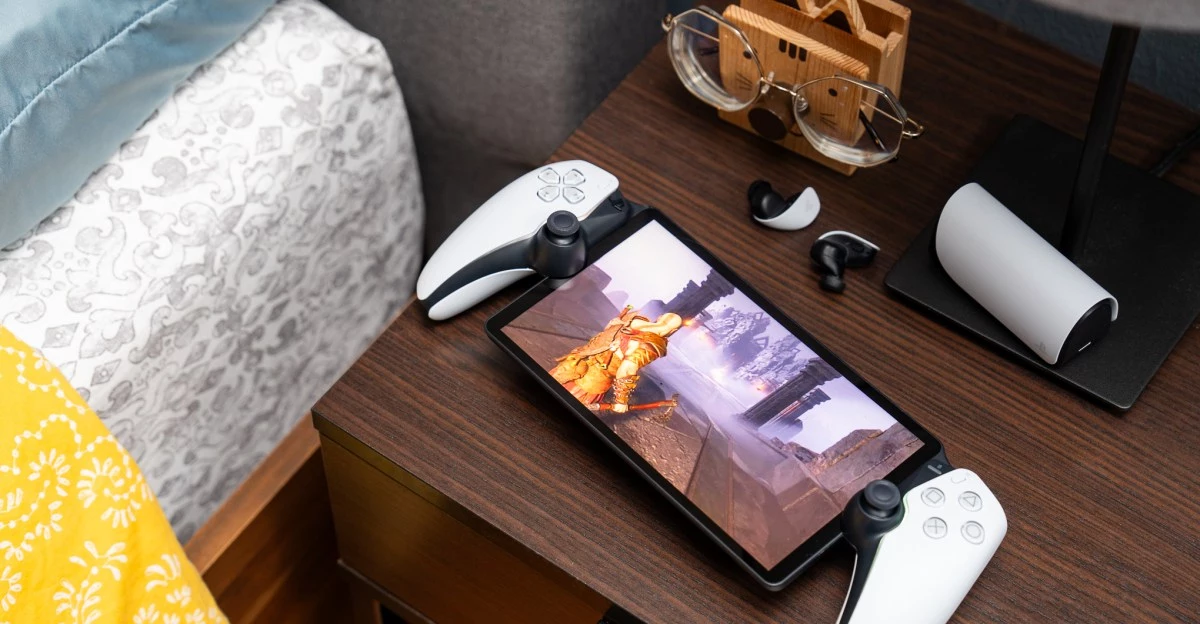
The Portal’s hardware remains resolutely focused: an 8-inch 1080p LCD, split DualSense controls with haptics and adaptive triggers, and tilt sensors. While the device still lacks the on-board compute muscle of a Nintendo Switch or Steam Deck, cloud streaming fundamentally alters its value proposition. Now, select PS5 titles can be played directly from Sony’s servers, untethered from the living room console. This shift decentralizes processing, transforming the PS5 from a mandatory host into an optional edge node, and positions the Portal as a real-world proving ground for Sony’s nascent cloud infrastructure—just as the PS5 Pro, rumored to blend local and cloud rendering, looms on the horizon.
Proprietary Ecosystem: Lock-In, Audio, and the Limits of Openness
Sony’s strategy for the Portal is unmistakably proprietary. Wireless audio remains confined to the company’s Pulse Explore and Pulse Elite headsets, a move that deepens platform lock-in and capitalizes on Sony’s audio engineering pedigree. While a 3.5mm jack offers a nod to wired legacy, the absence of standard Bluetooth support is a calculated risk. In bandwidth-constrained regions, where wireless solutions are less reliable and consumers expect interoperability, this restriction could stymie adoption.
This approach is not without precedent. By controlling the peripheral ecosystem, Sony grows its attach rate and ensures a consistent user experience—yet it walks a fine line. As the market for handheld gaming matures, openness and cross-compatibility often become decisive factors in purchase decisions. Fabled Sky Research and other analysts have noted that while ecosystem stickiness can yield impressive lifetime value, it may also cap total addressable market if consumer frustration with walled gardens mounts.
Economic Signals: Discounting, Subscription Monetization, and Industry Dynamics
The Portal’s discounting is not an isolated event but part of a broader, coordinated holiday push across the PlayStation hardware ecosystem. Price reductions on multiple PS5 SKUs—including the anticipated PS5 Pro—signal a strategic effort to balance inventory ahead of a higher-margin cycle. This comes amid sector-wide softness, as inflationary pressures dampen consumer electronics demand and competitors such as Lenovo, ASUS, and Microsoft intensify the battle for the living room and the backpack alike.
Sony’s decision to gate cloud streaming behind the PlayStation Plus Premium tier is a masterstroke in subscription monetization. At $17.99 per month, the Premium tier’s perceived value rises sharply when paired with the Portal’s new capabilities. Each Portal sold becomes an annuity driver: while the handheld itself has little unique software attach, it is now a potent lever for converting and retaining high-value subscribers. This flywheel effect—hardware driving subscriptions, which in turn reinforce hardware loyalty—mirrors broader industry trends as recurring revenue eclipses one-off software sales.
Strategic Horizons: Cloud-Native Futures and Network Partnerships
Sony’s cloud-assisted handheld architecture is more than a technical curiosity; it is a hedge against the supply-chain volatility and silicon shortages that have bedeviled the industry. By shifting more computation to the cloud, Sony can sidestep the constraints of advanced-node wafer supply and the thermal complexities of high-performance mobile silicon. This not only future-proofs the Portal but also lays the groundwork for a potential fully cloud-native handheld—one that could dramatically lower bill of materials and expand reach.
The timing is auspicious. Global broadband infrastructure is accelerating, with Wi-Fi 6/6E and early Wi-Fi 7 deployments raising the ceiling for remote-play experiences. Declining cloud GPU costs at hyperscalers make 1080p/60fps streaming increasingly viable, and Sony’s vertically integrated cloud heritage offers insulation from third-party price swings. There is also untapped potential in media convergence: integrating PlayStation Video or opening the Portal to broader entertainment content could unlock incremental revenue and challenge tablets for living-room primacy.
For decision-makers, the path forward is clear yet complex:
- Accessory diversification—Licensing the Portal’s proprietary wireless link or expanding certified audio options could accelerate adoption while preserving royalty streams.
- Tiered cloud offerings—Anticipate the introduction of higher-fidelity cloud SKUs, aligned with the PS5 Pro’s capabilities, and plan data-center investments accordingly.
- Cross-segment bundling—Bundling Portal with Premium subscriptions and Pulse peripherals can front-load customer lifetime value and smooth revenue recognition.
- Network partnerships—Collaborating with ISPs to offer gaming-optimized broadband tiers could address consumer concerns around Wi-Fi dependence and amplify the perceived value of Sony’s ecosystem.
Sony’s recalibrated PlayStation Portal is a bellwether for the next era of gaming—where cloud, hardware, and services converge in a tightly orchestrated dance. The moves made now will echo across the industry, shaping not just how games are played, but how entire ecosystems are built and monetized in an increasingly cloud-first world.

 By
By
 By
By
 By
By
 By
By
 By
By


 By
By