
A predictable lunar impact that exposes an unpredictable cislunar future
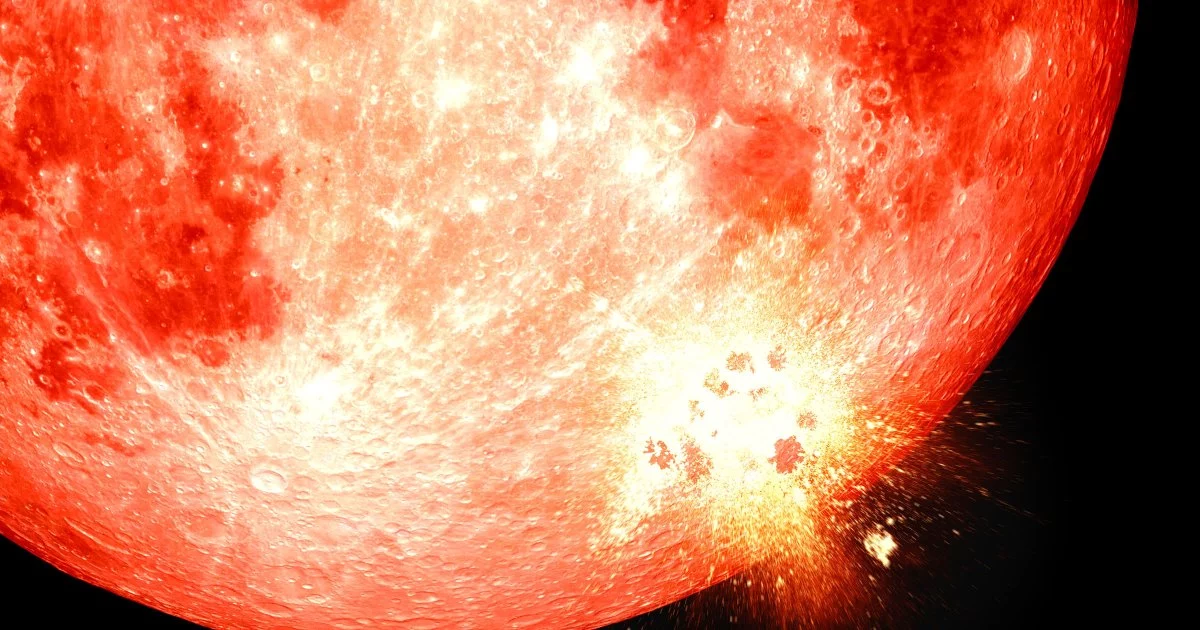
At 2:44 AM EDT on August 5, a discarded Falcon 9 upper stage—a roughly 45-foot remnant from a January 15, 2025 dual-lander mission—is expected to strike the Moon near Einstein crater at about 1.51 miles per second. The event is not remarkable because it is rare, but because it is trackable: Project Pluto’s Bill Gray has followed the object for more than a year as it co-orbited Earth and the Moon, refining its trajectory despite subtle nudges from solar radiation pressure.
That combination—an inert object on a long, loosely monitored path, yet still predictable with modern tools—captures the central tension now forming in cislunar space. The Moon is shifting from a distant destination to an emerging operational theater for science, national strategy, and commercial infrastructure. In that context, an uncontrolled impact is less a curiosity than a signal: the governance and engineering norms for end-of-life space hardware are lagging behind launch cadence and lunar ambition.
While the immediate scientific return may be limited largely to crater formation and ejecta behavior, the broader implications land squarely in business and technology. The question is no longer whether debris will accumulate beyond Earth orbit, but whether the industry will treat cislunar space as a managed domain—or repeat the early mistakes of low Earth orbit, only farther from help and harder to police.
Tracking prowess meets its limits: the next phase of deep-space situational awareness
Gray’s ability to forecast the impact within seconds underscores how far ground-based optical surveys, radar observations, and orbital mechanics software have advanced. This is a quiet but consequential maturation: accurate prediction is the foundation for any future cislunar traffic management regime, from collision avoidance to liability attribution.
Yet the same tracking story also highlights what today’s systems still lack. Even small forces—especially solar radiation pressure—introduce uncertainty that compounds over time. In Earth orbit, frequent updates and dense sensor coverage can reduce ambiguity. In cislunar space, the observational geometry is harsher, the update cadence is thinner, and the consequences of mischaracterization can be more expensive.
Several technical needs are becoming difficult to ignore:
- Cooperative tracking architectures: Upper stages and mission hardware could carry transponders or minimal telemetry beacons to reduce reliance on intermittent optical reacquisition.
- Higher-fidelity force modeling: Better characterization of object shape, attitude tumbling, and surface properties improves prediction under solar pressure.
- Hybrid sensor networks: A future-proof approach likely blends terrestrial telescopes, space-based sensors, and shared data standards to deliver consistent tracking beyond geosynchronous orbit.
- AI-assisted orbit prediction: Machine learning will not replace physics-based propagation, but it can help flag anomalies, optimize observation scheduling, and quantify uncertainty in ways insurers and regulators can operationalize.
The business takeaway is direct: situational awareness is becoming infrastructure, not an optional service. As lunar missions proliferate, the market will increasingly reward providers that can demonstrate measurable risk reduction, not just mission capability.
End-of-life design becomes a cost center—until it becomes a competitive advantage
The upper stage’s uncontrolled fate points to a structural gap in spacecraft lifecycle planning. Many upper stages are optimized for performance and cost to deliver payloads, but lack systematic mechanisms for passivation, controlled disposal, propulsive re-entry, or “graveyard” placement once their primary job is done. In cislunar space, that omission is amplified: objects can linger, drift, and re-encounter operational corridors long after mission teams have moved on.
This is where engineering choices begin to intersect with insurance pricing, regulatory exposure, and brand risk. As more lunar assets appear—landers, relay satellites, navigation aids, and eventually habitats—insurers are likely to demand clearer evidence of debris-avoidance planning and end-of-life compliance. That pressure can raise upfront costs, but it also creates a pathway for differentiation.
Key economic and industrial dynamics are already visible:
- Insurance and liability escalation: More debris increases modeled risk; higher risk raises premiums and can reshape mission financing.
- A new servicing and remediation market: Rendezvous, inspection, capture, and controlled disposal are emerging as credible business lines—especially if governments become anchor customers.
- Compliance as a design constraint: Anticipated “space-traffic” rules may mirror maritime pollution regimes, turning disposal capability into a certification requirement rather than a best practice.
- Circular-economy logic in space: What looks like waste may become feedstock. Spent stages could eventually be repurposed for in-space manufacturing, shielding, or structural components—an orbital analogue to terrestrial e-waste recycling.
The strategic implication for launch providers and mission integrators is that end-of-life design is shifting from an afterthought to a procurement criterion. The winners may be those who treat disposal and trackability as core product features—priced, engineered, and audited like any other mission-critical subsystem.
Lunar stewardship, geopolitics, and the emerging rules of cislunar commerce
A high-velocity impact on the Moon also raises a subtler issue: planetary protection and environmental integrity. Even “inert” hardware can carry residues, and impacts can loft ejecta that complicates future measurements or contaminates sensitive regions. As lunar science and commercialization expand, pressure will grow to define clean zones, operational exclusion areas, and contamination thresholds—concepts that resemble Antarctic environmental protocols more than traditional spaceflight norms.
At the same time, cislunar debris is becoming entangled with geopolitics. With the United States and China pursuing ambitious lunar roadmaps, unmanaged debris can become a diplomatic irritant—or a rhetorical weapon—framed as negligence, non-compliance, or strategic disregard. The Outer Space Treaty provides foundational principles, but it was not designed to manage dense, commercialized traffic patterns between Earth and the Moon.
What is emerging is a governance gap that markets will feel before treaties catch up. Practical next steps increasingly discussed across industry and policy circles include:
- A public–private cislunar traffic management consortium to aggregate tracking data, certify avoidance tools, and adjudicate risk disputes.
- Standardized end-of-mission protocols—binding technical norms for passivation and disposal that scale with launch rates.
- Demonstration missions for capture and repurposing of spent stages, validating both the technology and the business case.
- Coordinated investment in distributed sensor networks to deliver higher-resolution tracking and shared operational awareness.
The August 5 impact will carve a new mark into the lunar surface, but its deeper imprint is on Earth’s decision-making. Cislunar space is transitioning into an economic zone where predictability, stewardship, and accountability will determine who can operate at scale—and who will be priced out by risk, regulation, or reputational drag.

 By
By
 By
By
 By
By
 By
By


 By
By