
A Martian Overture: Interstellar Intrigue and the Battle for Space Data Supremacy
When the interstellar object 3I/ATLAS swept past Mars in late September, it did more than brush the red planet—it ignited a new era of scientific rivalry and economic calculation. Only the third confirmed extrasolar visitor ever detected, 3I/ATLAS has become a crucible for the entwined ambitions of spacefaring nations, commercial actors, and policymakers. Its passage, and the subsequent scramble for data, reveal the shifting tectonics of the modern space economy—where information, not just exploration, is the ultimate prize.
The Science of the Unprecedented: Imaging an Interstellar Visitor
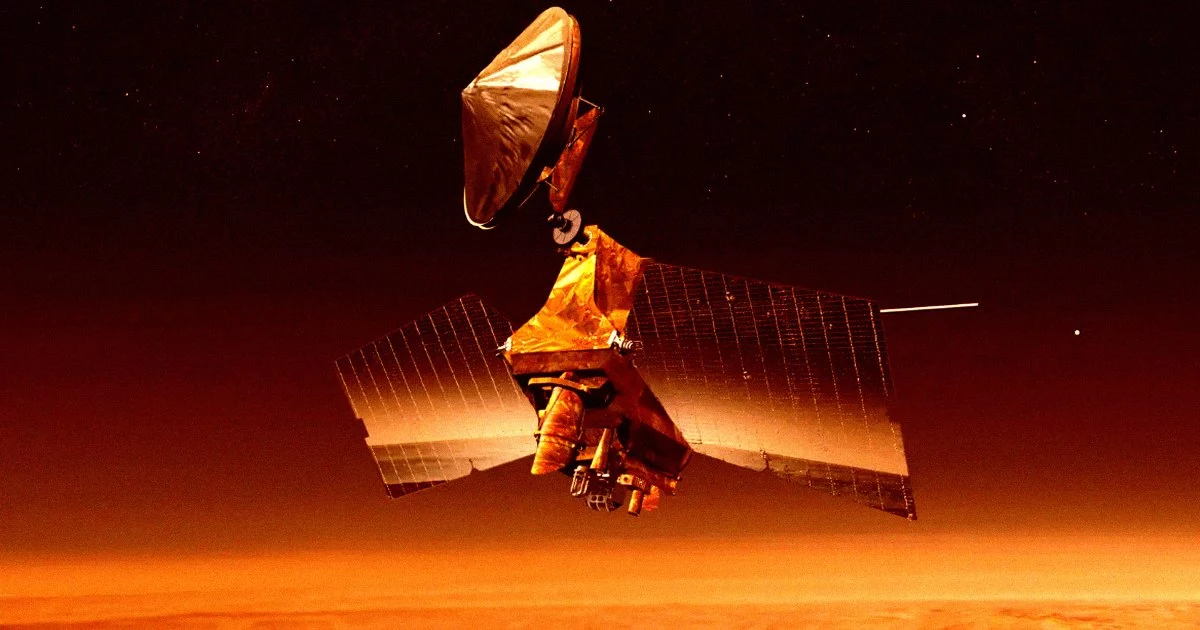
The scientific allure of 3I/ATLAS is as profound as its origin is mysterious. NASA’s Mars Reconnaissance Orbiter (MRO), equipped with the HiRISE camera, achieved a technical marvel: capturing sub-meter-per-pixel imagery of a body millions of kilometers away. This proof-of-concept for high-fidelity, long-baseline optical tracking is not just a feather in NASA’s cap—it is a harbinger for the future of near-Earth object (NEO) surveillance and planetary defense.
Yet, the story is complicated by circumstance. A U.S. federal shutdown has left these ultra-high-resolution images sequestered, frustrating scientists and entrepreneurs alike. In a striking contrast, China’s Tianwen-1 orbiter has already released its own images, revealing a coma-shrouded nucleus possibly five kilometers wide and weighing in at an estimated 33 billion tons. The object’s lack of a conventional tail and its anomalous mass-loss signature have stoked debate: Is this a comet with exotic chemistry, a metal-rich asteroid, or something else entirely? Either answer would recalibrate models for asteroid mining and planetary defense—fields where the line between scientific curiosity and commercial opportunity blurs.
The potential for data fusion—combining U.S. visible-range images with China’s multispectral datasets—offers a tantalizing glimpse of what cross-sovereign scientific collaboration could achieve. For the first time, humanity might map the composition of an interstellar body with unprecedented fidelity, if only policy and politics would allow.
Economic Stakes and Geopolitical Calculus in the New Space Race
The embargo on NASA’s data is not merely a bureaucratic hiccup; it is a costly delay for the burgeoning deep-space economy. Every day without access compresses the analytical lead-time for U.S. commercial players: resource-mapping startups, insurance actuaries modeling NEO risk, and the constellation of private ventures betting on space-situational awareness (SSA). For capital markets, such delays lengthen technology-development cycles and chill investment in a sector where timing is everything.
Meanwhile, China’s rapid publication of Tianwen-1 imagery has flipped the traditional narrative of scientific openness. Where once the U.S. was the standard-bearer for transparency, Beijing now positions itself as the vanguard of global astro-community engagement. This shift is not merely symbolic; it is a soft-power play with hard consequences. High-precision optical tracking at interplanetary distances is dual-use technology, equally relevant to planetary science and missile defense. The lines between exploration, commerce, and security grow ever more indistinct.
Industry trends reinforce this dynamic. The rise of “data-sovereign space”—where scientific data become bargaining chips in multilateral tech diplomacy—mirrors the commoditization of interplanetary sensors. CubeSat-class telescopes, once the domain of national agencies, now offer gigapixel aggregate resolution, lowering entry barriers for private SSA networks. Even the narrative economics of extraterrestrial life—however speculative—can mobilize capital, much as AI hype has done in terrestrial markets.
Strategic Imperatives: Agility in an Era of Celestial Uncertainty
For decision-makers, the 3I/ATLAS episode is more than a curiosity—it is a clarion call. Legislative momentum is building for real-time public release of taxpayer-funded space data, a move that could spawn new markets for AI-driven anomaly detection and reshape the competitive landscape. Venture capital and corporate R&D teams must now stress-test funding timelines against the structural risk of government shutdowns, while strategic investors eye materials-science breakthroughs that could recalibrate the total addressable market for off-Earth mining.
Looking further ahead, the migration of scientific diplomacy from Earth orbit to deep-space alliances will demand new intellectual property frameworks—ones that balance shared analytics with proprietary AI models. The public-perception wildcard looms large: even a statistically small chance of identifying technosignatures could swing policy, funding, and insurance models overnight.
Key imperatives emerge:
- Treat space-data latency as both operational risk and competitive differentiator.
- Advocate for standardized, cross-national data schemas to accelerate future integration.
- Hedge against tail-risk scenarios—resource windfalls or disruptive narratives—through diversified investments in edge-AI sensing, materials science, and regulatory advisory.
In the end, the passage of 3I/ATLAS is less an isolated event than a harbinger. In a world where celestial anomalies can reshape investor sentiment, defense postures, and technological roadmaps overnight, those who architect agility into their data, capital, and geopolitical strategies will define the next era of space leadership.

 By
By
 By
By

 By
By
 By
By


 By
By