
Powered Footwear: Nike’s Project Amplify and the Dawn of Augmented Mobility
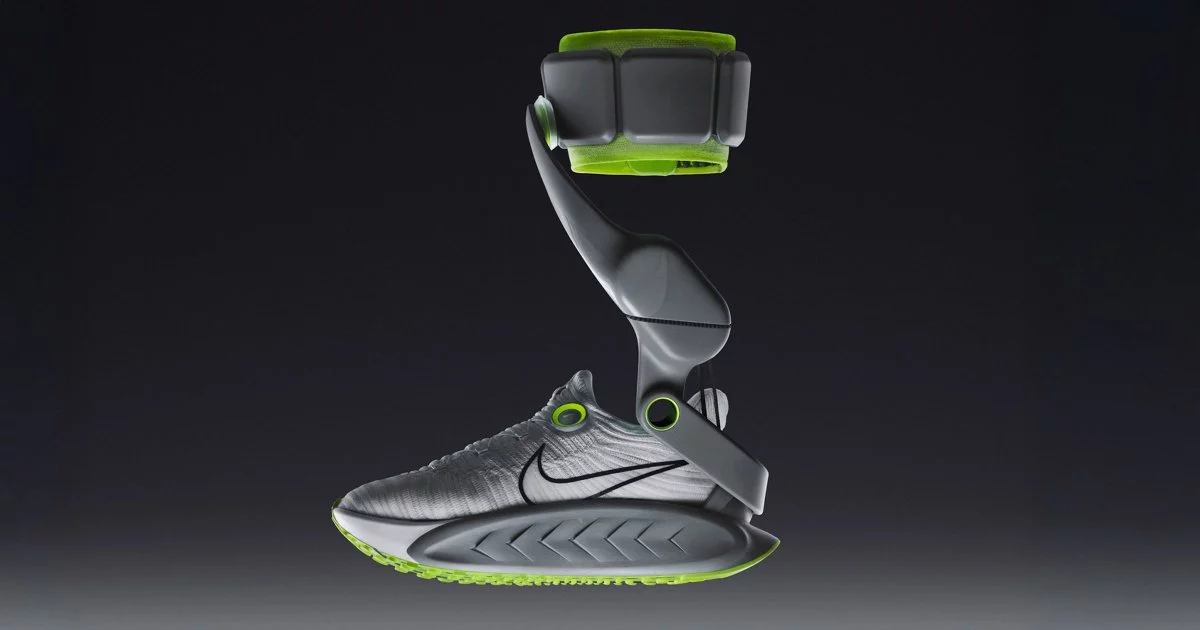
Nike’s unveiling of “Project Amplify” marks a decisive leap into the future of wearable technology, where the boundaries between athletic performance and robotics blur with every stride. The concept—an audacious fusion of lower-leg exoskeleton, motorized ankle assist, drive belt, rechargeable power pack, and carbon-fiber chassis—signals an era where sneakers are no longer passive gear but active partners in human movement. Project Amplify is not merely an incremental innovation; it is a bold reimagining of what footwear can be, promising to transform mobility for both elite athletes and everyday users.
Engineering the Next Generation of Movement
At the heart of Project Amplify lies a convergence of disciplines once siloed: wearable robotics, advanced materials, and performance apparel. The embedded motor, converting rotational energy into augmented plantar flexion, essentially turns the sneaker into a lightweight exoskeleton. This is not the stuff of science fiction but the logical evolution of a market hungry for performance gains and ergonomic support.
- Carbon-fiber reinforcement—long the province of aerospace and high-end cycling—anchors the chassis, optimizing the strength-to-weight ratio and setting a new standard for consumer-grade wearables.
- Battery density and thermal management emerge as critical frontiers. The promise of all-day mobility hinges on safe, efficient energy storage and real-time feedback loops, which remain closely guarded aspects of Nike’s design.
- Modularity is a quiet revolution within the platform. The drive-belt motor architecture hints at future variants tuned for torque, speed, or even sport-specific demands, while firmware updates open the door to post-sale performance tuning and data analytics—an unprecedented value chain for a sneaker.
Nike’s vision is unmistakably platform-centric. The possibility of subscription-based “boost profiles” and app-driven customization signals a future where footwear is as much software as hardware, with the potential for continuous improvement and personalization.
Economic Stakes: New Markets and Strategic Shifts
Project Amplify’s ambitions are as commercial as they are technological. By positioning the product as a mobility enhancer for all—akin to the e-bike’s democratization of cycling—Nike is poised to transcend the $90 billion athletic footwear market and tap into the rapidly growing exoskeleton and mobility aids sector, projected to reach $18 billion by 2030.
- Supply chain transformation is inevitable. The bill of materials now includes lithium-ion cells, precision gearboxes, and rare-earth magnets, shifting procurement from traditional footwear suppliers to the domain of electronics and automotive vendors.
- Price points will reflect this complexity. Early models are likely to command MSRPs north of $1,000, a barrier that may limit initial adoption but could fall as economies of scale and component cost deflation take hold.
- Competitive dynamics intensify. Project Amplify accelerates the technological arms race with rivals like Adidas and Under Armour, as well as robotics startups. The line between footwear brands and lightweight hardware companies is dissolving, favoring those with deep pockets and mechatronics expertise.
Nike’s integration with its digital ecosystem—spanning Run Club and Training Club—creates a closed-loop data network, a defensible moat that both enhances user experience and fortifies brand loyalty.
Regulatory, Ethical, and Cultural Crossroads
The arrival of powered footwear on the global stage raises profound questions for regulators, ethicists, and the broader sporting community.
- Sporting authorities will grapple with classification: Are powered shoes assistive devices, or do they confer an unfair advantage? Precedents set by the carbon plate “super-shoe” controversies loom large, and proactive engagement with governing bodies will be essential.
- Ethical debates are inevitable. The line between legitimate augmentation and performance enhancement blurs, echoing past controversies in pharmaceutical doping and necessitating transparent performance caps or competition-specific lockouts.
- Sustainability remains a pressing concern. The lifecycle of batteries and rare materials must align with Nike’s public commitments to environmental stewardship, making closed-loop recycling and responsible sourcing non-negotiable.
The Road Ahead: From Prototype to Paradigm Shift
Project Amplify is more than a product launch—it is a signal flare for the entire industry. The electrification of movement, once confined to vehicles and e-bikes, is now diffusing into the most intimate of wearables. As consumers acclimate to software-defined gear and wearable energy packs, the very definition of athleticism is poised for reinvention.
For Nike, and for the industry at large, the challenge is clear: to master the fusion of robotics, data, and apparel, while navigating the shoals of regulation, ethics, and market acceptance. The race is on—not just to build a better sneaker, but to define the next chapter in human mobility. As Fabled Sky Research and other observers note, those who can harmonize mechatronics with the poetry of movement will set the pace for a new era of sport and everyday life.

 By
By
 By
By
 By
By

 By
By
 By
By
 By
By