
The Battery Renaissance: Redwood’s Strategic Leap Into AI-Driven Energy
The American energy landscape is undergoing a profound transformation, catalyzed by the insatiable electricity demands of generative AI and the geopolitical imperatives of supply-chain sovereignty. In this charged atmosphere, Redwood Materials’ recent $350 million capital infusion, led by Eclipse and joined by Nvidia’s NVentures, signals more than a routine funding milestone. It marks a strategic pivot—one that positions the company at the nexus of AI, energy storage, and critical-mineral independence.
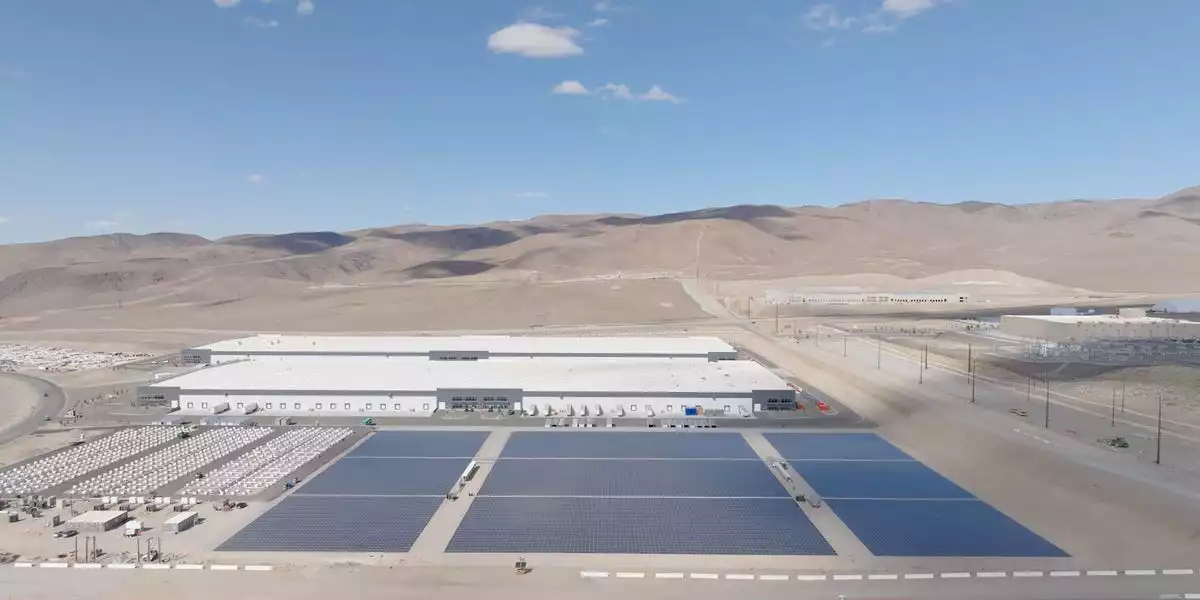
Redwood’s new “Redwood Energy” division is not merely a side project; it is a calculated response to a confluence of forces reshaping the industrial order. By redeploying end-of-life lithium-ion batteries as grid-scale storage, Redwood is crafting a business model that addresses both the acute power constraints throttling AI infrastructure and the volatility of global mineral markets. This dual focus on recycling and redeployment has elevated Redwood’s valuation above $6 billion, a testament to the market’s recognition of its expanded ambition.
The AI Power Surge and the Storage Imperative
The rise of hyperscale AI campuses is rewriting the rules of utility planning. Each 100-megawatt data center—now a common sight in the age of large language models—demands as much electricity as 80,000 American homes. Yet, the U.S. grid is not built for this pace: interconnection queues have ballooned to over 2 terawatts, creating a yawning chasm between AI’s appetite and the grid’s ability to deliver.
Battery energy storage systems (BESS) have emerged as the stopgap, and Redwood’s second-life packs offer a compelling value proposition:
- Rapid Deployment: BESS can be permitted and installed in 12–24 months, far outpacing the timelines for new transmission lines or gas peaker plants.
- Cost Efficiency: Refurbished EV batteries can reduce capital costs by 30–40%, especially when paired with Inflation Reduction Act (IRA) production credits.
- Grid Flexibility: These systems are not just backup power—they can participate in frequency regulation and capacity markets, stacking revenue streams and improving returns.
Nvidia’s strategic investment through NVentures is a harbinger of deeper integration between compute and energy. The prospect of bundling GPU clusters with on-site storage is no longer speculative; it is fast becoming a competitive necessity, echoing the way hyperscalers have embraced renewables to control costs and emissions.
Recycling, Refining, and Redefining the Supply Chain
Redwood’s vertically integrated model—spanning recycling, refining, and deployment—confers advantages that are both economic and geopolitical. With China refining the lion’s share of the world’s lithium, nickel, and cobalt, the urgency for domestic alternatives is acute. The IRA’s domestic-content credits have turbocharged this trend, rewarding companies that localize both mineral processing and battery assembly.
Key differentiators in Redwood’s approach include:
- Chemistry Flexibility: While the company’s roots are in high-nickel cathodes, its refining capabilities allow it to pivot to LFP and sodium-ion chemistries, hedging against technology lock-in.
- Circular-Economy Advantage: By harvesting metals from end-of-life EV packs, Redwood not only reduces input-cost volatility but also burnishes its ESG credentials—an increasingly important factor for data center operators with 24/7 carbon-free pledges.
- First-Mover Status: Unlike competitors focused solely on recycling or new-build storage, Redwood’s “recycle-to-redeploy” model enables it to capture value across the battery lifecycle.
The company’s inaugural commercial installation with Crusoe, an AI-centric data center operator, is an early signal of how these synergies can play out in practice.
Navigating Regulatory Crosscurrents and Competitive Tensions
The path ahead is not without hazards. Feedstock variability, evolving battery chemistries, and the maturation of performance certification standards (such as UL1974) all present operational risks. The durability of IRA incentives, too, is subject to the shifting winds of U.S. politics—a factor that could recalibrate project economics overnight.
Within this landscape, Redwood’s competitors are formidable. Tesla’s Megapack and Fluence dominate the new-build BESS market, but their reliance on virgin supply leaves them exposed to commodity cycles and ESG scrutiny. Meanwhile, recycling specialists like Li-Cycle and Ascend Elements lack Redwood’s vertical integration into storage deployment, ceding ground in the race to build a closed-loop, domestically anchored battery ecosystem.
For utilities, data center operators, and OEMs, the implications are clear:
- Integrate BESS into site selection and procurement to stay ahead of interconnection bottlenecks.
- Forge closed-loop partnerships to secure both energy and ESG credits, mirroring the renewable PPA model.
- Monitor chemistry compatibility to future-proof recycling and deployment strategies.
Redwood’s ascent is emblematic of a broader industrial realignment—one where battery waste becomes grid capacity, and the boundaries between energy, technology, and manufacturing blur. As AI’s power demands accelerate, the companies that can bridge these domains will define the next decade of American innovation. In this unfolding story, Redwood Materials has staked its claim as both architect and beneficiary of the new energy-tech order.

 By
By
 By
By
 By
By

 By
By
 By
By
 By
By
 By
By