
Illuminating the Hydrogen Frontier: High-Speed Plasma Imaging and the Fusion Renaissance
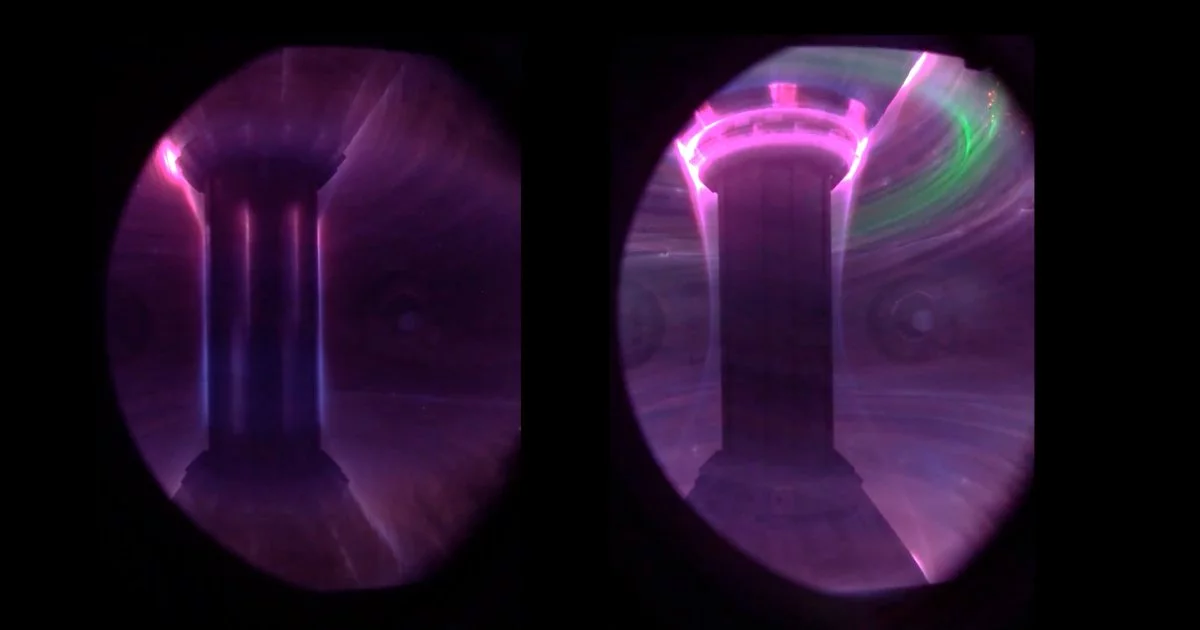
In a world increasingly defined by the race for clean, abundant energy, Tokamak Energy’s release of ultra-high-speed video footage—capturing the seething, pink hydrogen plasma inside its ST40 spherical tokamak—marks a pivotal moment. The footage, filmed at a staggering 16,000 frames per second, not only dazzles with its visual intensity but also crystallizes a series of technological and economic inflection points. This is not merely a laboratory curiosity; it is a harbinger of a new era where private capital, advanced diagnostics, and materials innovation converge to redraw the boundaries of what is possible in fusion energy.
From Inference to Observation: The New Language of Plasma Diagnostics
For decades, the inner workings of magnetically confined plasmas have been inferred through a patchwork of delayed sensor readings and theoretical models. The advent of high-speed, wide-spectrum imaging has rewritten this script. Now, researchers can observe, in near real time, the intricate dance of edge-localized modes (ELMs) and impurity transport phenomena—once the domain of speculation and indirect measurement.
- Accelerated Model Validation: The ability to film plasma dynamics at millisecond timescales shortens the feedback loop between experiment and theory. This is fertile ground for the integration of machine-learning control systems, which can parse vast streams of visual data to optimize plasma stability.
- Lithium’s Transformative Role: The experiment’s visual confirmation of lithium grain injection not only validates its effectiveness as a wall conditioner—absorbing impurities and enabling higher plasma temperatures—but also as a tritium-breeding agent. The footage reveals deposition behaviors and penetration depths that simulations alone could not resolve, addressing both operational performance and the long-term economics of deuterium-tritium fusion.
- Compactness as a Competitive Edge: The ST40’s use of high-field, compact superconducting magnets signals a strategic departure from the monolithic ITER-class devices. If this compact architecture proves scalable, it could dramatically lower capital expenditures and shift the fusion funding paradigm from multi-government consortia to nimble, venture-backed enterprises.
Private Capital, Supply Chains, and the Geopolitics of Fusion
The fusion sector’s financial landscape is undergoing a quiet revolution. Private investment in fusion technologies surpassed USD 6 billion in 2023, with a pronounced tilt toward tokamak-based approaches. Tokamak Energy’s transparent media strategy is a calculated signal to capital markets: the physics risks that once seemed intractable are being tamed, transformed into quantifiable engineering challenges.
- Lithium and Superconductor Supply Pressures: As electric vehicle battery demand is set to triple by 2030, fusion’s appetite for lithium introduces a new axis of competition. The race to secure high-temperature superconducting (HTS) tape—critical for compact magnet designs—will grant early movers structural advantages not only in energy, but also in quantum computing and medical imaging.
- Emerging Fusion Mercantilism: National strategies are coalescing around fusion as a flagship export technology. The UK, post-Brexit, is positioning itself as a global leader, while the U.S. and China accelerate their own roadmaps. The result is a new form of “fusion mercantilism,” where intellectual property, supply chains, and talent mobility become levers of statecraft.
Strategic Ripples: AI, Carbon Markets, and Risk Pricing
The implications of high-speed plasma imaging ripple far beyond the fusion sector itself. The same sensor-driven, AI-enabled control loops developed for plasma management are finding second lives in industries as diverse as autonomous aviation, semiconductor fabrication, and hypersonic flight.
- AI-Driven Control Systems: Real-time imaging pipelines can be repurposed, creating cross-industry toolchains that unlock novel revenue streams and operational efficiencies.
- Fusion’s Early Markets: Even before grid-scale fusion is realized, early heat sources could catalyze high-temperature hydrogen production or synthetic aviation fuels, offering decarbonization pathways that outpace traditional renewables.
- Insurance Innovation: The granularity of visible-light diagnostics reduces uncertainty around plasma disruptions, enabling the creation of specialized insurance products. This mirrors the transformation seismic imaging brought to deepwater drilling, potentially lowering financing costs for pilot fusion plants.
The Next Decade: Positioning for Fusion’s Ascent
As demonstration plants targeting net energy gain (Q>1) at the 50–100 MW scale come into view for the early 2030s, the strategic calculus for corporate leaders is shifting. Those with long-horizon capital projects—from chemicals to data centers—should begin scenario planning for a fusion-augmented energy mix. Vertical integration across lithium, superconductors, and neutron-resistant materials will become a battleground for early equity stakes and supply agreements.
Regulatory frameworks are also evolving, with fusion likely to escape the strictures of traditional nuclear licensing. Proactive engagement with emerging standards can shave years off commercialization timelines. And as the discipline fuses plasma physics, materials science, and AI, organizations that invest in cross-disciplinary talent pipelines today will find themselves with a formidable moat as the market tightens.
The mesmerizing imagery from Tokamak Energy’s ST40 is more than scientific spectacle—it is a signal flare from the frontier of energy innovation. The challenge for executives and strategists is clear: to translate today’s breakthroughs in diagnostics and materials into tomorrow’s competitive advantage, before the glow at the edge of the tokamak becomes the dawn of a new energy order.

 By
By
 By
By




 By
By
 By
By