
Surface Shadows: The Unraveling of Russian Undersea Power
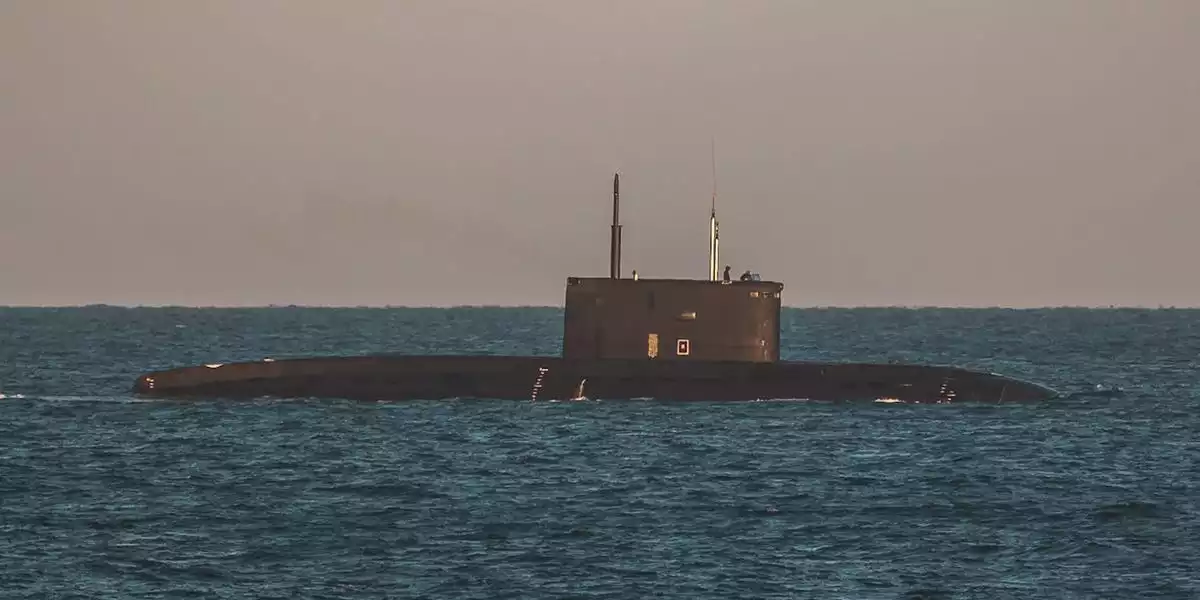
When NATO surveillance assets tracked the Russian Kilo-class submarine Novorossiysk limping home on the surface, the spectacle was more than a fleeting anomaly—it was a vivid tableau of a navy in slow-motion retreat. Designed for stealth, the Project 636.3 Kilo-class is the pride of Russia’s diesel-electric submarine fleet, renowned for its acoustic discretion and ability to vanish beneath the waves. Yet, as the Novorossiysk crept across the surface, escorted by a tug and likely suffering from mechanical or power-train failure, it laid bare the mounting pressures eroding Russian maritime power.
Moscow’s insistence that the transit was merely “routine” rings hollow against a backdrop of mounting evidence: combat attrition, sanctions-strained supply chains, and shrinking fiscal bandwidth are converging to sap the vitality from a once-formidable naval force. The image of a flagship, Kalibr-missile-capable submarine unable—or unwilling—to submerge has become a symbol of this decline, and a signal flare for NATO’s recalibrated focus on undersea infrastructure protection.
—
Anatomy of a Maritime Decline: Technology, Tactics, and Supply Chains
At the heart of the Kilo-class’s reputation is its sealed-cycle diesel-electric propulsion and advanced anechoic coatings—technologies that, under normal circumstances, render it a ghostly presence in contested waters. But surface transit nullifies its core survivability, exposing the vessel to detection and, in a conflict scenario, destruction.
- Technical Vulnerabilities: Open-source imagery and NATO intercepts suggest the Novorossiysk suffered propulsion or battery-charging anomalies. Western sanctions have sharply curtailed Russia’s access to high-reliability power electronics, marine bearings, and composite propeller materials—components critical to submarine reliability and difficult, if not impossible, to substitute domestically at scale or quality parity.
- Operational Asymmetry: The incident underscores a widening chasm between Russian maintenance, repair, and overhaul (MRO) capacity and NATO’s rapid adoption of autonomous undersea systems and persistent ISR (intelligence, surveillance, reconnaissance) networks. A submarine forced to surface becomes a predictable target, trackable by multi-static sonar nets, satellite RF sensing, and low-cost uncrewed surface vessels.
This technological and logistical deficit is not an isolated event but a harbinger of systemic decay across Russia’s naval enterprise.
—
Strategic Retreats and Economic Strains: The Geopolitical Undercurrents
The Novorossiysk episode is emblematic of broader strategic contractions. Russia’s naval presence in the Mediterranean has dwindled from a pre-2022 average of 15–17 hulls to single digits, undermining its traditional anti-access posture. In the Black Sea, relentless Ukrainian drone and missile strikes have driven key assets from occupied Crimea to Novorossiysk, elongating response times and degrading operational tempo.
- Logistical Dilemmas: The disruption of Tartus logistics following Syria’s 2024 leadership shift has forced the Kremlin into a strategic bind—either thin out Baltic and Northern Fleet rotations or accept a vacuum in the Mediterranean, both options signaling diminished deterrence.
- Economic Headwinds: Sanctions elasticity is reaching its limit. Makeshift workarounds—parallel imports, domestic substitution—can bridge some microelectronics gaps but falter in metallurgical specialties and naval-grade lubricants. With defense spending projected to exceed 8% of GDP by 2025, social programs are being squeezed, and investment in next-generation shipbuilding is delayed. The emigration of precision engineers and software talent, a “silent sanction,” further erodes reliability and quality control within Russia’s shipyards.
—
Undersea Infrastructure and the Next Security Frontier
Even in decline, the Russian fleet retains the capability to threaten Western critical infrastructure—subsea fiber-optic cables, gas pipelines, and offshore energy platforms remain soft targets for “gray-zone” sabotage. The tug-escorted transit of the Novorossiysk prompted NATO warships to shadow its route, a visible demonstration of allied vigilance.
- Risk and Resilience: The paradox of Russian naval weakness is that it may incentivize asymmetric disruption. Insurance and freight premiums for North Sea and Mediterranean energy corridors are already being recalibrated, with Lloyd’s underwriters factoring in the volatility of a desperate adversary.
- Industry Response: Telecom and energy operators are integrating naval OSINT (open-source intelligence) feeds into cyber-physical security dashboards. Sensor fusion—linking AIS (Automatic Identification System) anomalies with undersea cable strain gauges—is now commercially viable, offering a new layer of situational awareness.
- Investment Signals: The cost curve of naval power is tilting toward unmanned, distributed, and networked systems. For technology suppliers, including those in the undersea autonomy space, this marks a pivotal moment: what was once niche is poised for mainstream adoption, with early movers shaping emerging standards.
The Novorossiysk’s journey home is a microcosm of larger forces at play—a convergence of industrial, fiscal, and human-capital constraints manifesting in plain sight. For executives and strategists across defense, energy, telecom, and finance, the imperative is clear: resilience is now the baseline, and the undersea domain, once the preserve of navies, is becoming both more contested and more accessible. The future will belong to those who can read these signals and adapt before the next submarine surfaces, not as a shadow, but as a warning.

 By
By
 By
By
 By
By

 By
By