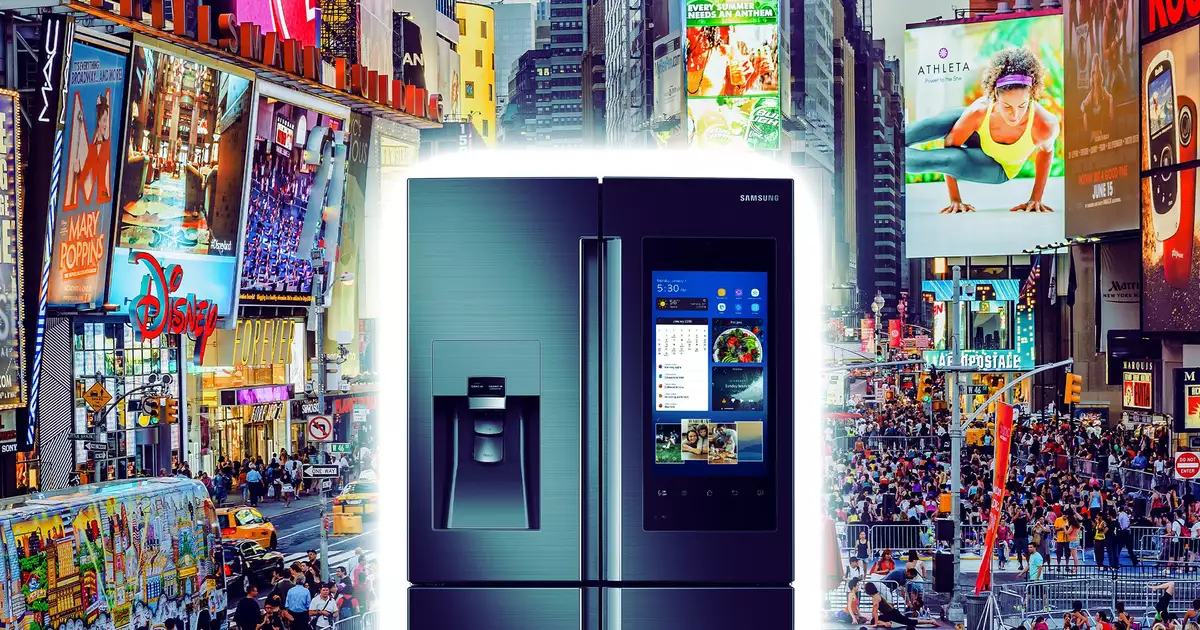

The Kitchen as the New Media Battleground: Samsung’s Refrigerator Ad Revolution
In a move that feels both inevitable and audacious, Samsung has announced it will transform idle screens on its U.S. Family Hub refrigerators into digital advertising canvases. This isn’t a mere experiment in monetizing unused pixels; it’s a signal flare for an industry-wide pivot. The kitchen, once a sanctuary of analog routine, is being reimagined as a lucrative endpoint in the sprawling attention economy.
Samsung’s gambit is more than a footnote in the annals of consumer electronics. It’s a harbinger of a world where durable goods—refrigerators, ovens, even washing machines—shed their static identities and become dynamic, monetizable media assets. The implications ripple far beyond the kitchen, touching the core of how technology, advertising, and everyday life will intersect in the coming decade.
—
From Appliances to Attention Platforms: The Tech and Data Alchemy
At the heart of this transformation is the Family Hub’s robust, Tizen-based operating system—already a nexus of Wi-Fi, Bluetooth, AI, and camera-powered features. With a simple firmware update, Samsung can layer in an ad server, instantly converting millions of fridges into addressable screens. But the true innovation lies not in the hardware, but in the data exhaust these appliances emit.
- Behavioral Telemetry: Family Hub refrigerators track door openings, inventory via internal cameras, and even sync with family calendars. This granular behavioral data, when federated across Samsung’s SmartThings ecosystem, allows for ad targeting that transcends the blunt instruments of age and gender.
- Edge AI for Contextual Relevance: By leveraging on-device intelligence, Samsung can localize ad delivery—think breakfast prompts in the morning, dinner ideas at dusk—while minimizing latency and cloud costs.
- Cross-Device Identity Graphs: The convergence of TVs, smartphones, and now refrigerators under a single platform enables advertisers to orchestrate unified campaigns, measuring incrementality and closed-loop attribution with unprecedented precision.
This is the kitchen not just as a place of nourishment, but as a node in a sprawling, data-driven media network.
—
Economic Incentives and Competitive Dynamics: Monetizing the Mundane
The strategic calculus is clear. Refrigerators, like most major appliances, are mature products with razor-thin margins and long replacement cycles. By layering in advertising, Samsung creates a recurring revenue stream that can meaningfully lift lifetime customer value—without inflating the bill of materials.
- Margin Diversification: In an era of hardware deflation and volatile supply chains, recurring ad revenue offers a hedge against cyclical downturns.
- Retail Media Adjacency: With CPG brands spending over $30 billion annually on retail media, Samsung’s kitchen screens offer a contextually rich, point-of-consumption channel—potentially siphoning budgets from established networks like Walmart Connect and Amazon DSP.
- Freemium Upsell Potential: Echoing the playbooks of streaming giants, Samsung can offer ad-free experiences via premium subscriptions, bundling in features like AI-driven grocery replenishment or energy optimization.
Yet, this strategy is not without risk. The specter of “attention saturation” looms large. Overexposure to ads in the home’s most intimate spaces could drive consumers toward “offline-luxury” brands or spark regulatory scrutiny. Data privacy, too, takes on new gravity when telemetry encompasses health, lifestyle, and purchase behaviors—making robust encryption and transparent policies non-negotiable.
Competitively, Samsung’s move is as much about defense as offense. By saturating the home with proprietary screens, the company deepens ecosystem lock-in, raising the switching costs for consumers and preempting rivals like LG, Whirlpool, and GE. The precedent it sets will likely force the hand of every major appliance OEM—normalizing a new era in which the battle for attention minutes extends to every glowing surface in the home.
—
Navigating the New Domestic Media Economy
The kitchen’s transformation into a media endpoint is not a foregone conclusion—it is a high-stakes bet on shifting consumer tolerance, regulatory winds, and the evolving economics of hardware. For Samsung, and for the industry at large, several imperatives emerge:
- Unified Monetization Architecture: Treat kitchen screens as nodes in a holistic home retail media network, offering advertisers integrated campaigns spanning TVs, mobiles, and appliances.
- Consumer Trust and Transparency: Establish privacy advisory boards, publish annual transparency reports, and voluntarily align with emerging privacy certifications to preempt regulatory backlash.
- Strategic Partnerships: Convert potential channel conflict with grocers and CPGs into co-op opportunities—think shoppable recipes and embedded commerce that shorten the path from inspiration to transaction.
- Premium Differentiation: Pilot ad-free, value-added subscriptions for affluent segments, using early adopters to fund broader rollouts and R&D.
As the lines between utility and media blur, the home itself becomes the next frontier in the contest for first-party data and recurring revenue. Samsung’s refrigerator ad initiative, while controversial, is a blueprint for the future: a world where every device is both a tool and a touchpoint, every surface a potential screen. The companies that navigate this convergence with ethical clarity and strategic foresight will define the contours of the domestic digital economy for years to come.

 By
By


 By
By
 By
By

 By
By