
The New Face of Screenshots: Apple’s Vision for Intent-Driven Mobile Interactions
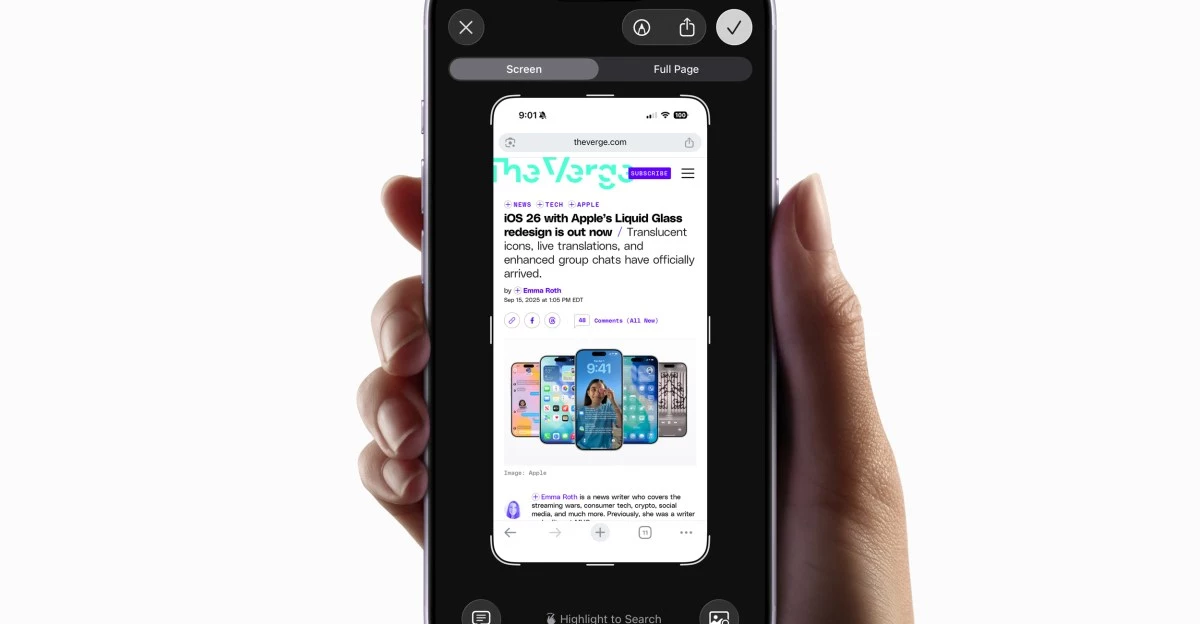
Apple’s unveiling of iOS 26 marks a subtle yet profound shift in the way everyday users interact with their devices. The once-passive act of taking a screenshot—a digital reflex as old as the smartphone itself—has been reimagined as an active, AI-augmented gateway. The familiar thumbnail preview gives way to a full-screen editing canvas, where generative tools, markup, and search are not just features, but immediate invitations to transform, extract, and act upon captured content. This evolution is emblematic of Apple’s dual commitment: expanding first-party capabilities while preserving user autonomy through opt-out toggles.
Generative Intelligence at the Edge: Architecture and Experience
At the heart of this transformation lies a sophisticated hybrid of on-device and cloud-based AI. Lightweight generative tasks—summarization, visual search, and context-aware suggestions—are processed locally, minimizing latency and reinforcing Apple’s privacy-first narrative. More demanding queries, such as those routed through ChatGPT, are deftly offloaded to the cloud, reflecting a pragmatic edge/cloud inference strategy that balances performance with privacy and cost.
This architectural finesse is matched by a UI/UX philosophy that privileges immediacy. Screenshots, once relegated to the Camera Roll, now surface as “intent surfaces”—interactive canvases where the boundaries between capture and action blur. With a single gesture, users can annotate, search, or summon AI-driven insights. For those wedded to the old paradigm, a simple toggle in Settings restores the thumbnail, but even here, the richer toolset remains one tap away. Apple’s sensitivity to cognitive load and interface complexity is evident: choice is preserved, but the future is unmistakably active, not passive.
Economic Stakes and Platform Dynamics: Lock-In, Monetization, and the New Micro-Market
Beneath the surface, these changes reverberate through the broader economic and developer ecosystem. By absorbing tasks historically handled by third-party apps—markup, long-scroll capture, visual search—Apple incrementally tightens its ecosystem lock. Each new feature, however marginal, raises the switching costs for users, a metric closely watched by investors as device upgrade cycles lengthen and hardware margins face pressure.
The integration of external AI partners, most notably ChatGPT, signals a rare openness from Apple. This is not mere technical expedience; it hints at emerging revenue-share or referral models that allow Apple to participate in the AI value chain without assuming the capital-intensive burden of model training. At the same time, even locally processed screenshots generate a trove of de-identified metadata—objects, text, context—that could quietly feed Apple’s nascent advertising ambitions, particularly in App Store search.
For developers, the writing is on the wall. The presence of hooks for Google Image Search and ChatGPT foreshadows a forthcoming Screenshot Extension API. Third parties—OCR, translation, compliance—will soon compete for placement in this post-capture sheet, birthing a new micro-market for contextual utilities. The challenge for independents is stark: pivot to specialized verticals or risk obsolescence as Apple’s first-party net widens.
Strategic Horizons: Regulation, Spatial Computing, and the Consumerization of AI
The competitive landscape is in flux. Google and Samsung are racing to own the “micro-intent” moment, embedding smart suggestions and linkification into their own capture workflows. Regulatory scrutiny, especially under the EU’s Digital Markets Act and U.S. antitrust regimes, looms large. Apple’s decision to offer a toggleable UX is a calculated hedge, a blueprint for compliant feature rollouts that could extend to other contested domains—default browsers, payment systems, and beyond.
Yet the implications stretch further. The full-screen editing layer is not just a mobile flourish; it is Vision Pro–ready, with hand-trackable UI elements that dovetail with Apple’s spatial computing ambitions. Screenshots, in this light, become bridge content—fluid across iPhone and headset, anchoring users in a seamless, context-aware ecosystem.
On the macroeconomic front, Apple’s edge-leaning AI design is a strategic response to persistent GPU shortages and the high cost of cloud inference. As enterprises embrace “bring-your-own-AI” policies, enriched screenshots promise just-in-time knowledge capture, accelerating the consumerization of workplace tools. In an era of inflationary pressure on R&D, software-led differentiation is not just a hedge—it is the new battleground.
The iOS 26 screenshot overhaul is a bellwether. It signals a future where every gesture is an opportunity for AI-driven, first-party value creation—where the mundane becomes strategic, and user agency is preserved not as a courtesy, but as a competitive necessity. For product leaders, CIOs, developers, and investors alike, the message is clear: the capture-to-action paradigm is here, and the stakes have never been higher.


 By
By

 By
By

 By
By
 By
By
 By
By