
The Back-to-School Laptop Lineup: Where AI Ambition Meets Classroom Reality
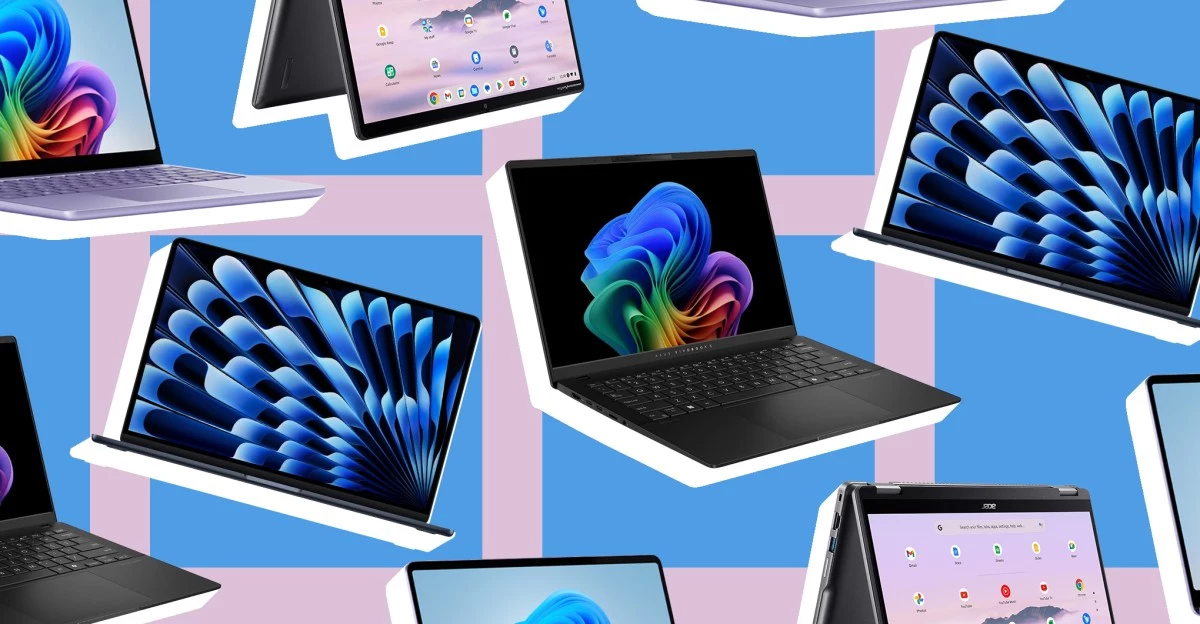
The 2025 back-to-school laptop cycle is not merely a seasonal refresh; it’s a harbinger of a deeper transformation in the personal computing landscape. This year’s roster—headlined by Apple’s M4 MacBook Air, Qualcomm’s Snapdragon X-powered “AI PCs,” Google’s reimagined Chromebook Plus, and Framework’s modular marvel—signals a convergence of technological, economic, and regulatory forces. The education sector, long defined by its price sensitivity and scale, is quietly becoming the crucible for the next era of AI-accelerated, sustainable, and ecosystem-driven computing.
Silicon Shifts and the Rise of On-Device AI
Beneath the familiar clamshells and glossy screens, a new architectural arms race is underway. The latest generation of student laptops is defined not just by CPU speed, but by “AI compute budgets”—the on-device horsepower dedicated to neural processing. Apple’s M4, Intel’s Core Ultra, AMD’s Ryzen AI 300, and Qualcomm’s Snapdragon X all boast dedicated NPUs (Neural Processing Units), each delivering 40–50 TOPS (trillions of operations per second). This threshold is no accident; it aligns with Microsoft’s Copilot+ requirements, ensuring even entry-level devices can handle local generative AI tasks—audio transcription, adaptive learning, and image generation—without leaning on the cloud.
The implications are profound:
- Arm’s Advance on Windows: The Snapdragon X’s debut in Surface Laptops marks Arm’s graduation from niche Chromebooks to mainstream Windows devices. If battery life claims hold, OEMs gain a potent margin lever, especially in education, where all-day endurance often trumps raw performance.
- Modularity and Right-to-Repair: Framework’s Laptop 13 embodies a growing demand for repairability. Swappable mainboards and ports extend device lifespans, aligning with sustainability mandates and potentially disrupting OEM refresh cycles.
- Display and Form-Factor Innovation: OLED panels and convertible designs are trickling down to sub-$700 price points, eroding the traditional two-device (tablet + laptop) market and making high-quality displays accessible to students at scale.
The Economic Chessboard: Pricing, Supply Chains, and Ecosystem Lock-In
This technological leap is reshaping the industry’s economic calculus. Apple’s $1,099 MacBook Air sets a premium anchor, while Chromebook Plus models target the $399–$699 value segment. The result is a pricing “barbell” that squeezes mid-tier Windows OEMs—unless they can differentiate through bundled AI features or service contracts.
Education’s bulk-purchase cycles, typically every three to four years, are now synchronizing with the AI hardware refresh. Vendors who secure these contracts lock in recurring streams of cloud management and AI software licensing revenue. But the race is complicated by supply-chain bottlenecks: surging NPU demand is straining TSMC’s 3-nm and Samsung’s 4-nm foundries, while lead times for LPDDR5X memory and OLED panels are stretching procurement timelines well into 2025.
Key dynamics at play:
- Microsoft’s Dual-Front Strategy: Copilot+ PCs court premium buyers, while aggressive EDU discounts aim to seed Windows-on-Arm adoption in schools.
- Google’s Certification Gambit: Chromebook Plus is less a device than a quality certification, promising consistency for IT admins and hinting at future subscription tie-ins with Google Workspace.
- Apple’s Services Funnel: The base-tier MacBook Air’s limited storage nudges students toward iCloud+ and Apple Music, leveraging silicon differentiation to extract higher services revenue.
Macro Forces and the Shifting Sands of the PC Market
After years of contraction, the PC market is stabilizing. IDC projects low-single-digit growth for 2024–25, with education and SMB sectors as pivotal swing factors. The narrative is increasingly shaped by AI-capable hardware: school district RFPs now routinely specify NPU requirements, and on-device AI inference is emerging as a solution to student data privacy concerns—reducing reliance on cloud processing and associated costs.
Yet, risks remain:
- Component Cost Volatility: While memory prices are softening, rising component ASPs and foreign-exchange swings threaten OEM margins, especially for those exposed to euro or yen fluctuations.
- Regulatory and ESG Tailwinds: Right-to-Repair statutes in the EU and U.S. states are nudging OEMs toward modularity, with early adopters poised to win procurement preference points.
The Road Ahead: Strategic Imperatives and Industry Inflection
The next 12–18 months will see a gap between AI-ready hardware and the software that fully exploits it. Device makers who bundle curriculum-specific AI applications—think STEM simulations or language tutors—will create immediate value and accelerate adoption. Meanwhile, the tightening of Chromebook Plus certification could drive consolidation among mid-tier OEMs, with private equity circling if sales projections falter.
For decision-makers, the actionable priorities are clear:
- Procurement leaders should bake NPU capability and repairability into RFPs to future-proof device fleets.
- OEMs must differentiate beyond silicon, curating AI-enhanced learning ecosystems or sustainability credentials to escape commodity pricing traps.
- Investors should monitor memory pricing and education budget cycles for near-term demand signals.
- Software developers have a fleeting window to deliver NPU-optimized educational tools and secure first-mover advantage.
What appears, on the surface, as a routine back-to-school buyer’s guide is, in fact, a blueprint for the next era of personal computing. The education sector, once a laggard, is now the proving ground where AI-first, repairable, and ecosystem-anchored devices are not just tested—they are forged. The choices made in classrooms today will ripple across the industry, shaping the trajectory of computing for years to come.

 By
By
 By
By
 By
By
 By
By
 By
By

 By
By
 By
By