


The New Nostalgia: How Agile Hardware and Tariff Turbulence Are Rewriting Retro Gaming
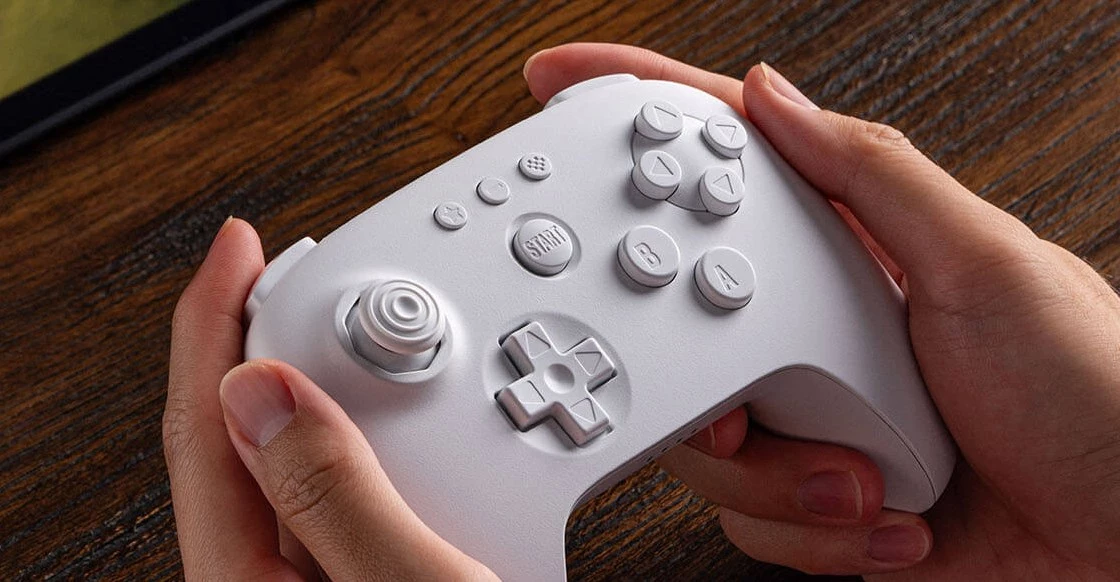
For the modern enthusiast, nostalgia is no longer a passive sentiment—it’s a marketplace. The recent debut of 8BitDo’s $39.99 “64” controller, arriving in a crisp white or black on Amazon’s digital shelves, is more than a nod to the past. It is a calculated play in a rapidly evolving retro-gaming economy, where speed, innovation, and global supply chains collide with the enduring allure of classic IP. Meanwhile, Analogue’s high-fidelity, FPGA-driven 3D console faces yet another postponement, this time at the hands of U.S. tariffs. These parallel developments illuminate the economic and technological forces shaping a niche that now exerts outsized influence on mainstream gaming strategy.
Hall-Effect Sensors: The Quiet Revolution in Controller Design
The 8BitDo “64” controller’s embrace of Hall-effect sensors—magnet-based components that sidestep the notorious “stick drift” plaguing potentiometer-based designs—signals a subtle but profound shift. This technology, once the preserve of high-end peripherals, is now filtering into mid-range devices as costs fall and suppliers scale up. The move is not merely technical; it is reputational. Recent class-action lawsuits and warranty headaches tied to Joy-Con drift have made reliability a core selling point, and 8BitDo’s adoption of Hall-effect sensors positions the brand as a harbinger of a new, more durable standard.
Yet, the design choices go beyond the internals. The controller modernizes button placement with a conventional ABXY orientation, catering to contemporary muscle memory, while retaining the single-stick layout that defined the original N64 experience. This balancing act—between ergonomic convergence and historical authenticity—reflects a broader segmentation in the market:
- Purist Accessories: Faithful recreations for archival and competitive use.
- Hybrid Devices: Modernized controls for cross-generational compatibility.
As cloud gaming and handheld PCs proliferate, dual-stick standards are hardening. Single-stick devices, while authentic, risk obsolescence outside emulator contexts unless manufacturers pivot to modular or upgradable designs.
Tariffs, Supply Chains, and the Economics of Nostalgia
While 8BitDo’s modular manufacturing in Shenzhen enables brisk 9–12-month concept-to-shelf cycles, Analogue’s premium FPGA console—designed to replicate the original N64 at a hardware level—remains mired in delays. The culprit: U.S. tariffs, which have become a formidable obstacle for hardware whose bill of materials leans heavily on components still subject to Section 301 duties (7.5–25%).
This divergence in supply-chain agility and tariff sensitivity is reshaping the competitive landscape:
- Accessory Makers: Broader catalogs allow for price amortization, mitigating tariff impact.
- Premium Console Creators: Single-SKU models face direct upward price pressure, especially as consumer discretionary spending tightens.
The result is a paradox: premium retro consoles, once the domain of the enthusiast, may soon be priced out of reach just as the market for affordable, nostalgia-driven accessories expands.
Platform Lock-In and the Subscription Economy
Nintendo’s decision to restrict its first-party wireless N64 controller behind a Switch Online subscription epitomizes a growing trend—physical peripherals as levers for recurring-revenue services. This walled-garden approach contrasts sharply with 8BitDo’s open-access model, which forgoes annuity revenues in favor of broad compatibility and consumer goodwill. The strategic calculus is clear: openness can drive brand trust, but at the cost of predictable annual recurring revenue (ARR).
For decision-makers, the implications are manifold:
- Supply-Chain Resilience: Multi-region assembly and alternative architectures (e.g., RISC-V emulation) can hedge against tariff volatility.
- Portfolio Segmentation: Dual-track roadmaps—“Authentic Heritage” vs. “Modernized Hybrid”—limit cannibalization and expand addressable markets.
- Subscription Partnerships: Bundling hardware with retro game libraries or cloud profiles can extract recurring revenue without full platform ownership.
- Quality as Differentiator: Hall-effect sensors, explicitly marketed as warranty-cost reducers, reinforce premium positioning.
- Regulatory Alignment: Durable designs future-proof products against impending “Right to Repair” mandates and intensifying IP enforcement.
The Expanding Retro-Gaming Horizon
The retro-gaming accessory market has outpaced overall console hardware growth, posting a 17% CAGR since 2019 and drawing in high-margin demographics. As the nostalgia economy broadens, the stakes for hardware makers intensify. The challenge is not merely to recreate the past, but to future-proof it—balancing authenticity with adaptability, quality with speed, and openness with monetization.
The agile launch of 8BitDo’s controller, set against Analogue’s tariff-induced delays, crystallizes the crossroads at which the industry stands. Those who harmonize component innovation, supply-chain strategy, and evolving service models will not only capture the nostalgia dollar—they will define accessory strategy for the cloud-augmented gaming era, where the boundary between past and future is as thin as a circuit trace.

 By
By


 By
By
 By
By
 By
By
 By
By




 By
By
 By
By







