
A Celestial Outlier Redraws the Map: 3I/ATLAS and the New Space Economy
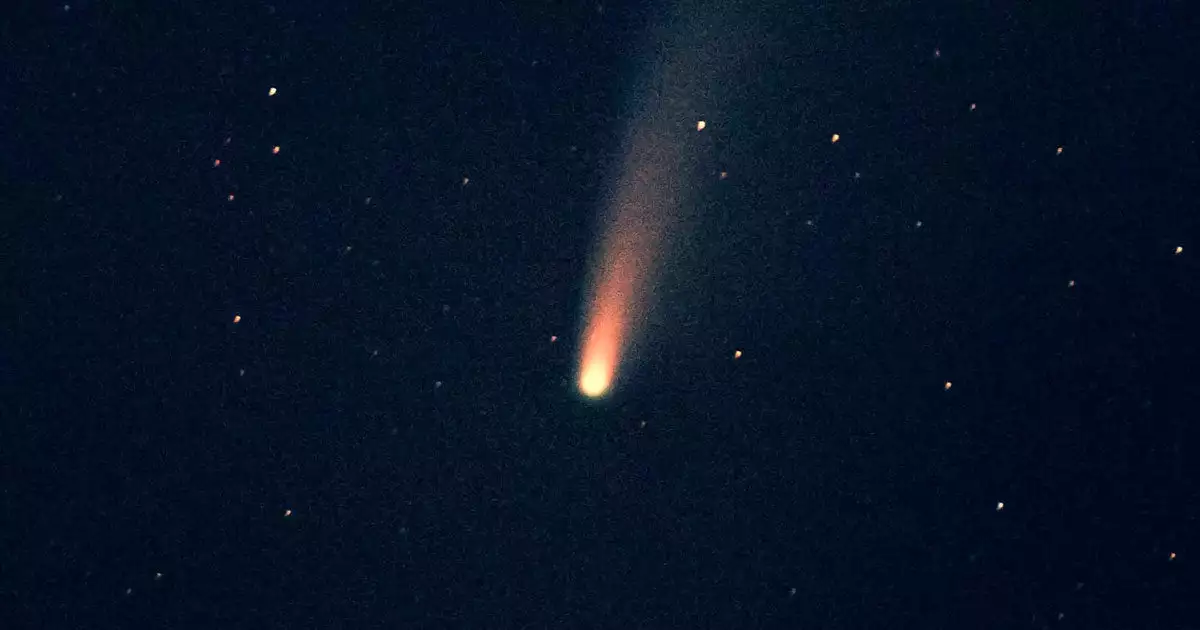
When the interstellar comet 3I/ATLAS pierced the solar system’s veil, it did more than dazzle astronomers—it set off a chain reaction across the technological, economic, and strategic spheres that define the modern space industry. Only the third confirmed visitor from beyond our Sun’s gravitational reach, 3I/ATLAS has become a crucible for the convergence of advanced sensor networks, real-time data orchestration, and the high-stakes calculus of space risk and opportunity.
Sensor Fusion, Spectroscopy, and the Next-Gen Remote-Sensing Stack
The choreography that brought 3I/ATLAS into scientific focus was nothing short of a masterclass in rapid-response astronomy. Wide-field sky surveys, powered by automated detection algorithms, flagged the object within hours of its arrival. In a seamless relay, observation time was secured on the Hubble Space Telescope and the James Webb Space Telescope, while ground-based arrays filled in spectral and temporal gaps. This “flash-to-funnel” pipeline—where AI refines orbital trajectories and dynamically schedules premium assets—signals a new era of autonomous, multi-instrument constellations.
- Immediate Implications:
– Same-day, multi-layered data acquisition is now a reality, not a theoretical ideal.
– The architecture is directly portable to Earth-observation, missile-tracking, and climate-monitoring, promising a step-change in responsiveness and fidelity.
The scientific revelations are equally profound. The comet’s anti-tail—an ethereal plume of water-ice fragments oriented toward the Sun—offers a natural laboratory for polarimetric and dust-plume studies. Meanwhile, the extraordinary carbon-dioxide–to–water ratio in its coma is straining the limits of current spectrometers, forcing real-world recalibrations that will benefit missions as varied as Europa Clipper and Mars Sample Return.
- Calibration and Stress Testing:
– Instruments are being pushed to their dynamic-range limits, exposing edge cases that will inform both hardware and firmware upgrades.
– These insights feed directly into the design of future flagship missions, ensuring resilience against the unknown.
Economic Shockwaves and the “Interstellar Arbitrage” Mindset
The arrival of 3I/ATLAS is not just a scientific event—it is a market signal. Each interstellar object that transits the inner solar system recalibrates the probability of accessing exogenous resources: icy volatiles, rare organics, even high-purity metals. For asteroid-mining startups and commodities analysts, this is a shot across the bow—a reminder that optionality exists for ad hoc capture missions, even if the decision cycles are measured in minutes.
- Market and Insurance Repercussions:
– Insurance actuaries are already modeling the tail risks of hyper-velocity impacts, with satellite premiums expected to incorporate interstellar clauses within a few years.
– Venture capital is flowing into sensor miniaturization, ultra-low-latency data relays, and kinetic capture technologies, with Series B rounds in the $50–$75 million range anticipated despite a challenging macro environment.
The scramble by NASA and ESA to re-task assets for 3I/ATLAS exposes the opportunity cost of not having a dedicated “interstellar interceptor.” The $1.2-billion Comet Interceptor mission, slated for 2029, now appears under-scoped, fueling lobbying for rapid prototyping and public–private partnerships. This is a clarion call for capital formation around responsive deep-space infrastructure—a trend that Fabled Sky Research and its peers are watching with keen interest.
Strategic Realignment: Defense, Governance, and Responsive Ops
The comet’s velocity—about 26 kilometers per second relative to the Sun—outpaces current intercept capabilities, forcing a rethink of planetary defense doctrines. As interstellar-class vectors become a credible risk, congressional attention and dual-use export controls are inevitable. The observation campaign has been a model of scientific cooperation, but the selective redaction of classified spectral lines hints at a future where deep-space ISR (intelligence, surveillance, reconnaissance) becomes a contested domain.
- Governance and Standards:
– The International Asteroid Warning Network and the Secure World Foundation are drafting new protocols for observatory time allocation, with mandatory override clauses for “Category-I” interstellar events on the horizon.
– Commercial telescope operators should prepare for regulatory intervention and potential loss of proprietary observation windows during such crises.
Instrumentation, Market Vectors, and Corporate Strategy in the New Deep-Space Era
The technical demands of 3I/ATLAS are already shaping procurement and R&D roadmaps:
- Hyperspectral sensors must adapt to unprecedented CO₂ dynamic ranges and rapid colorimetric shifts.
- Optical contamination models are being rewritten to account for elongated anti-tail geometries, informing the durability of next-generation mirror coatings.
Beyond the stars, the analytics developed for cryogenic volatiles have terrestrial applications—from carbon-capture to hydrogen storage—offering rare cross-pollination opportunities for investors and technologists alike. The emergence of “responsive deep-space ops” as a service layer—on-call propulsion, AI-driven flight planning—mirrors the evolution of cloud bursting in IT, hinting at a future where agility is the ultimate competitive advantage.
For corporate strategists, the checklist is clear:
- Audit insurance for interstellar debris scenarios.
- Embed astro-dynamicists within data teams for real-time risk dashboards.
- Pursue early partnerships on interceptor feasibility to secure preferred-vendor status.
The 3I/ATLAS episode is a live-fire test of the space industry’s capacity for agility, innovation, and cross-sector collaboration. As interstellar encounters shift from once-in-a-century anomalies to decadal certainties, those prepared to act—technically, financially, and strategically—will define the contours of the emergent deep-space economy.

 By
By
 By
By
 By
By

 By
By

 By
By
 By
By