
An Interstellar Messenger Redefines the Boundaries of Space Science
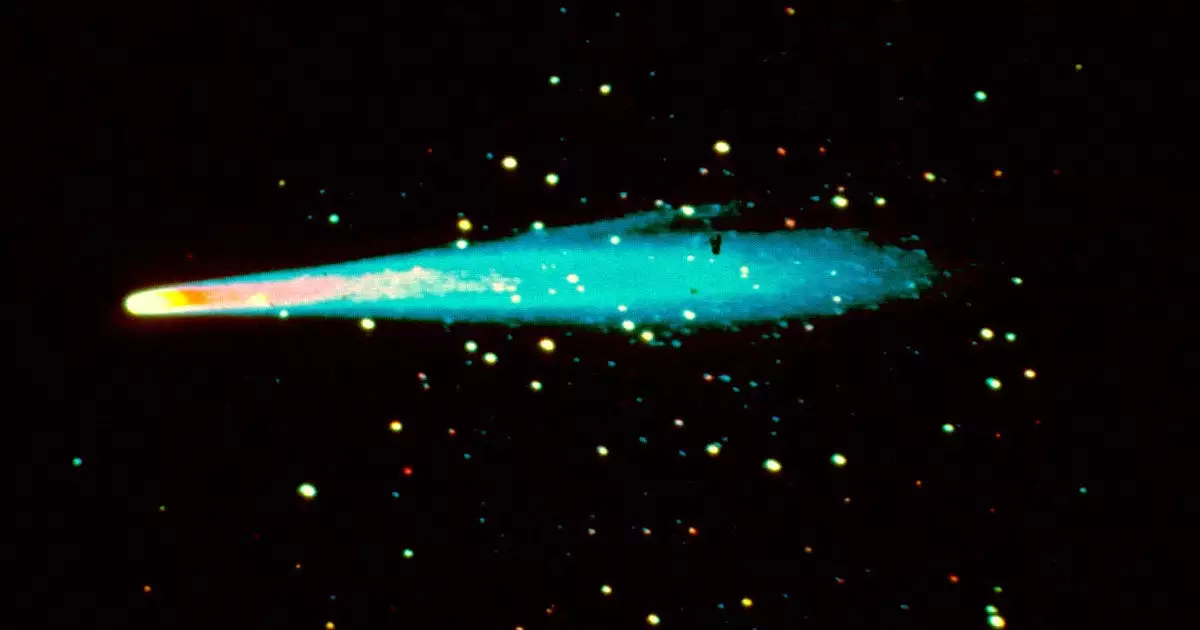
The arrival of 3I/ATLAS—a cosmic traveler from beyond our solar system—has sent ripples through the corridors of both scientific institutions and boardrooms. As only the third confirmed interstellar object to grace our celestial neighborhood, 3I/ATLAS is rewriting the playbook for cometary science, planetary defense, and the economics of space infrastructure. Its peculiar chemical profile—an unexpectedly high CO₂/H₂O ratio, early outgassing at six astronomical units, and a dust cocoon in lieu of a classic tail—has confounded models and electrified the global research community.
Yet, the true significance of 3I/ATLAS lies not only in its mysteries, but in the technological, economic, and strategic reverberations its passage is already setting in motion.
Distributed Sensor Networks and Agile Spacecraft: The New Normal
The campaign to observe 3I/ATLAS is a masterclass in technological orchestration. For the first time, an armada of heterogeneous space assets—Hubble, JWST, TESS, and soon SPHEREx—are operating as a distributed sensor network, fusing data in near real-time. The implications extend far beyond astronomy. Rapid cloud-based downlink and advanced machine-learning pipelines, honed to flag transient cosmic phenomena, are directly translatable to terrestrial domains such as Earth observation and defense surveillance.
NASA’s willingness to re-task legacy spacecraft like the Mars Reconnaissance Orbiter and Juno for opportunistic science marks a pivotal shift. This “software-defined spacecraft” paradigm—where mission objectives can pivot dynamically—demonstrates how asset longevity and scientific agility are no longer mutually exclusive. Commercial satellite operators, ever mindful of return on investment, are watching closely as these principles promise to unlock new revenue streams and compress the time from observation to insight.
The prospect of intercepting interstellar objects, once the stuff of science fiction, is now a serious technical roadmap. Concepts like Project Lyra, which envision rapid-response interception missions, are fueling private investment in high-impulse propulsion, autonomous navigation, and miniaturized analytics. These technologies, already attracting capital in hypersonics and lunar logistics, stand to benefit from the urgency and visibility that 3I/ATLAS brings.
Economic Realignment: Deep-Space Sensing and Risk Paradigms
The economic ripples of 3I/ATLAS are as profound as its scientific ones. Heightened media attention and the sheer unpredictability of interstellar objects are catalyzing procurement cycles for next-generation sensors—infrared detectors, cryogenic systems, and AI-enhanced spectrometers. Telescope time is now a strategic commodity, and public-private partnerships are accelerating to meet the demand for deep-space instrumentation.
Perhaps more consequential is the recalibration of risk in planetary defense. The anomalous chemistry of 3I/ATLAS calls into question the adequacy of existing risk models, particularly regarding exotic volatiles and structural unknowns. Insurers and satellite operators are being forced to revisit actuarial tables and debris-mitigation strategies, a shift likely to stimulate demand for both observation services and kinetic deflection R&D.
Speculation about the resource potential of CO₂-rich interstellar bodies is also re-entering the discourse. Venture capitalists tracking in-situ resource utilization for lunar and Martian projects are parsing 3I/ATLAS data for clues that could reshape market sizing and technology readiness assessments.
Geopolitical Chess and the Uncharted Legal Frontier
The observation campaign for 3I/ATLAS is not just a scientific endeavor—it is a subtle exercise in scientific soft power. Multinational telescope scheduling and joint data analysis echo the diplomatic choreography of the International Space Station, allowing nations to signal technological prowess without overt military posturing. The specter of future sample-return missions, however, raises thorny questions about the governance of non-terrestrial materials. The Outer Space Treaty’s non-appropriation clause, already stretched by lunar ambitions, may soon be tested in ways never before imagined.
Meanwhile, the convergence of interstellar science with UAP (Unidentified Anomalous Phenomena) protocols is drawing new attention from defense agencies. The need for systematic detection and civilian-military data sharing is driving upgrades in sensor arrays and analytics—a trend that could redefine the boundary between scientific discovery and national security.
Executive Imperatives: From Digital Twins to Talent Wars
The technological spillover from 3I/ATLAS is already manifesting in unexpected quarters:
- Climate Analytics: The CO₂/H₂O spectral differentiation techniques developed for interstellar study mirror those used in terrestrial greenhouse-gas monitoring, opening avenues for cross-licensing and innovation in earth-systems startups.
- Digital Twin Modeling: Simulating the thermophysical behavior of such an object pushes the limits of multiphysics modeling, informing digital twin strategies across aerospace and energy sectors.
- Talent Pipeline: High-profile research on interstellar phenomena is magnetizing AI scientists and cryogenic engineers, tightening labor markets in adjacent fields from quantum computing to advanced battery technology.
For executives and strategists, the message is clear: Prioritize software-upgradable architectures, hedge propulsion R&D toward high-impulse and solar-electric hybrids, and track procurement opportunities in planetary defense and deep-space sensing. Policy stakeholders must integrate interstellar object monitoring into national strategies and advance international dialogue on sample-return governance—lest legal ambiguity chill private investment at the dawn of a new space economy.
As 3I/ATLAS sweeps through the inner solar system, it is not merely a scientific curiosity, but a catalyst—reshaping technological priorities, capital flows, and the very frameworks by which humanity navigates the cosmos. Those who can translate today’s anomalies into tomorrow’s strategic assets will define the next era of extraterrestrial enterprise.

 By
By
 By
By

 By
By
 By
By

 By
By