

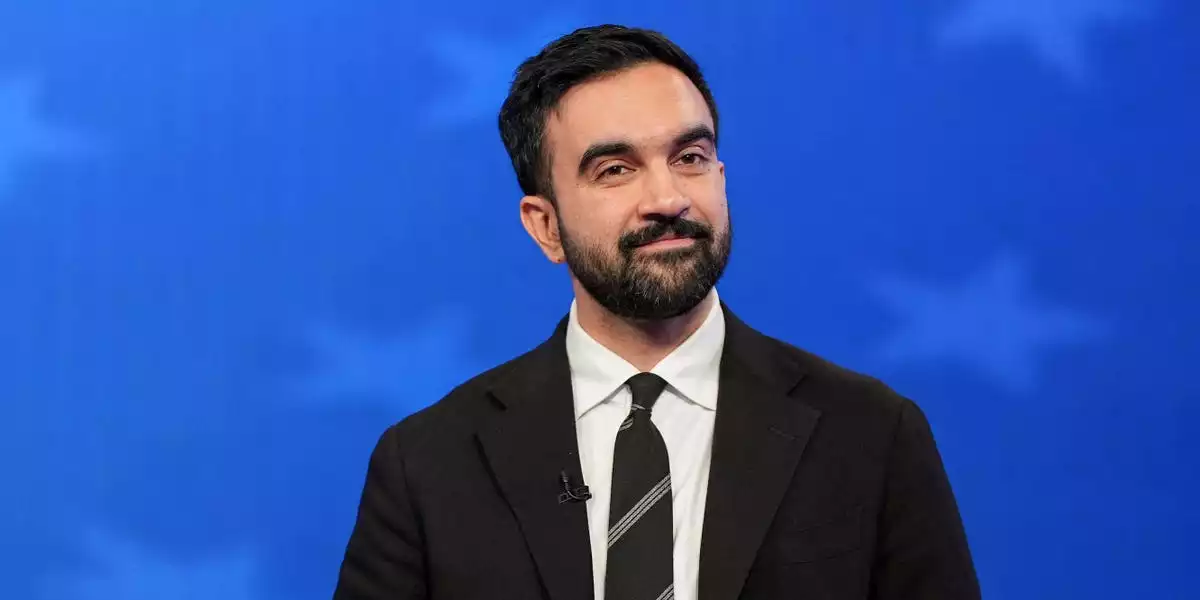

A Progressive Wave Reshapes New York’s Political and Economic Landscape
In a city where the skyline is as much a monument to ambition as it is to capital, the ascendance of Zohran Mamdani—a democratic-socialist state assemblyman—signals a profound recalibration. Polling well ahead of establishment figures like Andrew Cuomo and Republican Curtis Sliwa, Mamdani’s mayoral bid is not merely about personalities or party lines. It is a referendum on the relationship between wealth, governance, and the lived realities of New Yorkers. His platform, anchored by a two-point surtax on incomes above $1 million and a trenchant critique of billionaire influence, has drawn an extraordinary counteroffensive: nearly $10 million in super-PAC spending from a cadre of high-profile donors, including Joe Gebbia, Bill Ackman, and Ronald Lauder. Yet, the resilience of Mamdani’s support reveals a city—and perhaps an era—at an inflection point.
High-Earner Taxation: Elasticity, Mobility, and Fiscal Precarity
Mamdani’s proposed surtax would elevate New York City’s combined state and local top marginal rate to nearly 15%, surpassing even California’s famously high 14.4% and dwarfing Florida’s tax-free allure. This is not a trivial adjustment. The pandemic has loosened the gravitational pull of Manhattan’s office towers, enabling high earners to decamp for the Sun Belt’s tax havens with unprecedented ease. The city’s Aa2 Moody’s rating, a slender notch above the median for major U.S. metros, could be imperiled if a shrinking high-income tax base becomes more than a hypothetical. Even a modest 15–25 basis point rise in borrowing costs—translating to $60–$100 million annually—would ripple through municipal budgets, compounding the stakes of policy experimentation.
For investors and corporate strategists, this is a moment to reassess exposure. Discount rates on New York-centric assets may need upward revision, and site-selection models should incorporate the real possibility of accelerated talent migration. Yet, the city’s magnetic draw for creative and technical talent remains, for now, a counterweight to centrifugal fiscal forces.
Tech Policy: Between Disruption and Opportunity
Mamdani’s policy signals are as ambitious as they are disruptive. Proposals for public-option broadband, municipal data cooperatives, and algorithmic transparency mandates could destabilize incumbent business models—particularly for private ISPs and data-driven platforms. The mayoral front-runner’s openness to gig-economy regulation, reminiscent of California’s AB5 and the EU’s platform worker protections, portends a new regulatory climate for on-demand labor and tech firms headquartered in the city.
Airbnb’s prominent opposition to Mamdani—via super-PAC largesse—raises the specter of retaliatory crackdowns on short-term rentals, an area already under the microscope with the advent of Local Law 18. For technology leaders, the message is clear: compliance impact assessments and regulatory scenario planning are no longer optional. The prospect of “robot taxes” or automation dividends, inspired by experiments in Seoul and under EU consideration, adds another layer of complexity for firms with high-automation roadmaps.
Yet, there is opportunity amid the tumult. A progressive administration could channel new revenues into housing and transit, easing cost-of-living pressures for mid-income tech workers and stabilizing the city’s human capital base. Public-sector tech fellowships and civic-tech procurement could open novel channels for recruitment and partnership, rewarding those who engage constructively with the new policy environment.
Capital, Transparency, and the New Urban Bargain
The concentrated pushback from billionaire donors has transformed the mayoral race into a national bellwether for progressive taxation and the limits of elite influence. The deployment of activist capital through lightly regulated 527 and 501(c)(4) vehicles underscores the resilience of “dark money,” even as regulatory scrutiny intensifies. For institutional investors and corporate boards, the reputational risks of opaque political spending are rising, particularly as ESG frameworks increasingly treat governance transparency as material.
This contest is not an isolated phenomenon. It echoes a broader trans-Atlantic realignment—Barcelona’s municipalist surge, Berlin’s rent-cap referendum, Chicago’s progressive mayoralty—where urban centers are becoming laboratories for post-neoliberal governance. The convergence of housing affordability crises and wealth inequality is making such surges structurally repeatable, rather than episodic.
For decision-makers, the imperative is twofold:
- Portfolio and Site-Selection: Diversify geographic risk, but maintain a foothold in New York’s unique talent and capital ecosystem.
- Government Affairs: Shift from defensive lobbying to proactive partnership, especially on workforce development, digital equity, and climate adaptation.
- Talent Strategy: Adjust compensation models and embrace remote-first policies to retain key personnel amid fiscal shifts.
The city’s next chapter will be written at the intersection of capital and labor, innovation and equity. For those willing to adapt, New York remains not just a stage for ambition, but a proving ground for the future of urban governance.

 By
By
 By
By
 By
By
 By
By

 By
By
 By
By

 By
By
 By
By










