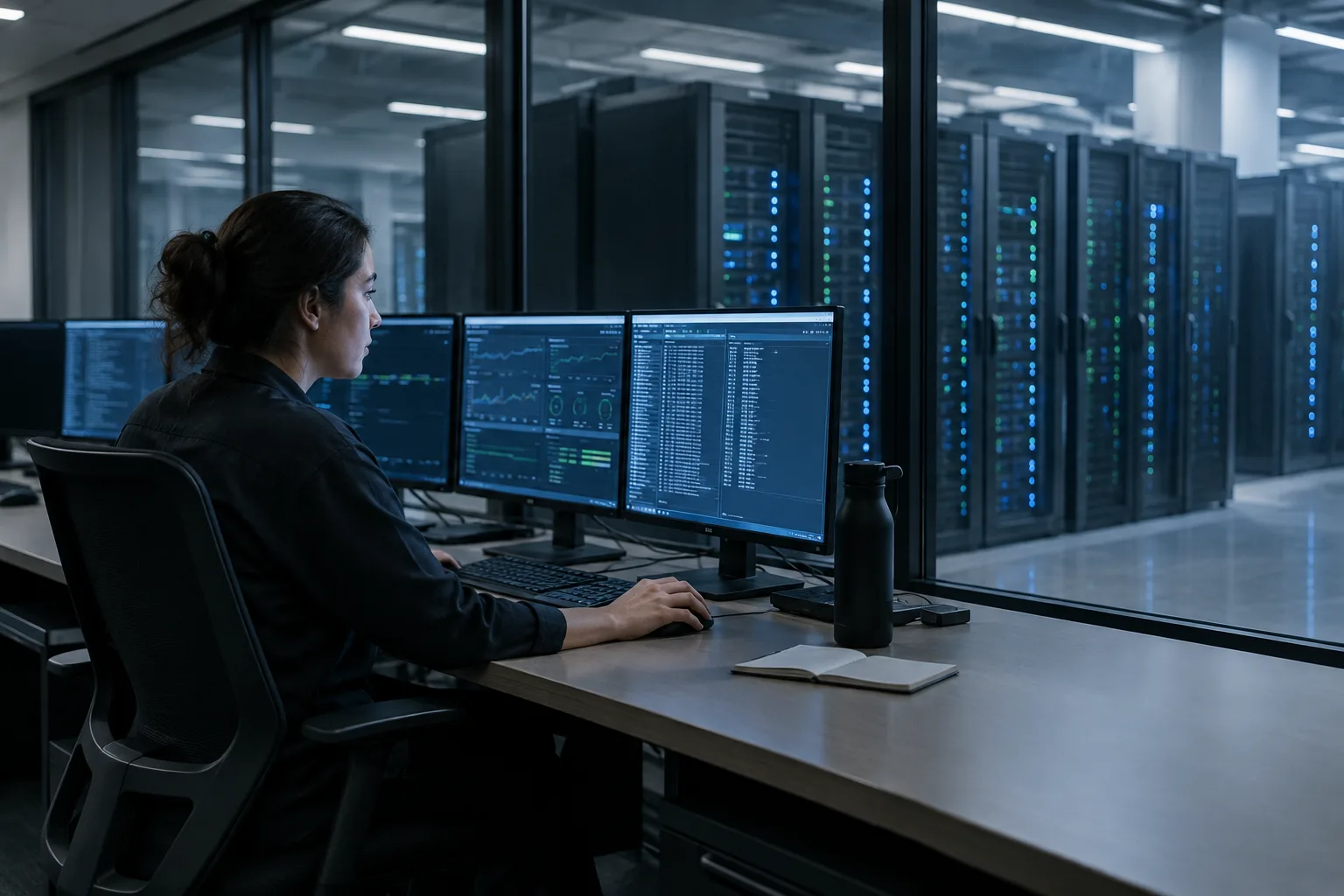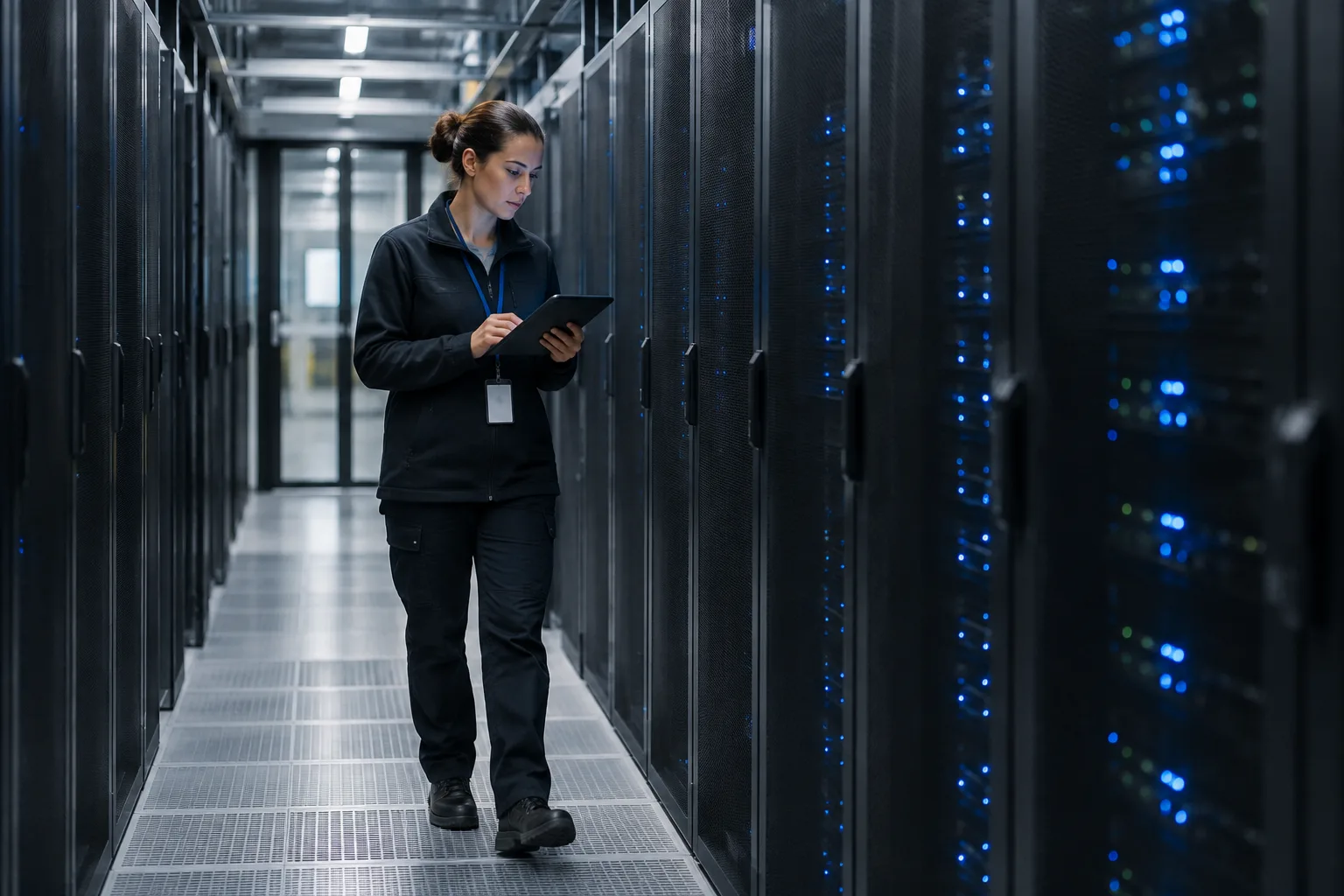

The International Energy Agency’s World Energy Outlook 2026 lands with a clear message for the cloud economy: the AI data-centre boom is no longer just a chips-and-capex story. It is now a power-systems story, with immediate consequences for hyperscalers, utilities, equipment vendors, investors and the communities asked to host the buildout. The report says global data-centre investment reached USD 565 billion in 2025 and anticipates another USD 4 trillion of associated spending by 2030.
The reader’s real question is simpler than the headline numbers: is this a durable infrastructure demand wave that power systems can absorb, or are developers committing capital faster than grids and supply chains can deliver electricity? The IEA’s answer is not that demand is imaginary. It is that “time to power” is becoming the operational test that separates a press release from an energized campus.
Global data-centre electricity use grew 17% in 2025, according to the IEA, and the industry already has about 120 GW of aggregate capacity. In the agency’s Stated Policies Scenario, another 120 GW is added by the end of the decade, with more than three-quarters intended for AI-optimised servers. Nearly 80% of today’s capacity sits in China, the EU and the United States, which means the grid consequences are concentrated in a relatively small number of power markets.
The scale of the pipeline is also becoming more visible. The IEA says it is tracking 93 purpose-built AI data centres using satellite imagery. Its inferred potential capacity has risen tenfold in 24 months to 17 GW and could reach about 50 GW if those projects are completed. That is a useful measure of intent and momentum, but not the same thing as signed interconnection, financed substations, secured transformers or servers actually drawing power.
The bottleneck is no longer just capital
The bullish case for AI infrastructure is easy to see. Money is real. So is demand. The report says data-centre electricity consumption doubles to about 1,000 TWh by 2030 in STEPS, with AI-optimised capacity driving roughly three-quarters of the increase. That makes this one of the more consequential demand shocks in modern power planning.
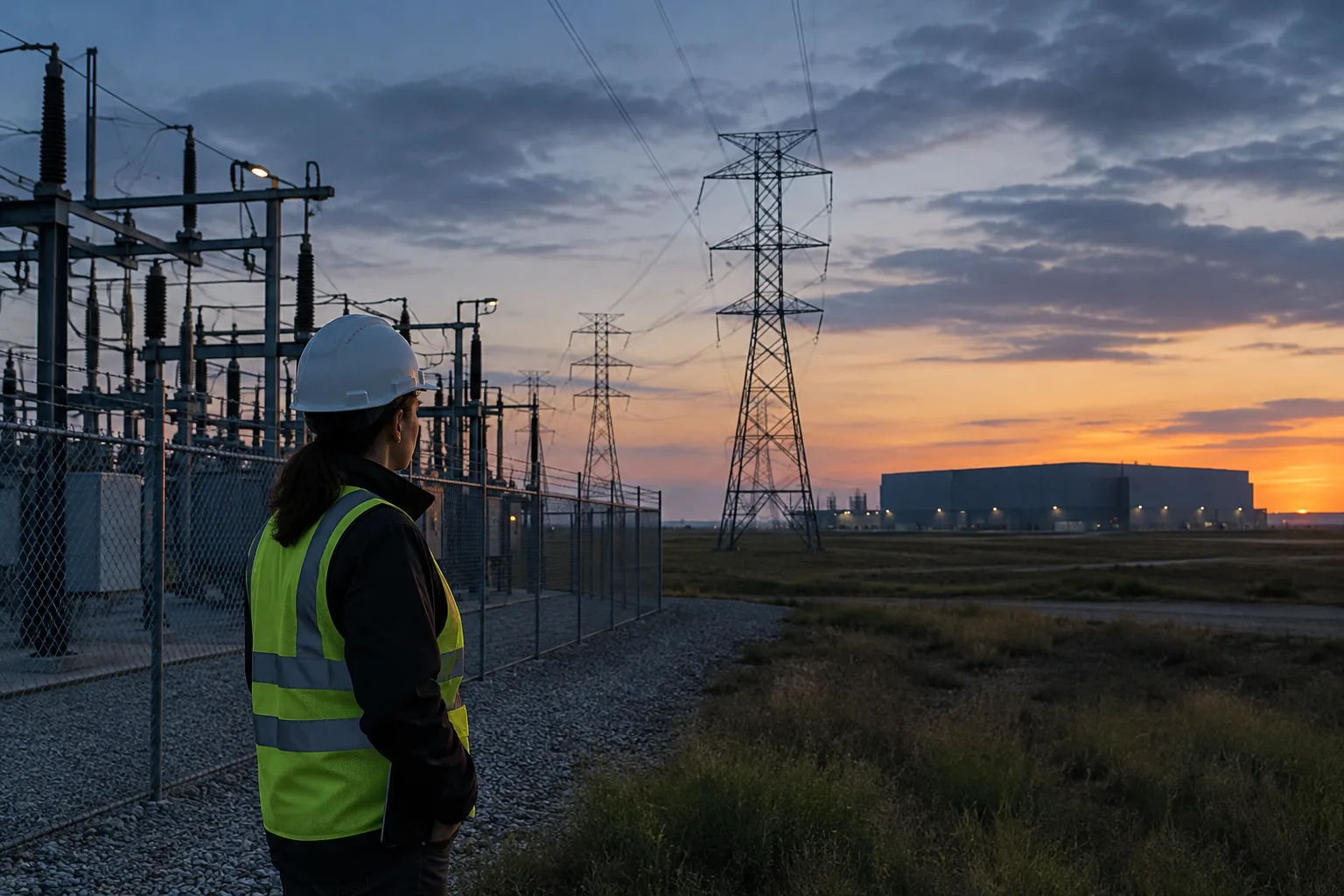
But the constraining factor is increasingly physical sequence, not investor enthusiasm. AI developers can order servers and announce campuses far faster than utilities can build substations, transmission, generation and turbine capacity. The IEA says grid queues already stretch for years in several jurisdictions. It also points to bottlenecks in advanced chip packaging, memory, transformers, turbines and other equipment. A site can have land, financing and a public launch and still stall on a transformer delivery slot or an interconnection study.
That is why headline campus size matters less than readiness to energize. A serious project now needs an interconnection path, a credible plan for firm power, and evidence that the enabling hardware is actually on order. Without that, the practical capacity available to cloud customers can trail the announced capacity by years.
PPAs help, but they do not solve deliverability
One reason the market can look more decarbonised on paper than it does on the wire is the gap between contracts and physical supply. The IEA says nearly half of commercial data-centre electricity demand is covered by renewable power-purchase agreements. That matters for financing clean generation and for corporate carbon claims, but it does not guarantee immediate hourly local delivery to a constrained campus.
For operators, that distinction is no longer academic. If the local grid is congested, a renewable PPA may improve the project’s energy portfolio without shortening the wait for a connection. The same logic applies to backup and balancing tools. The IEA says data-centre battery demand could reach about 25 GW, which may help sites ride through constraints or operate more flexibly, but batteries do not replace the need for transmission access and dependable bulk supply.
The same timing problem shadows gas. As of August 2026, the IEA says about 180 GW of gas-fired capacity was planned in the United States to supply data centres, versus 11 GW in Canada and 4 GW elsewhere. On paper, that looks like a massive firm-power response. In practice, turbine backlogs mean most of the planned U.S. capacity is not expected to operate until the 2030s. So even where developers turn to gas, it is not necessarily a quick route around the queue.
The costs and risks are starting to move downstream
This is where the story broadens beyond hyperscalers. If time to power stretches, someone absorbs the delay or pays to reduce it. Developers can wait for a grid connection, finance bring-your-own-power arrangements, run workloads more flexibly around constraints, or shift expansion to places with available capacity. Each option redistributes cost and risk.
For cloud and AI buyers, the practical issue is whether promised compute shows up when expected and at what price. For utilities and regulators, the harder question is which reinforcements are justified, who funds substations and transmission upgrades, and how local tariffs evolve. The IEA does not settle who ultimately pays for grid reinforcements, and it does not show how those costs might reach households or smaller businesses. That uncertainty matters as local communities weigh jobs and tax base against land use, water demands, emissions and power prices.
Investors, meanwhile, need a harsher scorecard than “announced megawatts.” The useful checks are interconnection status, transformer and turbine orders, firm-power arrangements, the role of on-site generation, and whether a project can operate flexibly rather than at a flat, always-on load. A renewable contract should be separated from physical deliverability. A gas plan should be tested for whether it is genuinely temporary or a long-lived emissions commitment.
The emissions trade-off is becoming harder to wave away. The IEA says emissions associated with data-centre electricity are on track to rise 70% by 2030. That does not mean every project becomes a fossil project, or that planned gas capacity will all be built. It does mean the industry’s expansion path is being shaped by what can be connected and equipped in time, not just by what companies would prefer to power with clean energy.
The upshot from World Energy Outlook 2026 is that the AI buildout looks durable, but not frictionless. Demand, capital and project ambition are all there. The limiting variable is whether power infrastructure can be delivered in the same timeframe as the servers it is meant to feed. For the next few years, the smartest question in this market may be the least glamorous one: not how large a campus is, but how fast it can actually get power.

 By
 By
 By

 By

 By