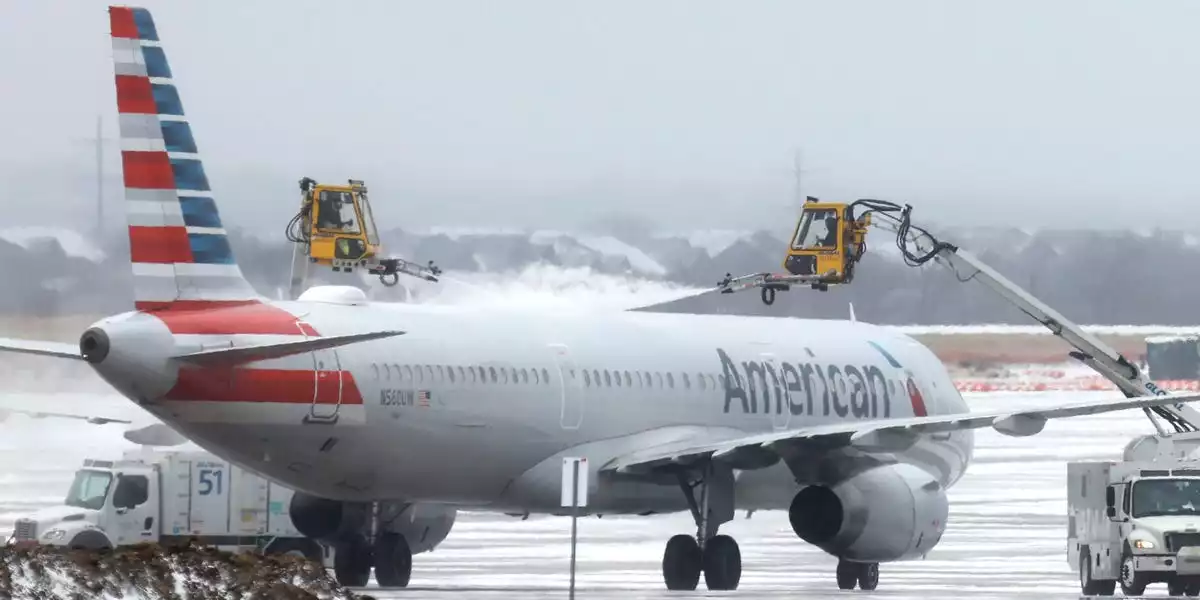

When the Sky Closes: Winter Storm Fern and the Anatomy of Aviation Disruption
The American air transportation network, a marvel of precision and scale, met its match in Winter Storm Fern—a tempest that grounded nearly 19,500 flights and left the nation’s busiest hubs paralyzed. On a single Sunday, more than 11,000 departures vanished from boards, a disruption not seen since the pandemic’s darkest days. Boston Logan hemorrhaged 60% of its departures; Dallas–Fort Worth, a linchpin of American Airlines, lost three-quarters of its schedule. Charlotte and Atlanta, too, became studies in sudden stillness. For all the industry’s technological bravado and operational choreography, Fern exposed the fault lines running beneath the tarmac.
The Technology Paradox: AI, Automation, and the Limits of Prediction
Airlines have poured billions into AI-driven dispatch and crew-scheduling systems, betting that predictive analytics would outpace chaos. Yet, Fern’s capricious snow bands outmaneuvered even the most advanced digital platforms. The storm revealed a persistent gap: the need for seamless integration between real-time meteorological data, network optimization engines, and airport surface-condition sensors. The promise of automation—robotic de-icing rigs, heated pads, intelligent chemical deployment—remains unevenly realized, with many hubs still reliant on legacy systems. This technological patchwork elongated ground times, strained crew-duty limits, and underscored the urgency for holistic, data-fused solutions.
Digital irregular-operations management, a focus since the 2022 holiday meltdowns, showed incremental progress. Mobile self-rebooking tools and automated pricing controls softened the blow for some passengers, yet call-center volumes soared by more than 300%. The customer experience, measured in net promoter scores and social sentiment, suffered. Next-generation conversational AI and proactive compensation protocols—voucher issuance before the ask—could become the new standard for mitigating disruption’s reputational drag.
Infrastructure, too, was stress-tested. Snow removal at Dallas–Fort Worth lagged behind FAA benchmarks, hinting at deferred capital investments in airside equipment. As airlines trim carbon-intensive reserve fleets under ESG scrutiny, airports themselves are being called to shoulder more of the resiliency burden, from microgrid-enabled hangars to shared de-icing infrastructure.
The Economic Shockwave: Costs, Cascades, and Capital Markets
The direct financial blow to airlines is estimated at $180–$220 million—a sum that slices away 3–4% of the industry’s expected January EBIT. The pain is not limited to lost ticket sales; ancillary revenue streams such as baggage, seat selection, and same-day change fees evaporated, shrinking unit revenue by up to two points for the week. The ripple effects radiated outward:
- Cargo delays intersected with already-tight trucking capacity, threatening just-in-time supply chains in pharmaceuticals and high-value electronics.
- Hotel and rideshare demand in hub cities surged, shifting economic activity rather than erasing it, while business travelers weighed the wisdom of in-person meetings against the reliability of virtual alternatives.
- Capital markets responded with a measured hand, treating Fern as a one-off but signaling that weather risk will loom large in Q1 guidance. Analysts are poised to interrogate hedging strategies—weather derivatives, contingent labor pools—as part of a new normal.
Strategic Recalibration: Resilience as Competitive Edge
Fern’s legacy will be written not just in canceled flights but in boardroom agendas. The storm has accelerated a reckoning across the aviation ecosystem:
- Hub-and-spoke concentration risk is under fresh scrutiny. Airlines are exploring dual-hub redundancy and selective point-to-point expansion, leveraging the range and economics of new-generation aircraft to thin out their network’s vulnerability.
- Workforce agility emerged as a decisive factor. Reserve pilots and cross-trained ground staff enabled some carriers to recover faster; upcoming union negotiations will likely center on flexible duty clauses and fatigue management.
- Climate-resilience capital planning is shifting from ESG showcase to necessity. Heated gates, de-icing fluid capture, and resilient power systems are becoming core investments, with the dual aim of operational continuity and emissions reduction.
The broader context is equally dynamic. Air-cargo shippers, burned by storm-induced opacity, are demanding blockchain-level visibility. Each disruption strengthens the case for high-speed rail on short-haul corridors, a subplot that infrastructure investors are watching with keen interest. Meanwhile, weather-indexed insurance products, priced via satellite data, are gaining traction as airlines seek to transform unpredictable operating expenses into manageable premiums.
For decision-makers, the path forward is clear but challenging: integrate next-generation weather-ops platforms, reassess network topology for climate resilience, and expand cross-industry collaboration. Trust mechanisms—blockchain-verified refunds, transparent voucher systems—will be essential to restoring passenger confidence and regulatory goodwill.
Winter Storm Fern, in its icy ferocity, has forced the industry to confront the limits of its systems and the urgency of adaptation. Those who seize this moment—leveraging data, technology, and strategic alliances—will not merely weather the next storm, but redefine the contours of competitive advantage in an era where resilience is the ultimate currency.

 By
By
 By
By
 By
By
 By
By

 By
By

 By
By