

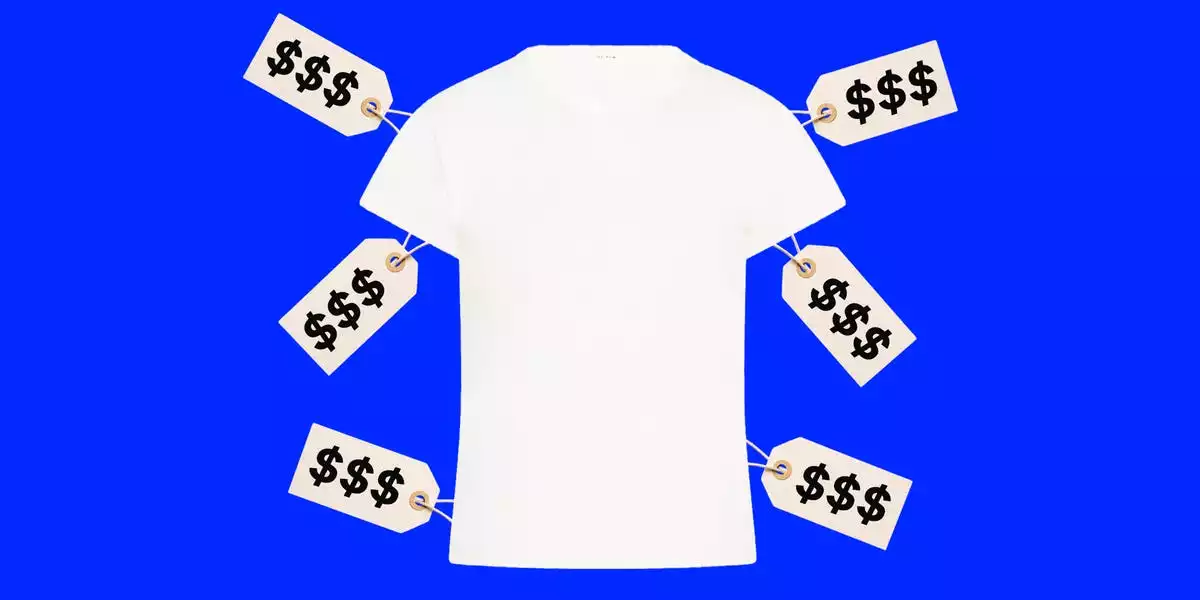

The Paradox of the $520 T-Shirt: Rethinking Value in the Age of Luxury Scarcity
In the heart of Manhattan, a line snakes around the block—not for the latest gadget, but for a white cotton T-shirt. The Row, the minimalist fashion house founded by Mary-Kate and Ashley Olsen, has managed to turn the most democratic of garments into a rarefied object of desire, listing its Italian-made tee at a staggering $520. At a recent sample sale, demand ran so hot that enterprising consumers paid professional “linesitters” to secure a discounted $130 price. The spectacle is not merely a testament to brand loyalty; it is a case study in the new economics of luxury, where value is less about fabric and stitching, and more about narrative, scarcity, and the delicate choreography of desire.
Scarcity, Status, and the Veblen Effect: The New Luxury Playbook
At first glance, the price tag strains credulity. Analysts estimate that the cost of goods sold—including the finest Italian long-staple cotton and artisanal labor—hovers between $27 and $40 per unit. The remainder, a gross margin north of 90%, is pure intangibility: a premium paid for the aura, not the artifact. This is the logic of the Veblen good, where higher prices stoke, rather than suppress, demand among status-driven consumers.
Several forces conspire to make this possible:
- Wealth Polarization: Persistent wage growth among the top decile and buoyant equity markets have insulated luxury buyers from inflationary pressures that batter the mid-market.
- Constrained Supply: The Row’s intentionally limited production runs and conservative replenishment cycles manufacture scarcity as much as they manufacture clothing.
- Discreet Exclusivity: Eschewing loud logos and social media blitzes, The Row cultivates an “invisibility premium.” In a world saturated with branding, the absence of overt signals becomes the ultimate signal.
For luxury executives, the lesson is clear: pricing power is a moat only as long as the mystique remains undiluted. The risk of overextension—through volume expansion or aggressive discounting—can erode the very cachet that commands the premium.
Data, Craft, and the Quiet Rise of Authentication
While some luxury rivals chase the latest digital trends—NFTs, “phygital” drops, and algorithmic hype cycles—The Row doubles down on a subtler fusion of tradition and technology. Its operating model is a study in contrasts:
- Manual Craft, Data-Driven Allocation: High-touch clienteling, powered by discreet CRM analytics, enables the brand to optimize scarcity without sacrificing intimacy. Waitlists, social influence mapping, and lifetime value calculations inform who gets access, and when.
- Supply Chain Storytelling: With geopolitical volatility threatening Italian sourcing, luxury brands are exploring “dual-provenance” narratives—think Italian yarn spun in Japan—not just as a hedge, but as a new chapter in the brand’s story.
- Stealth Authentication: As prices for “commodity” categories like T-shirts breach the $500 mark, the incentive for counterfeiting surges. Expect a quiet proliferation of embedded RFID chips, blockchain certificates, and private-label authentication apps—technologies that may never be advertised, but will be indispensable.
The Next Frontier: Intangibles, Sustainability, and Digital Scarcity
The implications of The Row’s strategy extend far beyond fashion. Investors and strategists are increasingly focused on how brands convert intangible assets—cultural capital, narrative equity, and community belonging—into recurring cash flows. This shift is reshaping balance sheets, M&A valuations, and even the mechanics of luxury itself.
Emerging trends include:
- Bifurcation of the Apparel Market: True luxury, defined by double-digit EBIT margins and demand-led scarcity, is pulling away from value apparel, which faces relentless price compression and consolidation.
- Sustainability as Status: High unit prices enable slower consumption cycles and higher repair budgets, aligning with the “buy-better, buy-less” ethos of affluent Gen-Z consumers. Circular services—trade-ins, rentals, transparent carbon accounting—are moving from CSR afterthoughts to core commercial levers.
- Digital Scarcity and Hybrid Experiences: As Web3 tools mature, the line between physical and digital exclusivity blurs. A $520 T-shirt may soon grant access to members-only salons, metaverse previews, or resale royalties—unlocking new vectors of value.
For executives, the path forward is both clear and daunting. Audit your brand’s price elasticity, embed authentication technologies before counterfeits proliferate, and treat provenance as a storytelling asset. Above all, resist the siren call of mass exposure; in the new luxury calculus, depth of relationship trumps reach, and invisibility may be the ultimate mark of distinction.
As Fabled Sky Research has observed, the firms that master the interplay of micro-scale craftsmanship, data-enabled scarcity, and intangible-asset storytelling will capture value far beyond the cost of cotton. The $520 T-shirt is not an aberration—it is a harbinger of the next chapter in the business of desire.

 By
By
 By
By

 By
By
 By
By
 By
By

 By
By







