
The Suburban Cart: How a Single Shopper Signals a Sea Change in U.S. Grocery Retail
A return to Aldi after four decades—by a shopper in suburban Chicago—may seem, at first blush, like a mere curiosity. Yet, behind this personal migration lies a profound shift in the American grocery landscape, one that is quietly but inexorably redrawing the boundaries of competition, consumer expectation, and operational discipline. The story is not simply about nostalgia or individual preference; it is a microcosm of three converging forces reshaping food retail: the mainstreaming of hard-discount formats, the ascent of premium private-label goods, and the strategic might of operational minimalism.
Inflation, Private-Label Ascendancy, and the New Middle-Class Migration
For decades, discount grocery was the province of the price-sensitive lower quintiles—a place where trade-offs were accepted as the cost of thrift. Today, persistent food inflation, hovering stubbornly at 6–8% year-over-year for core staples, has upended this calculus. The “trade-down” effect, once confined to the economically vulnerable, now sweeps through the middle-income demographic. Aldi, with its curated selection of organic SKUs—often priced a quarter below conventional grocers—has erased the stigma that once shadowed the discount experience.
This migration is not merely a matter of price, but of scale and leverage. Each new middle-class convert strengthens Aldi’s bargaining power with suppliers, fueling a virtuous cycle:
- Higher volumes drive stronger cost positions
- Deeper price gaps accelerate market share gains
- Private-label penetration rises, further marginalizing national brands
For legacy branded CPGs, the threat is existential. The U.S. market now echoes the European experience of the early 2010s, when discounters breached the 15% share threshold and permanently recalibrated the industry’s pricing architecture. The flywheel effect is unmistakable: as private-label quality rises and consumer perception shifts, the old loyalty to national brands is eroded, replaced by a new calculus of value and authenticity.
Operational Minimalism: The Engine of Disruption
Aldi’s competitive edge is not built on digital wizardry or personalized offers, but on a relentless commitment to operational engineering. The stores themselves, rarely exceeding 15,000 square feet, are a study in efficiency—minimizing overhead, accelerating inventory turns, and enabling hyper-local labor scheduling. The cart-rental and bring-your-own-bag policies, often dismissed as quirks, are in fact strategic levers: they externalize labor and packaging costs, while signaling a genuine commitment to sustainability. In an industry where U.S. retailers collectively spend billions on single-use bags, Aldi’s model is both a cost advantage and a brand statement.
The SKU count tells the story in numbers: 1,600–1,800 products, versus more than 30,000 at full-line grocers. This radical simplification enables high bay-pallet merchandising, slashes out-of-stock rates, and streamlines replenishment. Notably, Aldi eschews the loyalty-card data arms race, relying instead on point-of-sale velocity and supplier-level cost analytics. This divergence from the Kroger/Albertsons model—deep consumer analytics versus ruthless SKU and cost optimization—underscores that there is more than one viable AI path in modern retail.
Consumer Experience and the “Treasure Hunt” Effect
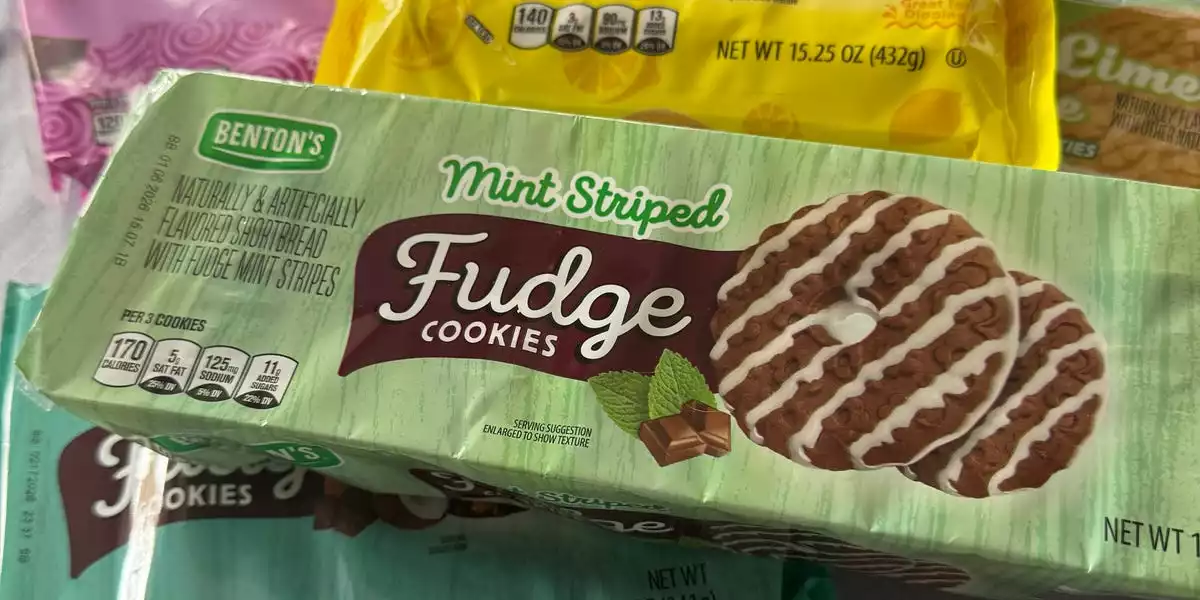
Perhaps most intriguing is how Aldi has managed to imbue its stripped-down model with a sense of discovery. The weekly “Aldi Finds” specials, reminiscent of Costco’s treasure-hunt dynamic, drive repeat visits and limit markdown risk through finite inventory runs. The psychological shift is palpable: where once private-label meant compromise, it now signals artisanal authenticity—especially among Millennials and Gen-Z. The shopper’s delight in Benton’s cookies or L’Oven Fresh bread is not an outlier, but a reflection of a broader redefinition of quality and value.
Strategic Implications Across the Grocery Value Chain
The ramifications for industry stakeholders are profound:
- Traditional grocers must brace for a 3–4-point shift toward private-label share, recalibrating shelf architecture and labor models—potentially through robotics and computer-vision systems—to preserve margin.
- Branded CPG manufacturers face an innovation imperative: discounters are both threat and opportunity, offering test-and-learn loops for new SKUs but demanding clear functional or experiential differentiation.
- Tech and logistics providers find new opportunities in micro-fulfillment and sustainable packaging, as Aldi’s format and partnerships reveal untapped demand for automation in smaller footprints.
- Investors and strategists are wise to monitor regional market share inflections and Aldi’s digital posture, as any pivot toward owned e-commerce or loyalty data could rewrite the retailer’s asset-light narrative.
What appears, on its surface, to be a single shopper’s rediscovery of Aldi is, in truth, a signal event—a harbinger of structural change. As macroeconomic forces, evolving consumer psychology, and operational discipline converge, the American grocery sector finds itself on the cusp of a transformation as irrevocable as it is overdue. The hard-discount curve, once a European phenomenon, is now a defining feature of the U.S. retail landscape. For executives, investors, and innovators alike, the time to recalibrate is now.

 By
By
 By
By
 By
By
 By
By

 By
By
 By
By