


Werner Herzog’s cameo economy: when auteur credibility becomes platform strategy
Werner Herzog has long occupied a rarefied tier in global cinema—an auteur associated with philosophical intensity, documentary rigor, and an unmistakable voice. Yet his recent cultural footprint is increasingly defined not only by feature films and literary work, but by high-impact television and streaming cameos that function as both entertainment and strategic media signaling.
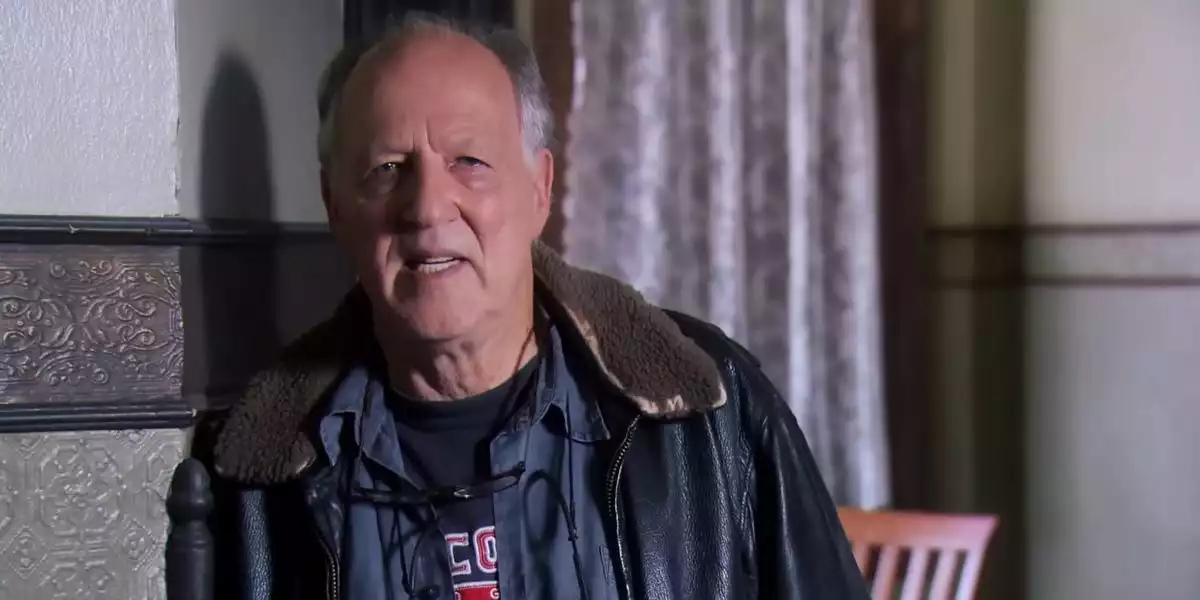
His 2015 appearance in *Parks and Recreation* (Season 7, “2017”) is a particularly instructive example. Cast as Keg Jeggings, an eccentric real-estate seller offering a property complete with bomb shelters, a fireman’s pole, and a staircase that leads nowhere, Herzog was reportedly given meaningful latitude to improvise. The result was a scene that landed with audiences as a kind of “event moment”—a short segment that travels far beyond its runtime via clips, quotes, and social sharing. Herzog himself later joked that the material was so effective “people peed their pants,” a blunt metric of comedic conversion that studios quietly value: memorable, repeatable, talkable.
This is not an isolated detour. Herzog’s voice work on *The Simpsons*, his role as “The Client” in Disney+’s *The Mandalorian*, and the release of his documentary *Ghost Elephants*—now streaming on Hulu and Disney+—collectively illustrate a modern entertainment reality: prestige and pop culture are no longer separate lanes. They are interoperable assets in a unified attention economy.
—
Cross-platform talent integration and the new logic of “authenticity at scale”
Herzog’s trajectory maps neatly onto a broader shift in how streaming services and legacy networks compete. In a market shaped by subscription fatigue and algorithmic discovery, platforms increasingly seek human signals of quality—recognizable creators who can confer legitimacy across genres and demographics.
From a business and technology perspective, Herzog’s cameos operate like a trust layer:
- For cinephiles, he represents artistic seriousness and cultural capital.
- For mainstream comedy audiences, he becomes a surprising, high-status comedic ingredient.
- For franchise viewers (notably sci-fi), he adds gravity and novelty without disrupting canon.
This is “cross-platform talent integration” in practice: a strategy akin to how technology companies onboard established brands or marquee partners to accelerate adoption. The cameo is not merely casting—it’s distribution-aware branding, designed to travel across social feeds, recommendation engines, and press cycles.
The Disney ecosystem highlights the industrial logic. By placing *Ghost Elephants* across Hulu and Disney+, Disney effectively treats Herzog as both content supplier and brand amplifier, using documentary prestige to broaden perceived value while keeping audiences inside the same subscription orbit. In a consolidating media landscape, this kind of internal portfolio leverage is becoming a default playbook: one creator, multiple touchpoints, diversified retention benefits.
—
Improvisation as agile production: creative autonomy as a measurable ROI lever
Herzog’s improvisational freedom on *Parks and Recreation* is more than a charming behind-the-scenes detail—it reflects a production philosophy increasingly aligned with agile methodologies in software and product development. Traditional TV pipelines favor predictability: locked scripts, controlled performances, minimal variance. But platforms and studios now face a different optimization problem: not simply delivering episodes on time, but producing moments that break through.
Improvisation functions like rapid iteration:
- It enables real-time experimentation on set, where performance and timing can be tuned to audience instincts.
- It can surface unexpected “killer features”—lines, gestures, or tonal pivots that become the scene’s signature.
- It reduces the risk of creative stagnation by allowing elite talent to contribute beyond execution into co-authorship.
In product terms, this resembles a hybrid workflow between planned releases and user-driven beta testing. The “user” here is the audience, and the feedback loop is mediated through laughter, rewatchability, and shareability. When a cameo becomes a cultural reference point, the return is not only artistic—it’s measurable in engagement, earned media, and long-tail discovery.
This also explains why certain creators are uniquely valuable in contemporary production environments. Herzog’s persona is itself a kind of modular asset: instantly legible, tonally distinctive, and adaptable across formats. That combination makes him unusually compatible with agile creative processes, where speed and surprise are competitive advantages.
—
Monetizing auteur versatility in a consolidated streaming marketplace
Herzog’s multi-medium presence points to a monetization model that resembles enterprise SaaS more than old Hollywood. Platforms increasingly aim to maximize lifetime value per talent, placing recognizable creators across multiple properties to generate compounding returns.
The economic logic is straightforward:
- Advertising and engagement uplift from “event” guest appearances in established series
- Subscriber retention driven by prestige documentaries and franchise roles
- Global licensing and catalog value as content libraries become strategic balance-sheet assets
- Portfolio cross-pollination, where one appearance nudges viewers into adjacent genres within the same platform ecosystem
This approach also supports audience segmentation without fragmentation. Herzog can activate distinct cohorts—comedy fans, documentary viewers, sci-fi loyalists—while keeping them inside a unified distribution umbrella. In periods of consumer caution, that matters: diversified entry points help platforms hedge against demand elasticity and reduce churn by ensuring there is always “another reason to stay.”
What emerges is a clear signal for media and technology leaders: the next phase of competition is not only about volume of content, but about interoperability of cultural assets—creators, IP, formats, and platforms designed to reinforce one another. Herzog’s cameos and streaming presence demonstrate how a singular artistic identity can be repurposed—carefully, credibly, and profitably—into a multi-surface strategy that meets audiences wherever they are, without diluting the brand that made the creator valuable in the first place.

 By
By
 By
By
 By
By


 By
By
 By
By







