
The Quiet Revolution: How End-to-End AI Is Rewriting the Autonomy Playbook
In the shadow of industry giants and the relentless march of sensor-laden robotaxis, a quieter revolution is taking shape on the streets of London. Wayve, a UK-based AI startup, is challenging the orthodoxy of autonomous vehicle development with a proposition as audacious as it is pragmatic: decouple advanced driver assistance from proprietary hardware and offer it as a plug-and-play intelligence layer for any automaker bold enough to license it. The implications ripple far beyond the technical, reaching into the economics, geopolitics, and regulatory frameworks that will define the next decade of mobility.
End-to-End Intelligence: Collapsing the Stack, Expanding the Possibilities
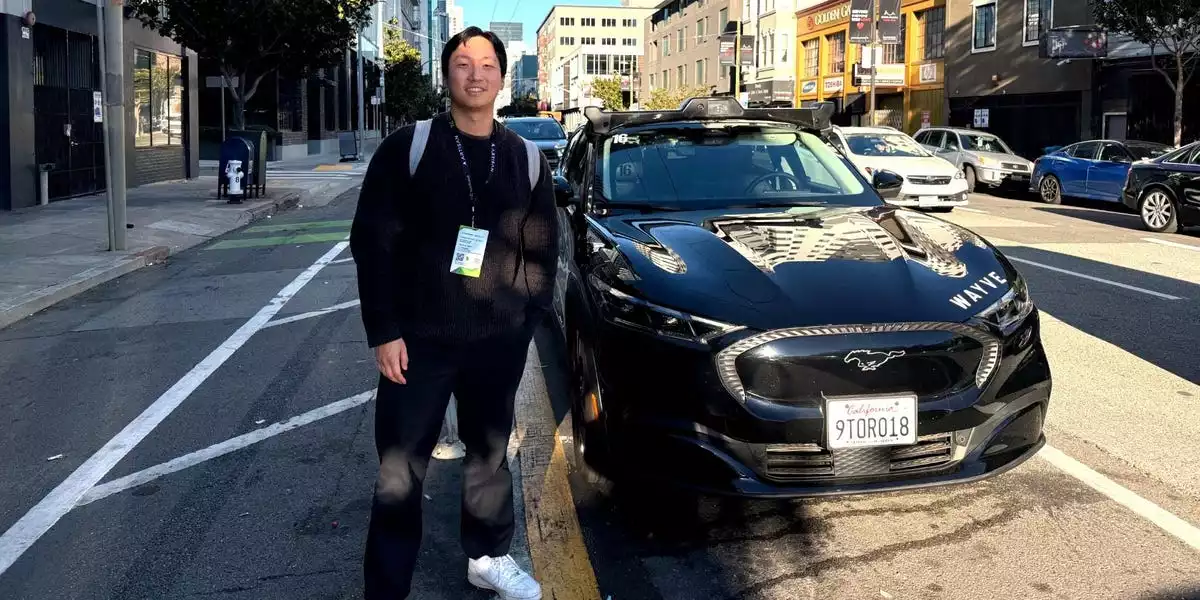
Traditional autonomous driving systems are intricate mosaics—perception, planning, and control, each a discrete module, each a potential point of failure or bottleneck. Wayve’s “AV2.0” upends this by collapsing the entire stack into a single neural policy, trained end-to-end on raw sensor data. The result is a system that, in a recent on-road demonstration, piloted a Ford Mustang Mach-E through the chaos of urban London using just five cameras and radar—a minimalist sensor suite that stands in stark contrast to the LiDAR-heavy, capital-intensive approaches of many incumbents.
Key advantages of this approach include:
- Reduced Latency: By eliminating handoffs between modules, the system can react to edge cases with greater speed—crucial in the unpredictable theater of city driving.
- Hardware Agnosticism: The neural network’s adaptability means OEMs can integrate autonomy without overhauling their sensor supply chains or inflating the bill of materials.
- Portability: With the right domain adaptation, the same core intelligence can leap from one vehicle platform to another, accelerating deployment across diverse fleets.
Yet, this architectural elegance comes at a cost: explainability. Regulators and insurers, rightly wary of black-box AI, will demand rigorous, provable safety assurances. This challenge is spawning a nascent ecosystem of “AI assurance” tools—a market opportunity that Tier-1 suppliers and startups alike are racing to address.
Economic Pragmatism: The New Arms Race in Cost-Efficient Autonomy
Where others see a technological arms race, Wayve sees an economic one. The company’s thesis is simple: autonomy must be not only safe and capable but also economically deployable at scale. This is where sensor minimalism becomes a strategic weapon. By relying on commodity cameras and radar, Wayve sidesteps the $1,000–$3,000 per-vehicle premium imposed by LiDAR-heavy systems. In an era of wafer-thin EV margins and volatile commodity prices, this is not a trivial advantage—it is a potential game-changer.
For automakers, the appeal is twofold:
- Upsell Without Upfront Pain: L2+ functionality at cost parity with basic ADAS unlocks new subscription revenue streams, mirroring the software-driven margins Tesla has pioneered.
- Supply Chain Resilience: Cameras and radar are less exposed to export controls and chip shortages, a consideration increasingly central to European industrial policy.
Wayve’s data strategy also diverges from the prevailing wisdom. While Tesla’s six-billion-mile dataset is formidable, Wayve bets on diversity over volume—curating data from multiple geographies, weather conditions, and driving cultures via strategic partnerships. Early research suggests that, beyond a certain point, breadth trumps raw mileage in training robust models. If this holds, Wayve’s leaner dataset could deliver disproportionate returns.
Regulatory and Strategic Crossroads: Shaping the Next Era of Urban Mobility
The regulatory landscape is evolving in tandem with the technology. The UK’s Automated Vehicles Bill, expected to crystallize by 2026, may provide a timely pathway for L3+ approvals—perfectly dovetailing with Wayve’s roadmap for driverless testing with Uber in London. This urban focus is not incidental; cities across Europe are under pressure to deliver on Vision Zero commitments, and data-rich ADAS platforms can be monetized beyond driving, from insurance telematics to municipal analytics.
For industry stakeholders, the implications are profound:
- Tier-1 suppliers should weigh partnerships or acquisitions to integrate software-centric autonomy, preempting margin erosion from hardware commoditization.
- OEMs can pilot hardware-lean stacks in secondary lines, validating cost savings and network effects before broader rollout.
- Investors must recalibrate valuation models, recognizing that capital-light, licensing-first approaches may reach cash-flow breakeven faster than asset-heavy robotaxi fleets.
- Regulators and insurers gain a new vantage point: cross-fleet deployments enable shared incident databases, accelerating the development of novel insurance products tailored to supervised autonomy.
- Urban mobility operators like Uber can hedge their autonomy bets, integrating AV2.0 into partner fleets without the burden of owning the technology outright.
Wayve’s strategy, reminiscent of how Android diffused across handset OEMs, positions it as a potential de facto standard for autonomy—especially if regulatory winds shift toward data-sharing and open platforms.
The Emerging OS Layer for Automotive Autonomy
As the autonomous vehicle sector pivots from moonshots to margin, the next axis of competition is not just technical prowess but economic deployability and regulatory fit. By offering an end-to-end, hardware-agnostic intelligence layer, Wayve inserts itself as the operating system of the automotive future—capable of scaling across brands, geographies, and use cases with minimal incremental cost. The race is no longer about who can drive first without a human, but about who can scale profitable, regulator-approved autonomy across the broadest possible swath of the market. The contours of this new era are only beginning to emerge, but the implications for automakers, suppliers, and urban economies are already profound.

 By
By
 By
By
 By
By
 By
By
 By
By
 By
By