

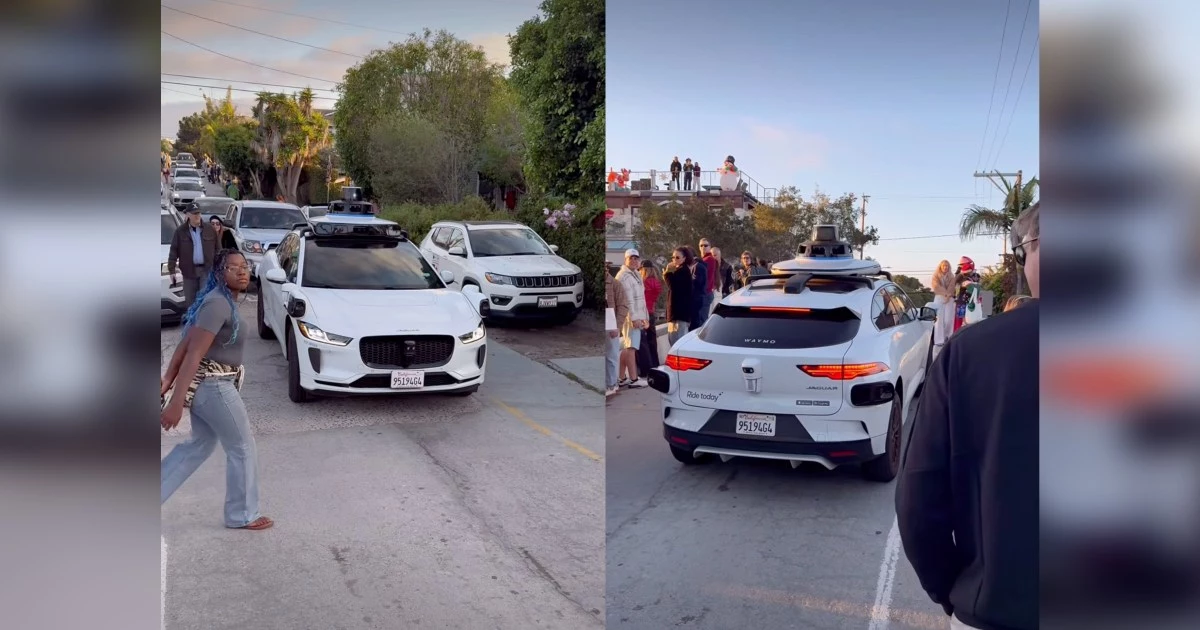

Venice Beach Gridlock: Autonomous Vehicles Meet the Unscripted City
On a festive night in Venice Beach, a Level-4 Waymo autonomous taxi found itself immobilized atop a slender one-way bridge, ensnared by a tide of parade-goers and the unpredictable choreography of urban life. For 45 minutes, the robotaxi’s sensors and algorithms—trained on millions of miles of “normal” traffic—were stymied by the extraordinary: a spontaneous, surging crowd, ambiguous right-of-way, and a geometry that left no margin for error. The resulting mile-long traffic snarl, amplified across social media, has become a clarion call for the autonomous-vehicle (AV) industry: the edge case is no longer an outlier, but the crucible in which AV readiness will be judged.
The Limits of Machine Perception in Living Cities
At the core of this incident lies a fundamental challenge: AVs excel in structured environments but falter when the world refuses to conform. The bridge’s funnel-like constraints, paired with a dense, ever-shifting pedestrian mass, overwhelmed the vehicle’s perception stack. Despite no direct physical block, the AV’s probabilistic models—conservative by design—defaulted to a fail-safe halt rather than risk an unpredictable maneuver.
Key technical bottlenecks surfaced:
- Perception Saturation: Sensor fusion models, optimized for routine scenarios, struggle with chaotic, unstructured flows—holiday parades, protests, or sporting event crowds—where the statistical distribution of obstacles diverges sharply from training data.
- Learning Lag: Waymo’s reliance on offline retraining means real-time adaptation is hamstrung by safety protocols. The system cannot relax its caution on the fly without violating certified boundaries, leaving it paralyzed in novel situations.
- Human-Machine Interface Gaps: The inability of police officers or pedestrians to intuitively “hand off” control or signal intent exposes a critical shortcoming. Standards for AVs to interpret human gestures or temporary digital signage remain fragmented and immature.
These technical fissures are not isolated to Waymo. They are emblematic of the entire sector’s struggle to reconcile the controlled world of simulation with the unruly theater of real cities.
Economic, Regulatory, and Strategic Reverberations
Every high-profile AV stall reverberates beyond the immediate inconvenience, rippling through economic models, regulatory frameworks, and strategic roadmaps.
- The Cost of the Long Tail: Industry analysts estimate that chasing the final 1% of edge cases can devour up to half of an AV program’s total budget, threatening the economies of scale that underpin commercial robotaxi ambitions.
- Dynamic Geofencing and Conditional Permits: Regulators and insurers are likely to tighten operational zones, imposing event-triggered restrictions or mandating remote operator standby during high-risk periods.
- Investor Sentiment and Capital Allocation: As the path to full autonomy grows steeper, capital may shift toward L2+/L3 ADAS systems—technologies that deliver incremental safety and revenue today—unless Level-4 players can demonstrate rapid progress in edge-case mastery.
The incident also surfaces less obvious, but equally profound, implications:
- Labor Market Shifts: The need for remote “fleet shepherds” echoes the rise of drone pilots, hinting at a new class of teleoperation professionals.
- ESG and Urban Congestion: Ironically, an immobilized AV can undermine emissions goals by causing widespread idling, a fact not lost on cities with aggressive climate mandates.
- Cyber-Physical Risk Disclosure: Boards must now grapple with new risk indicators that blend AI confidence scores with real-time urban event intelligence.
Toward a Collaborative, Adaptive Urban Mobility Future
The Venice Beach episode underscores that the AV revolution will not be won in isolation. It demands a new compact between technology providers, urban planners, regulators, and the public.
Emerging priorities include:
- Dynamic-Context Simulation: Incorporating city event calendars and synthetic crowd behaviors into AV training pipelines to better anticipate and navigate real-world volatility.
- Standardized Human-Gestural Protocols: Collaborating with law enforcement and transportation bodies to create interoperable signals—both digital and analog—that AVs can reliably interpret.
- Real-Time Remote Assistance: Investing in low-latency 5G edge infrastructure to enable swift intervention when algorithms falter.
- Smart Infrastructure Co-Design: Municipalities piloting IoT beacons, dynamic lane assignments, and machine-readable right-of-way signals to create an environment where AVs and humans can safely cohabit.
For investors and corporate strategists, the imperative is clear: stress-test business models against the rising cost and complexity of edge-case remediation, and track M&A opportunities in startups specializing in perception and behavior prediction for unstructured environments.
The Venice Beach stalemate is more than a viral hiccup; it is a vivid tableau of the “last-mile” challenge facing autonomous mobility. Whether Level-4 autonomy will flourish across sprawling cities or remain confined to sanitized enclaves depends on how deftly the industry translates these edge-case headaches into accelerated learning, robust infrastructure partnerships, and transparent risk management. As the sector pivots from spectacle to operational reality, those who lead this transition will define the next era of urban mobility.


 By
By
 By
By

 By
By
 By
By
 By
By
 By
By







