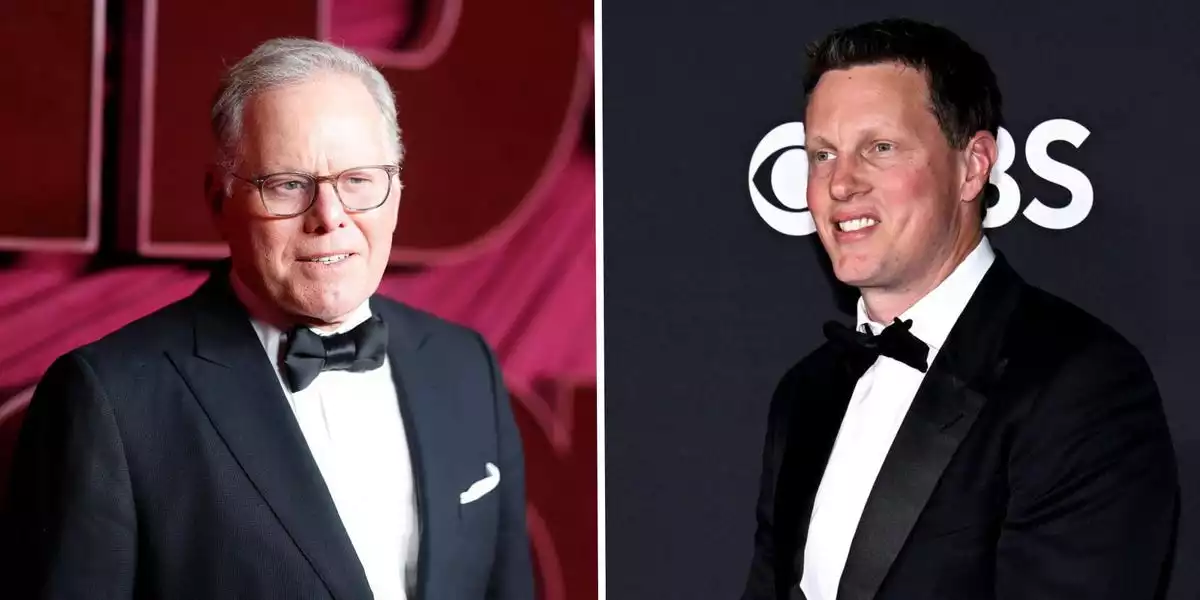

A Boardroom Drama: Streaming’s Next Act Hinges on Certainty, Not Just Cash
In the rarefied air of media mega-deals, the calculus of value is rarely as simple as a headline number. This week, Warner Bros. Discovery’s board delivered a decisive verdict, rebuffing an all-cash, $30-per-share bid from the Paramount–Skydance consortium in favor of a lower, $27.75 cash-and-stock merger proposal from Netflix. The move, while counterintuitive at first glance, reveals the evolving priorities of legacy media as it navigates a landscape where capital is dear, technology is king, and the future is anything but certain.
Capital Certainty in an Age of Volatility
The Paramount–Skydance offer, buoyed by the deep pockets of Larry Ellison, might seem irresistible. Yet, the board’s skepticism is rooted in the structure of the financing: the capital resides in a revocable trust, a vehicle whose reliability wavers in the face of today’s tightening credit markets. With syndicated loans and private credit demanding higher spreads, Warner Bros. Discovery faces an uncomfortable concentration risk—one that could unravel should Ellison’s commitment falter.
Netflix, by contrast, brings to the table a war chest denominated in equity, not just cash. Its stock, still trading at a premium—over 30 times forward earnings—offers Warner shareholders a rarefied “lift” from a valuation multiple they do not currently enjoy. The Netflix proposal also sidesteps a potential $2.8 billion break-fee, a financial penalty that would be triggered if Warner shifted allegiances midstream. In a market where capital discipline is paramount, these factors outweigh the superficial allure of Paramount’s higher bid.
Key Board Considerations:
- Execution Risk: Paramount’s financing structure lacks the irrevocability demanded in major M&A.
- Valuation Premium: Netflix’s equity offers upside beyond the immediate cash component.
- Break-Fee Avoidance: Switching suitors would incur a costly penalty, eroding any notional premium.
Strategic Alchemy: Content Meets Platform
The Netflix–Warner Bros. Discovery union is not merely a marriage of content libraries; it is a synthesis of differentiated capabilities. Warner brings a storied IP vault—DC, Harry Potter, HBO, Turner Sports—each a global franchise in its own right, yet hampered by distribution fragmentation. Netflix, meanwhile, wields a recommendation engine honed by billions of data points, a global billing network, and a cloud-based delivery stack that can scale at will.
Paramount–Skydance, for all its Hollywood pedigree, offers little by way of technological uplift. The synergies would be realized through cost-cutting and rationalization, not through the creation of new revenue streams or operational efficiencies.
Strategic Differentiators:
- Gaming Synergy: Warner Games could accelerate Netflix’s ambitions in cloud gaming, a frontier where Paramount is notably absent.
- Live Events and Sports: Netflix’s recent forays into live sports and event programming mesh seamlessly with Warner’s Turner Sports and Eurosport assets.
- Operational Efficiency: Netflix’s microservices architecture and in-house CDN promise immediate cost savings in OTT delivery, while its generative-AI infrastructure could compress content-cycle times and marginal costs.
Regulatory and Market Forces: The New Rules of Engagement
Both proposed deals would face rigorous antitrust scrutiny, especially as streaming consolidation raises concerns about content foreclosure and consumer pricing. Paramount’s claim of smoother regulatory passage is undermined by the reality that both transactions trigger similar horizontal-merger alarms. Yet, Netflix’s global reach could paradoxically streamline the clearance process, allowing for divestitures in non-core geographies without sacrificing the underlying logic of the deal.
The macro context is equally pivotal. With streaming growth plateauing in North America, the industry’s focus has shifted from subscriber acquisition to profitability. The advertising market’s pivot to programmatic connected TV (CTV) further favors combinations that can monetize inventory efficiently—an area where Netflix and Warner, together, would outstrip legacy linear-heavy firms.
Market Trends Shaping the Decision:
- Consolidation Playbook: Marrying world-class IP with best-in-class technology is the new industry standard.
- Capital Scarcity: Elevated interest rates and shrinking ad budgets reward balance-sheet strength and self-funding cash flows.
- Competitive Response: Rivals like Disney and Apple may be forced into defensive M&A to keep pace.
The Road Ahead: Strategic Counsel and Industry Ripples
Paramount may yet return to the table with a sweetened bid—perhaps introducing an equity component or a more robust technology narrative. But unless it can bridge the gap in capabilities, not just price, the board’s calculus is unlikely to change.
Should Netflix prevail, expect a phased integration: HBO Max may persist regionally, but user identity, recommendation, and billing systems will migrate onto a unified Netflix stack within two to three years. The ripple effects will be profound—from a rebalancing of content-production budgets toward tent-pole IP, to a potential reset in talent and labor negotiations as AI-driven localization becomes the new norm.
In the end, the board’s stance is a signal to the market: in an era defined by volatility, execution certainty and strategic complementarity matter more than headline premiums. For Warner Bros. Discovery, the future belongs not to the highest bidder, but to the partner best equipped to navigate the shifting tectonics of media, technology, and capital.

 By
By
 By
By

 By
By
 By
By
 By
By