


Charting a New Maritime Course: The U.S. Navy’s Golden Fleet Gamble
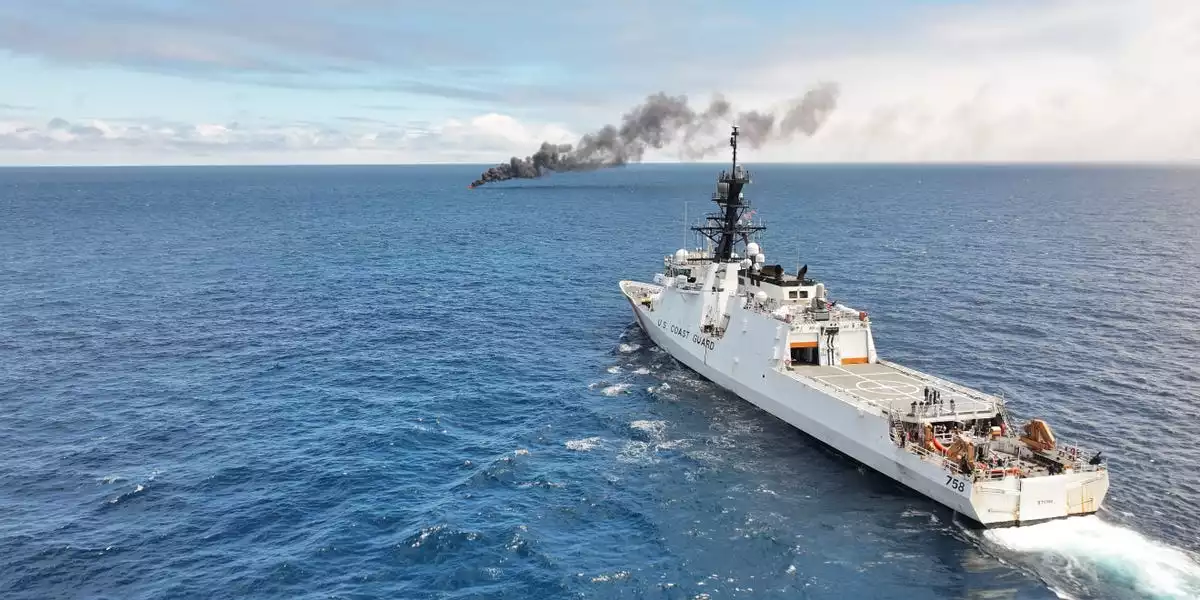
The U.S. Navy’s abrupt pivot from the beleaguered Constellation-class frigate to a new “Golden Fleet” derived from the Coast Guard’s Legend-class National Security Cutter is more than a procurement shuffle—it is a bellwether for the future of American maritime power. This decision, which hands the lead to Huntington Ingalls Industries (HII) and aims for a first hull by 2028, is a calculated response to mounting geopolitical pressures, industrial vulnerabilities, and the relentless arithmetic of defense budgets.
Strategic Realignment: From Exquisite Design to Fleet Readiness
The Indo-Pacific’s churning waters demand presence—more hulls, sooner, and at sustainable cost. The Navy’s adoption of a proven, Americanized cutter hull over an Italian-derived design is not simply an exercise in risk aversion; it is a deliberate embrace of the “minimum viable capability” ethos now permeating the Pentagon. This mirrors the Air Force’s shift toward rapidly fielded collaborative combat aircraft, prioritizing operational tempo over bespoke engineering.
Key to this realignment is the recognition that foreign-license design transfers—so alluring for their initial promise of speed and sophistication—often founder on the shoals of divergent requirements and export controls. The Constellation-class, once touted as a shortcut to advanced capability, saw its design commonality plummet from 80% to a mere 15%, dragging costs and timelines with it. The Golden Fleet, by contrast, leverages a mature domestic platform, collapsing technical risk and accelerating time-to-fleet.
Congressional mandates for a 355-ship Navy, combined with the Budget Control Act’s fiscal gravity, have forced the Navy’s hand: quantity, delivered quickly, must now trump the pursuit of perfection.
Industrial Base and Economic Reverberations
The selection of HII’s Pascagoula yard as the Golden Fleet’s crucible is a strategic move to shore up the nation’s two-yard cruiser/destroyer ecosystem. This is not just about ships—it is about sustaining the skilled workforce, digital manufacturing infrastructure, and supply-chain resilience that underpin American naval power.
Economic and industrial implications include:
- Cost Efficiency: The learning curve from ten prior Legend cutters translates into a 5–7% cost reduction per subsequent hull, according to RAND ship cost models. Integrating frigate blocks into existing destroyer and amphibious lines further drives down overhead, yielding true program savings of 8–10%.
- Workforce Stability: Pascagoula’s skilled labor force, threatened by projected welder shortages, gains a lifeline. Federal training grants can now be leveraged to cross-pollinate digital and traditional manufacturing skills, fostering innovation spillovers into the civilian sector.
- Supply Chain Sovereignty: With over 95% domestic content, the program aligns with Buy American thresholds, insulating the Navy from global supply shocks and rare-earth dependencies—an increasingly critical consideration in an era of strategic competition.
Tier-2 marine electronics suppliers, long fragmented and vulnerable, stand to benefit from recurring orders, potentially catalyzing much-needed consolidation and modernization across the defense industrial base.
Technology, Modularity, and the Digital Thread
The Golden Fleet’s technological foundation is as pragmatic as its industrial one. The Legend-class hull offers surplus weight and power margins, future-proofing the design for directed energy weapons and containerized autonomous systems. This modularity, in line with NATO’s standardization protocols, ensures that the fleet can evolve in step with emerging threats and technologies.
Technological highlights:
- Digital Twin Integration: HII’s digital twin infrastructure, already proven in cutter production, is poised to shorten logistics support timelines by up to 18 months. This digital thread is essential for the Navy’s push toward predictive, condition-based maintenance—targeting a 25% reduction in unplanned downtime by 2030.
- Cybersecurity by Design: The indigenous, U.S.-controlled design simplifies cyber certification and enables rapid security updates through DevSecOps pipelines. This is a marked improvement over legacy programs encumbered by foreign intellectual property restrictions and slow-moving recertification processes.
Ripples Across the Defense and Geopolitical Landscape
The Golden Fleet’s impact will resonate far beyond Pascagoula’s shipyards. An American baseline streamlines interoperability with allies such as Australia and the UK, dovetailing with the ambitions of AUKUS and distributed maritime operations. Cheaper, faster frigates allow the Navy to shift toward a more dispersed, networked force structure—complicating adversary targeting and enhancing resilience.
Budgetary breathing room, achieved through cost savings and industrial efficiencies, unlocks the potential to fund undersea dominance programs like the Columbia-class SSBN, even as fiscal constraints tighten.
For decision makers, this pivot signals a broader doctrinal shift: expect intensified scrutiny of foreign-derivative programs, a move toward modular “yard-as-platform” strategies, and a wave of consolidation among combat-system integrators. The message to Congress—domestic jobs, resilient supply chains, and technological sovereignty—lands with particular resonance in an election year.
The Golden Fleet is more than a procurement correction; it is a harbinger of a new era in naval acquisition—one that prizes agility, modularity, and industrial fortitude as the keys to maritime supremacy in an uncertain world.

 By
By
 By
By
 By
By
 By
By
 By
By










