


Lunar Resources: From Grand Gesture to Strategic Asset
The Moon, once the stage for Cold War pageantry, is now the crucible of a new, high-stakes competition—one where resource extraction, not flag-planting, is the measure of ambition. The United States’ commitment to a crewed lunar return by 2028, countered by China’s 2030 timeline, compresses the window for establishing a permanent cislunar presence. This is no longer a race for prestige; it is a contest for control over the Moon’s most coveted assets, with helium-3 (He-3) emerging as the flagship prize.
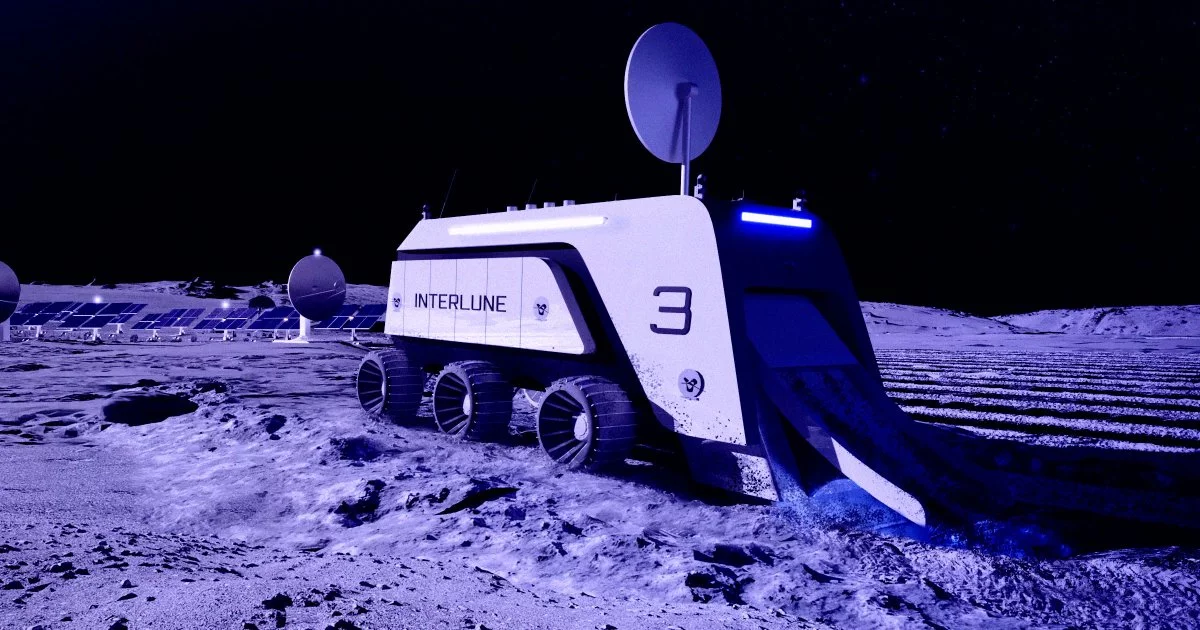
He-3’s allure is not merely theoretical. Its dual utility—as a fusion feedstock and a cryogenic enabler for quantum and AI computing—has conferred upon it a strategic premium that far exceeds its current market footprint. The recent offtake agreement between Bluefors, a leader in cryogenics, and Interlune, which has optioned up to 10,000 liters of He-3 for an estimated $300 million, signals a tectonic shift. This contract, reminiscent of early LNG pre-sale deals, is less about immediate supply and more about staking a claim to future optionality—a mechanism for shaping price discovery, catalyzing project finance, and, perhaps most importantly, signaling intent to competitors and financiers alike.
The Mechanics of Lunar Extraction and Economic Transformation
The path from lunar regolith to industrial-scale He-3 extraction is formidable, yet increasingly plausible. Interlune’s planned deployment of a multispectral survey camera on Astrobotic’s Griffin-1 lander in 2025 is emblematic of a broader technological convergence. The fusion of high-throughput thermal mining, autonomous robotics, and in-situ power generation—technologies honed in terrestrial mining and now adapted for the lunar environment—marks a maturation of the lunar resource play. Advances in battery-electric mining fleets, such as Komatsu’s 230-ton EV haul trucks, are directly transferable, accelerating the timeline for operational viability.
Water-ice, too, is more than a scientific curiosity; it is a propellant feedstock and a thermal buffer, creating a virtuous infrastructure loop. Electrolysis and fuel cells powered by lunar ice can, in turn, enable He-3 extraction, closing the notorious “mass-to-orbit” economic gap that has long stymied lunar industry. As launch costs plummet—driven by reusable platforms like SpaceX’s Starship and Blue Origin’s New Glenn—the internal rate of return (IRR) for lunar mining ventures becomes increasingly attractive, with every percentage drop in launch cost yielding nonlinear gains in project economics.
Regulatory Ambiguity and the New Geopolitical Chessboard
Yet, as the technical and economic pieces fall into place, the legal and geopolitical landscape remains unsettled. The 1967 Outer Space Treaty, with its prohibition on sovereign appropriation, is silent on the practical realities of resource utilization. In practice, “rights of use” may accrue to those who first establish energy infrastructure—especially nuclear reactors, which could create de facto exclusion zones and a new form of “functional sovereignty” on the lunar surface.
He-3’s strategic significance extends beyond energy. Its relevance to quantum computing introduces a dual-use dilemma, likely to draw the attention of export-control regimes such as the Wassenaar Arrangement. As lunar isotopes become entwined with semiconductor and quantum supply chains, expect a tightening of policy linkages and the emergence of resource-specific controls. The Artemis Accords, initially a framework of soft-law principles, may evolve into enforceable protocols akin to the transformation of the United Nations Convention on the Law of the Sea (UNCLOS) into exclusive economic zones (EEZs).
Industry Implications and the Dawn of the Cislunar Economy
The implications for industry are profound:
- Aerospace Supply Chain: Demand for modular payloads, radiation-hardened robotics, and cryogenic storage will surge, with early standardization conferring durable platform advantages.
- Energy and Materials: Utilities exploring fusion pilot plants may seek vertical alliances with lunar He-3 suppliers, hedging isotopic input risk and creating a new axis of strategic interdependence.
- Finance and Insurance: Space-specific political-risk insurance is nascent but rapidly evolving. Early movers in asset coverage may secure pricing advantages that persist as the market matures.
- Commodities and Capital Markets: The emergence of cislunar logistics indices and the inclusion of lunar assets in sovereign wealth fund portfolios will signal the transition from speculative venture to infrastructure-class investment.
Signals to watch include the demonstration of ≥100 kg/month regolith processing, the formation of bilateral technology-sharing pacts between quantum computing and lunar resource firms, and the development of blended-finance vehicles that combine export-credit guarantees, insurance wraps, and ESG-aligned bonds. The sustainability narrative—anchored in clean fusion—has the potential to unlock pools of capital otherwise barred from fossil-adjacent sectors.
As the lunar theatre transitions from exploration to proto-industry, helium-3 stands as both a commodity and a catalyst. Early corporate maneuvers—such as Bluefors’ offtake agreement—should be seen as the opening transactions in a market that will shape the future of energy, computing, and international security. Those who recognize lunar resources as an extension of terrestrial supply-chain resilience, rather than a distant scientific curiosity, are poised to define the contours of the emerging cislunar economy.

 By
By
 By
By


 By
By

 By
By
 By
By







