

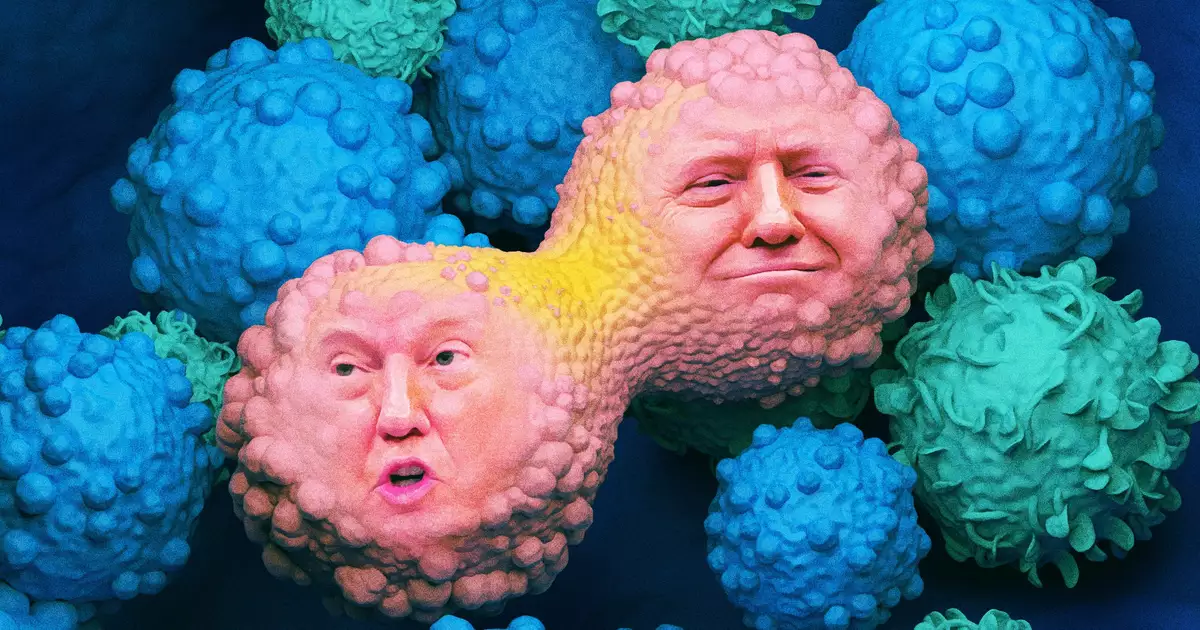

The Unraveling of American Oncology Leadership: A Budgetary Shockwave
The Trump administration’s proposed budget, with its dramatic $2.7 billion cut to the National Institutes of Health (NIH) and a deep reduction in the National Cancer Institute’s allocation—from $7.2 billion to $4.5 billion—signals more than fiscal restraint. It marks a profound inflection point in the United States’ half-century dominance in cancer research and biomedicine. The reverberations extend far beyond the laboratory, threatening to upend the delicate ecosystem that has underpinned American preeminence in oncology innovation and global health leadership.
Innovation Interrupted: The Hidden Costs of Disinvestment
The lifeblood of biopharma’s oncology pipeline—early-stage academic discoveries—has always relied on robust federal funding. With the NIH and NCI facing unprecedented contraction, the entire translational research continuum is at risk. Consider the following:
- Pipeline Deceleration: Academic labs contribute up to 45% of the discoveries fueling biopharma’s oncology development. The abrupt withdrawal of billions will not only slow this engine, but is projected to extend drug discovery timelines by up to two years. In an industry where first-mover advantage is everything, this is a strategic setback of the highest order.
- Stalled Platform Convergence: The convergence of mRNA therapeutics, precision radiomics, and AI-driven drug discovery depends on public-sector grants to de-risk foundational science. Without this support, the financial burden shifts to venture investors, whose time horizons rarely match the decade-long gestation of transformative therapies.
- Data Deficit and AI Regression: Federally funded clinical cohorts generate the longitudinal datasets that train next-generation diagnostic algorithms. A contraction in this data pipeline threatens to erode both the accuracy of AI models and the strategic value of U.S. health data—especially as the EU and China accelerate their own investments in health data infrastructure.
The cancellation of universal mRNA-based cancer vaccine programs is emblematic of the broader disruption. These are not merely scientific setbacks; they represent missed opportunities for U.S. companies to define the next era of oncology and precision medicine.
Economic and Geopolitical Repercussions: A Shifting Global Order
The economic fallout from these cuts is already rippling through public markets, with small-cap biotech indices repriced downward in anticipation of diminished NIH-backed innovation. But the consequences are even more far-reaching:
- Capital Flight and IP Migration: As U.S. grant funding becomes unstable, high-value patents are increasingly likely to be filed in jurisdictions such as Singapore or the EU, where research financing is more predictable. Over time, this shift in intellectual property (IP) domiciling will redirect licensing royalties, manufacturing jobs, and economic growth abroad.
- Health-System Cost Inflation: The fiscal logic of research cuts is illusory. Every dollar withheld from oncology research typically adds $4–$6 in downstream treatment costs, as late-stage cancers require more intensive—and expensive—care. This dynamic amplifies pressure on Medicare, private insurers, and ultimately, American households.
- Global Policy Asymmetry: While the U.S. retrenches, rivals surge forward. China’s 14th Five-Year Plan earmarks $12 billion for oncology research; the EU is doubling down on health sovereignty. The resulting asymmetry echoes the semiconductor arms race—except that, in biomedicine, lost ground is even harder to recover.
Talent Exodus and National Security: The Unseen Externalities
Perhaps most insidious is the threat to America’s talent pipeline. The emigration of principal investigators, Nobel-caliber scientists, and international post-docs is not merely a loss for academia; it weakens the entire STEM ecosystem, including defense biotech, biosurveillance, and pandemic preparedness. Oncology platforms developed for cancer—such as lipid nanoparticles and viral vectors—are also foundational to rapid vaccine response. Undermining them erodes biodefense readiness, an externality rarely captured in budget spreadsheets.
The ideological rationale for these cuts—rooted in skepticism of “politicized” science and discomfort with diversity frameworks—introduces a new volatility. Funding decisions now risk being tethered to cultural winds rather than scientific merit, injecting uncertainty into every facet of life-science innovation.
Strategic Imperatives for Industry and Policymakers
For C-suite leaders and technology strategists, the new reality demands a recalibration:
- Portfolio Realignment: Expect consolidation among oncology-focused biotechs; distressed assets may offer acquisition opportunities, but political risk must be carefully monitored.
- Global R&D Diversification: Companies must hedge against U.S. funding volatility by expanding laboratory footprints into grant-rich geographies and aligning IP strategies accordingly.
- Data Partnerships: With federal cohort data in jeopardy, partnerships with private payers and real-world evidence providers become critical for AI-enabled therapeutics.
- Corporate Philanthropy as Strategy: Large-cap biopharma can gain both reputational and pipeline advantages by underwriting academic labs, effectively substituting for the NIH and securing early access to breakthrough discoveries.
- Advocacy Engagement: Multi-stakeholder coalitions—spanning industry, patient groups, and state governments—must reframe cancer research as both an economic engine and a national security asset.
As the United States stands at this crossroads, the choices made by industry leaders, policymakers, and the scientific community will determine whether the nation remains at the forefront of oncology innovation or cedes its generational advantage to global competitors. The stakes are nothing less than the future of American biomedical leadership and the health of millions.

 By
By
 By
By
 By
By
 By
By
 By
By


 By
By







