
The Calculus of Conflict: When Knowledge Becomes Collateral
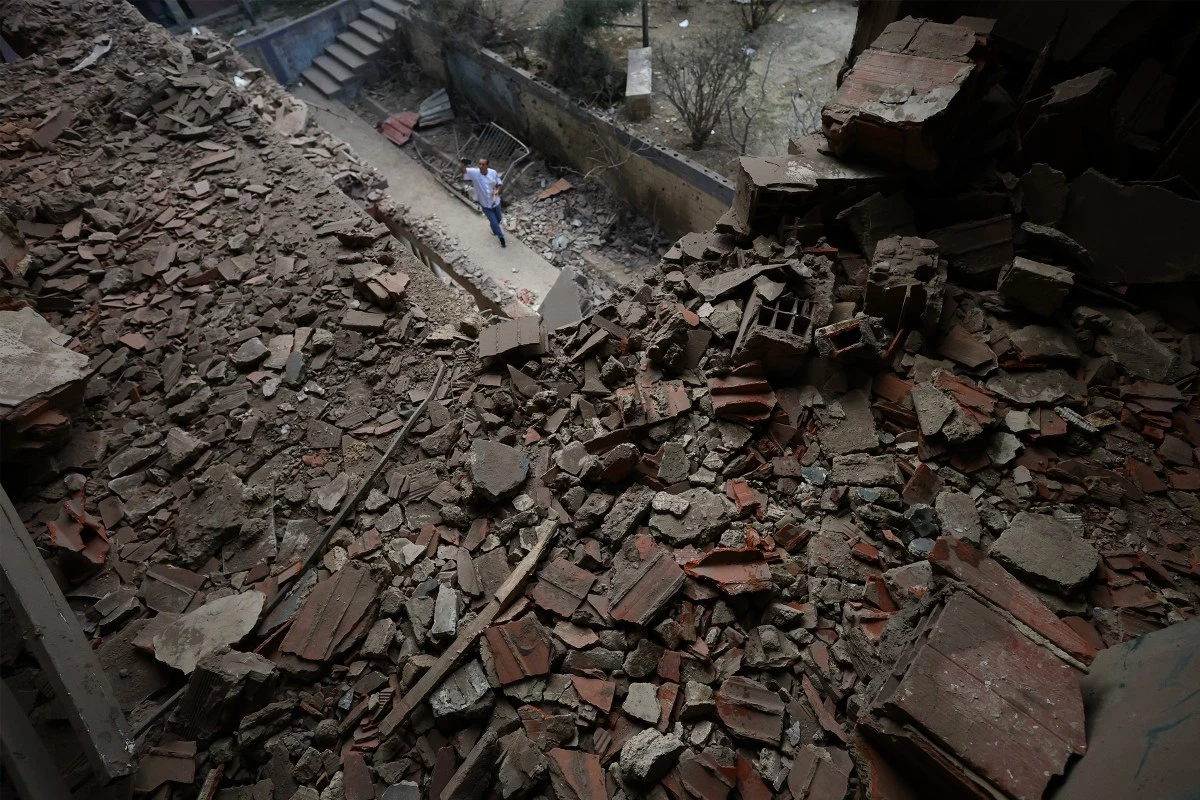
The recent U.S. air strikes in Venezuela, resulting in the deaths of at least 56 military personnel and the destruction of vital non-military assets, mark a profound shift in the choreography of modern conflict. The obliteration of five buildings at the Venezuelan Institute for Scientific Research (IVIC) and a critical medicine warehouse in La Guaira signals a new era—where the crosshairs are as likely to settle on data centers and laboratories as on missile silos or armored columns.
Beyond the immediate toll, the strikes expose a widening rift between the rhetoric of surgical precision and the reality of strategic blowback. The targeting of knowledge infrastructure and pharmaceutical reserves does not simply degrade physical assets; it reverberates through the arteries of national innovation, public health, and regional stability.
Unpacking the Targets: Signals, Missteps, and the Erosion of Intellectual Capital
The selection of IVIC as a strike target is, on its face, enigmatic. Located far from traditional military installations, its destruction hints at several possible rationales:
- Intelligence on Dual-Use Research: The possibility that civilian research facilities might be repurposed for military ends is a perennial concern in modern warfare.
- Deliberate Coercion: Degrading scientific capacity can serve as a warning—an unambiguous signal that the intellectual underpinnings of future weapons programs are not off-limits.
- Operational Error: The fog of war, compounded by the limitations of ISR (Intelligence, Surveillance, Reconnaissance) in dense, urban-scientific environments, leaves open the possibility of misidentification.
Yet the destruction of IVIC’s mathematics department and experimental labs is not simply a tactical maneuver. It is a strategic gambit with cascading effects:
- Brain Drain Acceleration: The loss of academic infrastructure will likely drive an exodus of researchers, echoing patterns seen in Syria and Ukraine, where intellectual diaspora becomes a decades-long wound.
- R&D Setbacks: The vaporization of physics, chemistry, and nuclear labs could set Venezuela’s scientific progress back by a decade, severing it from regional consortia and jeopardizing international funding.
- Humanitarian Fallout: The incineration of pharmaceutical stockpiles transforms a single strike into a public health crisis, compounding existing shortages and forcing reliance on costly emergency imports.
The New Fragility: Data, Supply Chains, and the Business of Resilience
The strikes underscore a growing vulnerability in the digital and physical supply chains that underpin both national security and economic vitality. The destruction of IVIC’s servers is a case in point: kinetic attacks on data nodes are no longer theoretical risks, but operational realities. For enterprises operating edge data centers in emerging markets, the lesson is stark—cyber-physical resilience is now a boardroom imperative.
The medicine warehouse’s obliteration offers a parallel lesson in supply-chain fragility. A single-point failure in cold-chain logistics can accelerate humanitarian crises, with ripple effects for regional pharma suppliers and foreign exchange markets. The insurance sector, too, is poised for recalibration: expect war-risk premiums to rise across Northern South America, impacting telecom, biotech, and satellite operators.
- Energy Markets: Prolonged instability in Venezuela, a heavyweight in heavy-sour crude, injects volatility into global supply chains, benefiting Canadian and Middle Eastern producers while fortifying U.S. shale’s market position.
- Geopolitical Realignments: The vacuum left by destroyed scientific infrastructure offers Beijing and Moscow a strategic opening—one that could see alternative technology standards and investment regimes take root.
Strategic Imperatives: Redefining Critical Infrastructure and Corporate Response
The Venezuelan strikes crystallize a new reality: knowledge infrastructure—labs, data centers, pharmaceutical warehouses—now occupies the same strategic terrain as power grids and pipelines. Boards and policymakers must recalibrate their risk models accordingly. Key takeaways for industry leaders and investors include:
- Geopolitical Risk Assessment: Intangible-asset nodes are now high-value kinetic targets. Disaster-recovery plans must extend beyond physical redundancy to sovereign-agnostic architectures: multi-region cloud deployments, satellite backup links, and portable research instrumentation.
- Mobile Manufacturing: The convergence of humanitarian need and strategic business opportunity is catalyzing a market for rapid-deployment micro-factories—modular GMP units and 3-D-printed reagents that can restore pharmaceutical capacity in days, not months.
- Dual-Use Dilemmas: Technology firms engaged in “civilian” collaborations in volatile regions must prepare for heightened scrutiny and potential reclassification as military-adjacent. Transparent ESG disclosures and compliance with evolving export controls are no longer optional.
The implications for Fabled Sky Research and its peers are clear: the perimeter of strategic risk has expanded. Intellectual capital and humanitarian supply chains are not collateral—they are the new front lines. As the boundaries of conflict shift, so too must the architecture of resilience, innovation, and ethical responsibility. The future will not wait for those who fail to adapt.

 By
By
 By
By

 By
By
 By
By

 By
By
 By
By