


Ukraine’s battlefield lesson: winning the drone war is about economics, not elegance
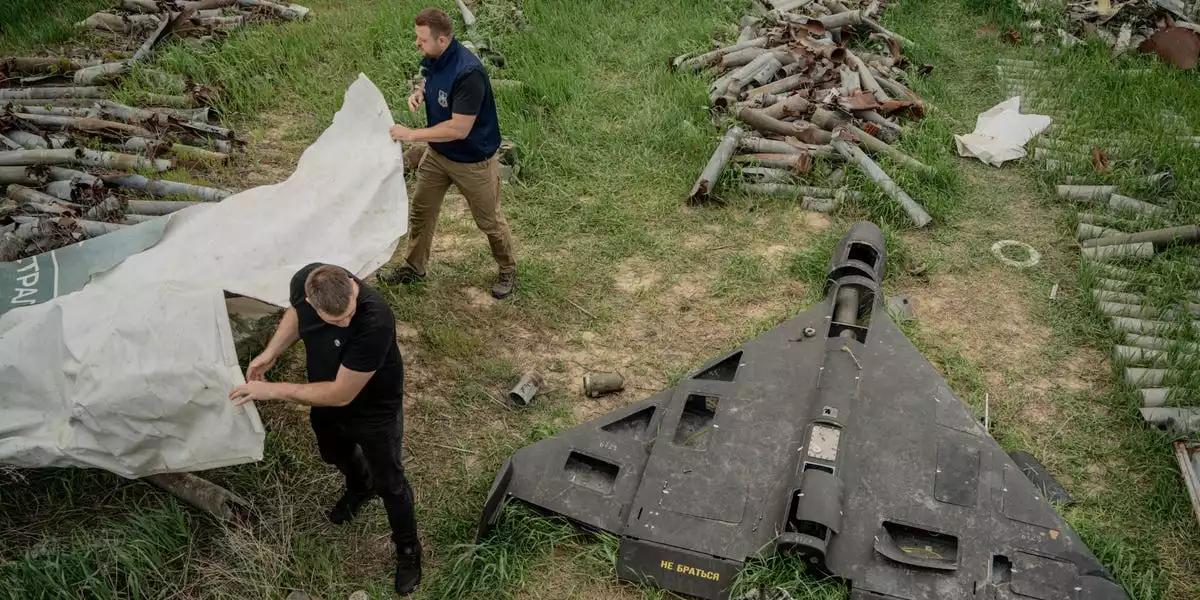
The most consequential air-defense innovation emerging from Ukraine is not a new missile, radar, or classified sensor. It is a procurement and operational philosophy: treat one-way attack drones like Iran’s Shahed “kamikaze” UAVs as an industrial-scale attrition problem, and defeat them with an equally industrial, cost-efficient, layered counter-UAS system.
Ukraine’s reported ~90% kill rate against Shahed-type threats is especially instructive for the United States and allied militaries now confronting similar drone patterns across the Middle East. The core insight is blunt: expensive interceptors are strategically misallocated when used against cheap, mass-produced drones. Firing a multimillion-dollar missile—such as a PAC-3-class interceptor—at a target that may cost tens of thousands of dollars (or less, depending on configuration and supply chain) is not merely inefficient; it risks becoming operationally unsustainable in prolonged campaigns where adversaries can replenish drones faster than defenders can replenish premium missiles.
Ukraine’s approach reframes air defense as a defense-in-depth architecture where lower-tier tools absorb the bulk of drone salvos, preserving high-end interceptors for truly high-value threats—ballistic missiles, advanced aircraft, or saturation attacks aimed at strategic nodes.
The new counter-drone stack: guns, jammers, and interceptors built at scale
Ukraine’s evolving counter-Shahed playbook is notable for its modularity and its reliance on systems that can be fielded quickly, repaired locally, and iterated under combat pressure. Rather than betting on a single “silver bullet,” Ukrainian forces have assembled a multi-layered stack that blends kinetic and non-kinetic effects.
Key elements of the model now drawing attention from U.S. defense leadership include:
- Mobile gun teams for point defense
Rapidly deployable units using guns and fire-control techniques optimized for slow, low-flying drones. This is “close-in air defense” updated for the drone era—less glamorous than missiles, but far more scalable.
- Electronic attack and jamming systems
Electronic warfare (EW) tools can disrupt navigation, links, and guidance—especially valuable when drones are used in large numbers. EW also offers a repeatable “shot” without consuming scarce missile inventory.
- Low-cost interceptor drones (“swarm-on-swarm”)
Perhaps the most disruptive element is the use of expendable counter-drones to intercept incoming drones at favorable cost. The reported domestic production tempo—over 1,000 interceptor drones per day—signals an industrial mindset: build enough volume to make defense sustainable.
This layered approach also reflects a deeper shift away from “Big Iron” air defense—monolithic, high-value systems designed for high-end threats—toward distributed, upgradeable nodes that can be repositioned, reconfigured, and replenished quickly. For U.S. and allied forces, the implication is not that legacy systems are obsolete, but that they are increasingly misused when tasked with routine drone defense.
Why U.S. and allied militaries are paying attention: cost-exchange ratios and supply chains
The strategic gravity of Ukraine’s experience lies in the cost-exchange ratio—the relationship between what the defender spends per engagement and what the attacker spends per drone. When the defender’s cost per kill is too high, the attacker can impose financial and logistical strain even without achieving decisive battlefield effects.
Ukraine’s data-driven argument is that spending roughly $2,000 (illustratively) on a low-cost interceptor or gun-based engagement to defeat a drone that costs under $20,000 is a sustainable posture. Spending orders of magnitude more per intercept is not. This logic is now shaping how U.S. planners think about defending:
- Forward bases and expeditionary sites
- Naval platforms and port infrastructure
- Energy facilities and logistics hubs
- Urban centers facing persistent drone harassment
Equally important is the industrial lesson. Ukraine’s ability to produce counter-drone systems domestically highlights the emergence of proliferated manufacturing in modern defense: additive manufacturing, small-batch electronics, and fast-turn assembly lines that can scale under pressure. For the U.S. defense industrial base, this points to a future where resilience depends not only on prime contractors, but also on distributed production hubs and a broader supplier ecosystem.
It also strengthens the case for commercial off-the-shelf (COTS) integration—using modified civilian drones, commercial components, and software-defined payloads. The trade-off is governance: faster acquisition cycles and lower costs must be balanced with cybersecurity, reliability, and interoperability standards that prevent “cheap” from becoming “fragile.”
The next frontier: AI-enabled command-and-control and coalition standardization
As drone salvos grow in size and sophistication, the bottleneck shifts from “can we shoot it down?” to “can we manage the engagement fast enough?” Effective counter-swarm defense increasingly depends on sensor fusion, target discrimination, and deconfliction—deciding what to engage, with what tool, and in what sequence, before the window closes.
That is where AI-enabled command-and-control (C2) becomes pivotal. Networked nodes—radars, acoustic sensors, EO/IR cameras, EW emitters, and interceptor drones—must share a common operational picture and execute engagements with minimal latency. The goal is kill-chain velocity: detect, classify, decide, and act faster than the attacker can saturate defenses.
Strategically, Ukraine’s message to Washington—reinforced by appeals from Ukrainian lawmakers and President Volodymyr Zelenskyy—is that these methods are not niche adaptations. They are a preview of how future adversaries, including peer competitors such as China, may employ swarms, decoys, and layered unmanned systems to probe and exhaust defenses. That prospect is already nudging allied militaries toward:
- Formalized knowledge sharing based on Ukrainian operational data
- Interoperable counter-UAS architectures across NATO and partner coalitions
- Joint development of low-cost interceptors and EW kits that can be produced in volume
The enduring takeaway is that air defense is being redefined by mass, iteration speed, and affordability. Ukraine’s counter-Shahed evolution shows that the side that learns fastest—and manufactures at the tempo of the threat—can turn a drone campaign from a strategic vulnerability into a manageable, repeatable defensive problem.

 By
By
 By
By

 By
By
 By
By

 By
By
 By
By







