
The Waning Fire of the Cosmos: Star Formation’s Decline and Its Terrestrial Reverberations
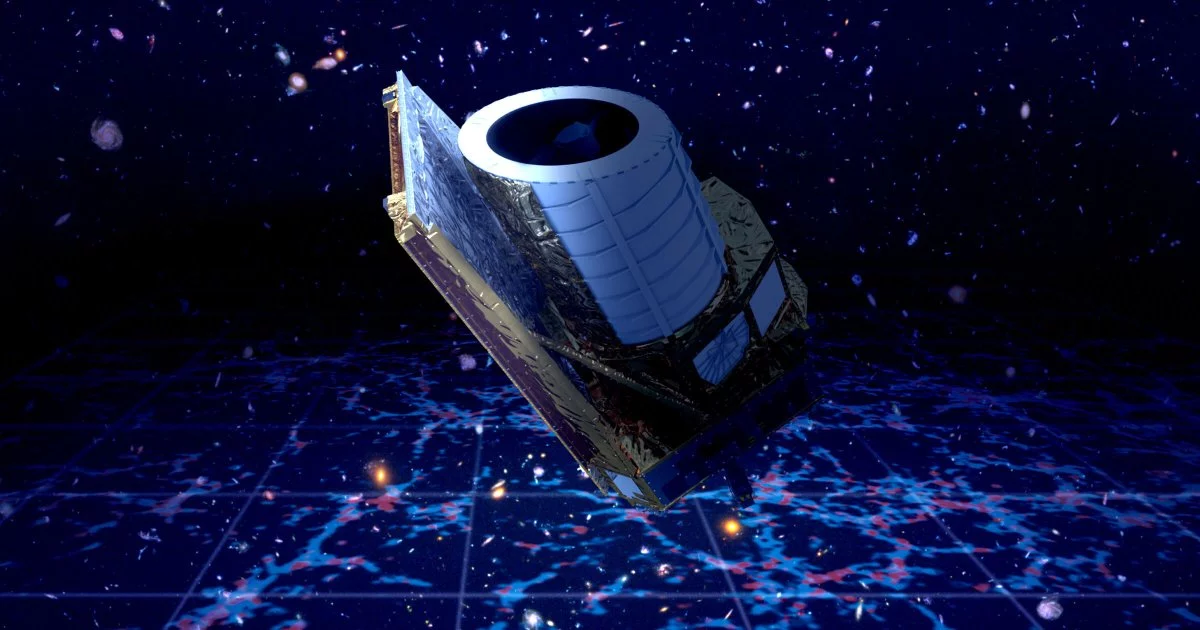
The universe, it seems, is cooling—not just metaphorically, but in the most literal, thermodynamic sense. In a landmark release, a global consortium of 175 astronomers has unveiled early findings from the largest optical-infrared galaxy survey ever attempted. By meticulously analyzing 2.6 million galaxies with the European Space Agency’s Euclid telescope, cross-referenced with Herschel’s archival data, they have traced a subtle but inexorable drop: interstellar dust temperatures have fallen by roughly 10 degrees Celsius over the past 10 billion years. This cosmic thermometer tells a story of dwindling star birth and fading stellar nurseries, signaling that the universe has passed its most fecund era and is now gliding toward a colder, quieter destiny.
Yet, beneath the melancholic poetry of a universe “past its prime,” the implications for business, technology, and strategy are anything but static. The ripples from this research reach deeply into the mechanics of innovation, capital allocation, and even the philosophical underpinnings of sustainability.
—
Technological Frontiers: From Deep Space to Data Centers
The Euclid mission is not merely a triumph of astronomical curiosity; it is a crucible for next-generation technologies whose utility extends far beyond the stars.
- Instrumentation at Scale:
Euclid’s wide-field, multi-spectral imager is generating petabytes of data—dwarfing the output of even the Hubble and JWST missions. This data deluge is forcing ground-based processing pipelines to embrace hyperscale cloud infrastructure, GPU acceleration, and the nascent promise of photonic interconnects. Such advancements are already informing terrestrial sectors, from quantum computing to 6G communications, as the same cryogenic and semiconductor breakthroughs migrate from orbit to earthbound labs.
- Federated Data Science:
The cross-institutional analysis, spanning over 30 research centers, exemplifies a new paradigm in AI and machine learning: models that travel to data, not the other way around. This federated architecture is a harbinger for corporate analytics, where data sovereignty and privacy concerns increasingly dictate operational design. Anomaly-detection algorithms, honed in the cosmic hunt for rare galaxies, are now finding a second life in semiconductor fabrication and precision manufacturing—detecting defects invisible to conventional systems.
- Sensor-Driven Sovereignty:
Euclid’s custom CMOS-based focal plane is a quiet but potent signal of Europe’s ambition to harmonize scientific exploration with semiconductor self-reliance. As geopolitical tensions drive nations toward “friend-shoring” and tech-stack localization, the mission’s supply-chain choreography offers a template for balancing open science with strategic autonomy.
—
Strategic Capital: Big Science as Industrial Catalyst
The economic logic of flagship space telescopes has always been twofold: to illuminate the mysteries of the cosmos, and to catalyze the next wave of industrial technology. Euclid, by all early indicators, is poised to deliver on both fronts.
- Multiplier Effects:
Historical analysis suggests that every euro invested in ESA science missions returns €1.80–€2.20 in downstream industrial activity. Euclid’s scale—both in data and in technological ambition—positions it to match or exceed this benchmark. The mission’s advances in cooling, sensor fabrication, and autonomy are already seeding commercial applications, derisking R&D for sectors as diverse as medical imaging, logistics, and advanced manufacturing.
- Resource Scarcity and Space Economy:
The revelation of a universe in decline paradoxically sharpens the case for near-term resource capture: asteroid mining, lunar regolith processing, and in-situ propellant production. As the long-run energy dividend from fresh star formation wanes, investors with thirty-year (or longer) horizons are recalibrating their models—shifting from assumptions of infinite cosmic growth to a more measured, scarcity-aware calculus.
- Risk and Sustainability:
The cosmic cooling curve is a stark reminder that all complex systems—planetary or otherwise—face hard physical ceilings. For boards wrestling with climate risk or critical-mineral depletion, the study reframes sustainability as a subset of universal thermodynamics, lending urgency to resource stewardship without the crutch of anthropocentrism.
—
Industry Currents: Thermodynamics, AI, and the Long View
The echoes of this research reverberate in unexpected quarters:
- Semiconductor Thermal Management:
The universe’s cooling dust mirrors the semiconductor industry’s relentless battle against heat at the bleeding edge of miniaturization. Techniques pioneered for deep-space cryogenics—multi-layer insulation, adiabatic demagnetization—are now entering the R&D pipelines of chip manufacturers racing toward the 2-nanometer node.
- Generative AI’s Energy Appetite:
As star-formation energy fades, the study casts a metaphorical spotlight on Earth’s surging computational demands. Data centers, the engines of generative AI, are under renewed scrutiny for their energy sourcing. Silicon photonics, reversible computing, and even fusion research are gaining traction as potential antidotes to the AI era’s thermodynamic hunger.
- Long-Duration Finance:
Sovereign wealth funds and endowments, already experimenting with century bonds and intergenerational assets, may look to the universe’s decelerating energy production as a benchmark for modeling “terminal growth”—a far horizon beyond the traditional 30-year DCF.
—
The universe’s fading fire is not merely a cosmic elegy; it is a clarion call for innovation. As Fabled Sky Research and its peers parse the implications of a cooling cosmos, the most agile enterprises will treat these revelations not as distant curiosities, but as signals—opportunities to harness the technologies, strategies, and philosophies that will define the coming deep-space industrial era. In the end, thermodynamic inevitability may prove to be the ultimate competitive advantage.

 By
By
 By
By


 By
By
 By
By
 By
By

 By
By
 By
By