
A morning outage that exposed the airline’s digital “front door”
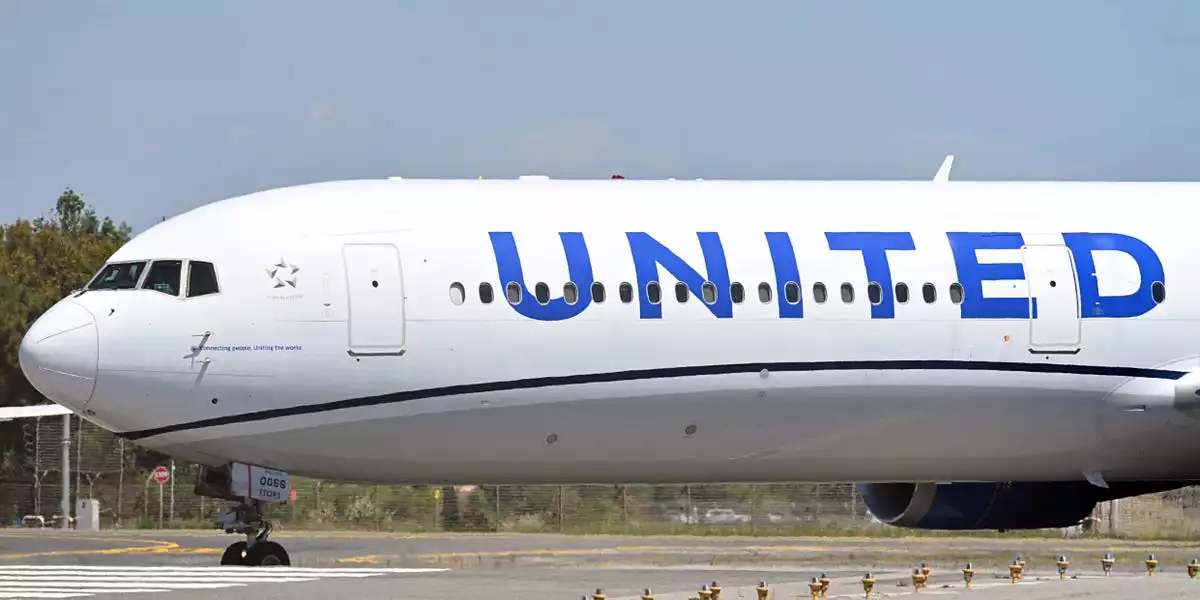
United Airlines’ technology disruption—triggered shortly before 7:40 a.m. and centered on its reservation and check-in systems—was not merely an inconvenience for travelers; it was a high-visibility reminder that modern aviation is as dependent on software continuity as it is on aircraft availability. With new check-ins, boarding authorizations, and baggage processing temporarily blocked, the effects concentrated quickly at major hubs such as Washington Dulles (IAD) and Newark Liberty (EWR), where high passenger throughput leaves little tolerance for system friction.
Public signals of distress arrived fast. Social monitoring services like Down Detector recorded a sharp rise in complaints—more than 430 reports by 8:23 a.m.—illustrating how customer-facing telemetry increasingly shapes the narrative of operational reliability in real time. United later attributed the incident to an internal reservation-system fault, and importantly noted that flights already airborne or already moving toward departure were not impacted. Full functionality returned within hours, with the airline directing customers to its mobile app for status updates.
That restoration timeline matters, but so does the pattern. The episode inevitably recalls the airline’s 2021 disruption tied to a CrowdStrike update, when a security tooling issue rippled into operational paralysis. The common thread is not a single vendor or a single bug; it is the structural reality that airline operations run on tightly interdependent systems where failure in one layer can rapidly degrade the entire passenger journey.
Why airline reservation platforms remain a high-stakes single point of failure
Airline reservation and departure-control systems are among the most complex transaction engines in commercial life: they reconcile inventory, pricing, passenger identity, regulatory requirements, crew constraints, and airport operations—often across legacy architectures built for stability, not agility. When these systems stall, the airline’s physical assets (gates, aircraft, crews) can become stranded by a digital bottleneck.
Several technical dynamics stand out in this outage:
- Centralized architecture risk (monolith fragility): When check-in, boarding, and baggage workflows are tightly coupled to a core reservation platform, a fault can behave like a circuit breaker for the entire airport experience. Without robust isolation and automated fail-over, localized issues become system-wide stoppages.
- Integration tension between legacy operations and modern security tooling: The 2021 CrowdStrike-linked event and today’s internal failure both underscore a persistent industry challenge: integrating endpoint security, identity controls, and continuous updates into operational environments that were not designed for frequent change. Tight coupling can turn routine updates—or internal misconfigurations—into cascading disruptions.
- Observability gaps and delayed root-cause clarity: Down Detector and social media can reveal the *symptoms* quickly, but they are external indicators of pain, not internal diagnostics. The lag between customer impact and definitive technical explanation suggests that end-to-end telemetry, transaction tracing, and anomaly detection are still unevenly mature across incumbent carriers.
For airlines, the hard truth is that operational resilience is no longer measured only by on-time performance and maintenance reliability. It is increasingly measured by digital uptime, particularly at peak travel windows when a short outage can generate outsized downstream delays.
The business cost: margins, loyalty, and the compounding economics of delay
Technology outages in aviation are uniquely expensive because they convert instantly into physical congestion. Every minute of downtime can propagate through a tightly scheduled network, creating knock-on effects that are difficult to unwind even after systems recover.
Key economic and brand implications include:
- Direct downtime costs: Delays trigger a chain of expenses—crew overtime and repositioning, gate conflicts, passenger reaccommodation, baggage handling disruptions, and in some cases compensation or service recovery. For a major carrier, the aggregate impact of a single event can plausibly reach tens of millions of dollars, depending on duration and network conditions.
- Erosion of customer trust among high-value segments: Frequent flyers and corporate travel managers prioritize reliability. Even a short-lived outage, if widely publicized and concentrated at major hubs, can influence future booking behavior—especially when competitors can market operational consistency as a differentiator.
- Capital allocation pressure: Airlines face competing demands: fleet modernization, fuel and route strategy, labor costs, and debt servicing in a higher-rate environment. IT resilience investments—often less visible than new aircraft—must still compete for scarce capital, despite their growing role in protecting revenue continuity.
There is also a broader ecosystem consideration. Airlines operate within alliances, codeshares, and shared airport technology environments. A disruption at one carrier can create contagion effects, from rebooking congestion to partner call-center overload, amplifying reputational risk beyond the original incident.
What this signals for aviation IT strategy: resilience as competitive infrastructure
This outage reinforces a strategic shift underway across the sector: digital resilience is becoming a competitive asset, not merely an internal IT metric. Carriers that can demonstrate minimal downtime will be better positioned in corporate contracting, loyalty economics, and operational negotiations with airports and partners.
The most credible forward path is not a single “big bang” modernization, but a disciplined resilience program built around measurable outcomes:
- Modular, cloud-aligned architectures: Phased migration from monolithic platforms toward service isolation, redundancy, and controlled blast radius can prevent a check-in failure from becoming a network-wide event. Cloud adoption is not a cure-all, but multi-zone redundancy and modern deployment patterns can materially improve availability.
- AI-assisted observability and incident response: Instrumentation across reservation, boarding, and baggage transaction flows—paired with machine-learning detection of degradation—can shorten the time between anomaly and action. The operational goal is simple: restore critical workflows in minutes, not hours.
- Stricter third-party and change governance: Whether the trigger is internal or vendor-linked, airlines benefit from sandbox testing at production scale, phased rollouts, rapid rollback, and real-user monitoring. In complex operational environments, change management is a safety discipline.
- Customer-experience continuity planning: Expanding self-service and offline-capable workflows—mobile-first check-in, contactless baggage options, and airport contingency modes—can reduce dependence on a single centralized pathway during peak periods.
Regulators and consumer advocates are also watching. Recurring outages across the industry raise the prospect of minimum uptime expectations and more formal incident reporting requirements, shifting resilience from a competitive choice to a compliance baseline.
United’s rapid restoration will be noted, but the deeper takeaway is structural: airlines are now judged not only by how they fly, but by how their software holds up when demand spikes. In that environment, the carriers that treat IT resilience as core infrastructure—funded, measured, and continuously improved—will be the ones best positioned to protect both operational performance and long-term brand equity.

 By
By
 By
By
 By
By
 By
By
 By
By
 By
By
 By
By