


Humanoid Robotics at the Edge: Walker S2 and the Battery-Swap Breakthrough
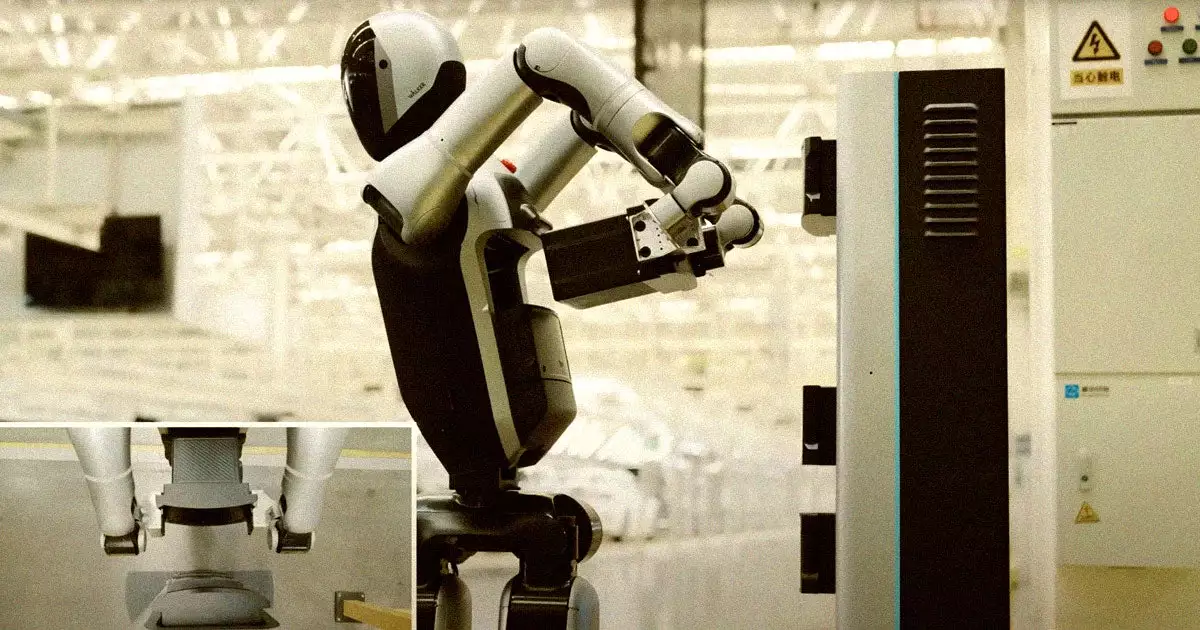
In the ever-evolving theater of industrial automation, UBTECH’s unveiling of the Walker S2 humanoid marks a watershed moment—one that reframes not only the technical frontiers of robotics, but also the economic and societal calculus underpinning the future of work. At first glance, the Walker S2’s demonstration—autonomously traversing to a charging rack, deftly swapping its own battery packs, and resuming its tasks without human intervention—might seem a feat of incremental engineering. Yet, beneath this choreography lies a profound inflection point: the decoupling of humanoid uptime from the tyranny of battery chemistry, and the dawn of near-continuous robotic labor.
The Mechanics of Energy Autonomy: Shifting the Bottleneck
For decades, the promise of humanoid robots has been hobbled by a single, stubborn constraint: the battery. Even as AI and mechatronics advanced, the need to pause for charging rendered robots little more than novelties in real-world deployments. Walker S2’s hot-swappable dual battery system, however, signals a structural break. No longer does the duty cycle hinge on battery endurance; instead, the limiting factors become mechanical reliability and the sophistication of fleet management software—domains where progress is both predictable and compounding.
This innovation is not merely about hardware. The integration with standardized battery racks hints at a convergence with China’s burgeoning EV battery-swapping infrastructure. Such compatibility could drive down costs through shared supply chains and logistics, accelerating the deployment of humanoid fleets in warehouses, logistics hubs, and “dark factories”—facilities designed for lights-out, round-the-clock operation. The implications are profound: robots as infrastructure, not just assets, with service models built around “robot-hours-as-a-service” and predictive maintenance, rather than simple unit sales.
Dexterity, Modularity, and Global Standards
Walker S2’s demonstration showcased more than just endurance. Its ability to coordinate two arms for precision battery swaps, while maintaining balance and spatial awareness, signals a maturation of robotics middleware. This composability—where manipulation, locomotion, and perception are modular and re-skinnable—unlocks a spectrum of use cases, from package sorting to meal preparation and beyond.
Crucially, the robot’s dexterity edges closer to compliance with international safety standards such as ISO/TS 15066, a prerequisite for collaborative work alongside humans in industrial settings. This opens the door to European markets and positions China as a contender not just in volume, but in quality and regulatory sophistication. The export optionality is significant, especially as China aims to triple its robot density and reduce dependence on foreign industrial giants.
Economic, Labor, and Policy Reverberations
The economic logic driving this wave of automation is unambiguous. China’s manufacturing labor pool is shrinking, even as wages rise faster than productivity. Robots like Walker S2, capable of 24/7 uptime, offer a direct response to margin pressures. The cost curve is equally compelling: with benchmark pricing from competitors suggesting sub-$15,000 humanoids by 2026, the total cost of ownership could soon undercut the annual wage of a human warehouse worker in China within a couple of depreciation cycles.
Yet, the labor-market effects are nuanced. History suggests a pattern of selective displacement—low-skill, repetitive roles are automated first, while new jobs in installation, orchestration, and exception handling emerge. Data from previous waves of industrial robot adoption indicate a two- to three-year lag before net employment stabilizes, offering policymakers a critical window to deploy reskilling initiatives and shape the transition.
The societal and regulatory stakes are equally high. As robots become fixtures in brownfield facilities, carbon accounting shifts: extending the life of existing assets reduces embedded emissions, but the increased energy intensity of round-the-clock automation demands a pivot to renewable power. National security regulators will scrutinize the dual-use potential of modular, energy-autonomous humanoids. Proactive compliance with evolving safety standards—such as ISO 3691-5 and OSHA 29 CFR 1910—will become a competitive differentiator for manufacturers and operators alike.
Strategic Horizons: From Prototype to Paradigm Shift
The debut of Walker S2 is more than a technical milestone. It is a harbinger of a strategic reset in global manufacturing and logistics—a future where the geography of production is decoupled from the availability of human labor, and where supply-chain resilience is rewritten around energy, software, and robotic orchestration. For executives, investors, and policymakers, the message is clear: the window for shaping the next competitive order is open, but narrowing fast. Those who move decisively—piloting new workflows, retooling policy, and investing in orchestration IP—will define the contours of the post-human-shift industrial landscape. Others may find themselves navigating a world where the cost curve, and the rules of engagement, have already been redrawn.

 By
By
 By
By
 By
By

 By
By

 By
By
 By
By







