
The Imminent Collision: Human Labor and the Rise of Autonomous Mobility
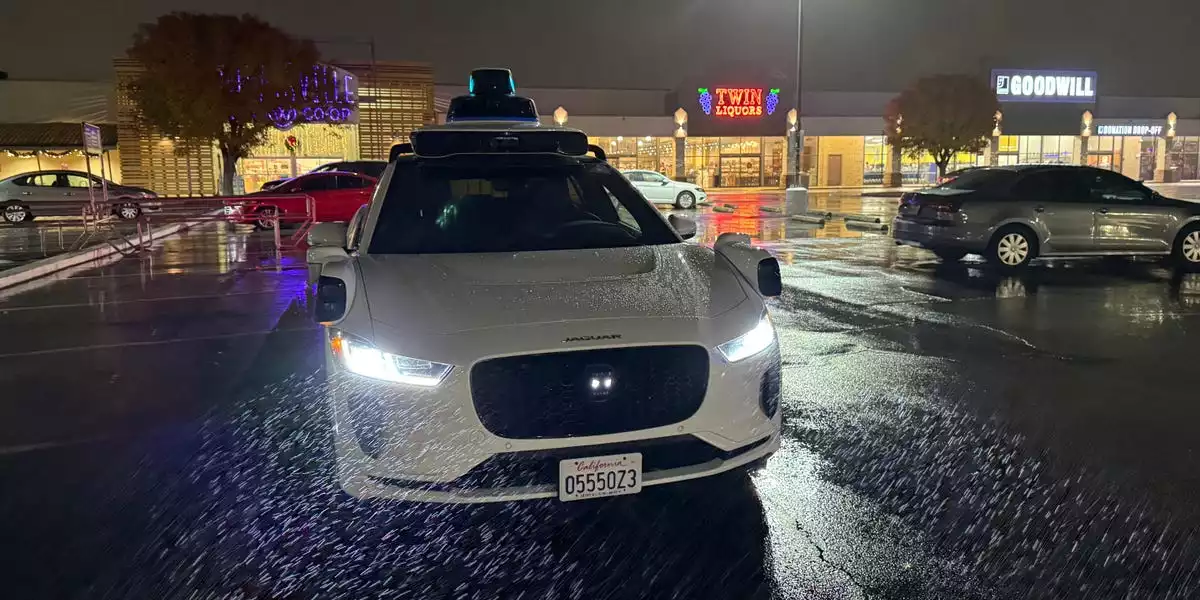
In a rare moment of candor, Uber’s CEO Dara Khosrowshahi has publicly drawn the curtain back on a future that has long hovered at the periphery of Silicon Valley’s ambitions: the large-scale displacement of human drivers by autonomous vehicles. As Waymo robotaxis quietly expand their reach in cities like Phoenix, Austin, and Atlanta—now woven directly into Uber’s platform—the theoretical has become operational. The clock is ticking. Khosrowshahi’s estimate of a seven-to-ten-year horizon for meaningful driver substitution compresses the industry’s timeline, forcing a reckoning not just for Uber, but for the entire gig economy.
The Technology Stack: From Costly Experiment to Scalable Reality
The maturation of autonomous vehicle (AV) technology is not merely a triumph of engineering; it is a recalibration of economic logic. Five years ago, the prohibitive cost of LiDAR sensors rendered mass-market AV deployment a distant dream. Today, with hardware costs plummeting by more than 80 percent, the calculus has shifted. Fleet operators can now envision a return on investment that was once the stuff of pitch decks and white papers.
Underpinning this transformation is the convergence of foundation models—multimodal generative AI stacks that learn from vast, heterogeneous datasets. These models, increasingly adept at edge-case recognition, have reduced the need for brittle, rule-based programming. The result: AVs that learn faster, adapt better, and require ever-larger pools of labeled data. Here, Uber’s foray into AI-adjacent gig work—data labeling, annotation, and edge-case triage—serves a dual purpose. It provides a lifeline for displaced drivers while quietly building a workforce that undergirds the next phase of machine learning at scale.
Meanwhile, advances in cloud-to-edge computing have made real-time inference possible on sub-100-watt chips, shifting the margin equation from recurring cloud costs to amortized hardware investments. The incentive for platforms to accelerate AV adoption has never been clearer.
Economic and Labor Disruption: Margin, Model, and the Human Cost
Uber’s platform, once lauded for its asset-light model and elastic labor supply, now faces a profound inversion. Human drivers, who account for roughly 70 percent of trip revenue, represent a variable cost that AVs promise to compress. The migration from variable to fixed costs—where capital is tied up in vehicles, charging infrastructure, and maintenance—heralds a new era of margin recomposition. Expect to see the emergence of synthetic leases, off-balance-sheet special purpose vehicles, and even green bonds for electric AV fleets, echoing the financial engineering that powered the rise of hyperscale data centers.
Yet, the labor elasticity that has defined the gig economy will not vanish quietly. Driver skepticism regarding AV safety and performance remains high, a sentiment gap that could slow—but not halt—the deployment curve. As Uber pilots new gig roles in data services and vehicle support, it is, in effect, modeling a transition path for a workforce facing obsolescence. The company’s quiet incubation of a crowdsourced, mobility-adjacent annotation workforce hints at a future where the line between gig labor and AI micro-tasking blurs, potentially creating a new B2B service vertical.
Policy, Power, and the Urban Fabric
The regulatory terrain for AVs is a patchwork, with permissive states like Texas standing in stark contrast to California’s recent tightening in the wake of high-profile incidents. Uber’s rollout strategy, therefore, must mirror the early days of ridesharing: geo-segmented, opportunistic, and deeply attuned to local politics. The specter of displaced drivers organizing for stricter labor mandates or AV usage fees looms large, threatening to alter the cost structure for platforms and inject new volatility into the regulatory process.
At the municipal level, the integration of autonomous electric fleets could reshape debates around congestion pricing, emissions targets, and urban planning. The data generated by these fleets—granular, real-time, and city-specific—will become a regulated asset class, conferring competitive advantage on those who secure early data-sharing agreements with local governments.
For executives, the strategic imperatives are clear:
- Redeploy and Retrain: Model a five-year glide path to transition up to 40 percent of gig labor into AI data services or vehicle support roles.
- Innovate in Capital Formation: Explore new fleet-finance structures with infrastructure funds and long-duration investors.
- Defend Data Moats: Treat mobility data as a strategic asset, securing agreements that anticipate future compliance regimes.
- Plan for Multiple Scenarios: Prepare for best, middle, and stress-case AV adoption curves, each with distinct margin, capex, and labor implications.
Uber’s acknowledgment of the coming labor shift is more than a signal to investors—it is a call to action for policymakers, urban planners, and business leaders. The convergence of platform economics, AI maturity, and labor-market resilience will define the winners and losers of the next decade. As the AV era accelerates, those who act early—integrating finance, HR, data governance, and government affairs—will not merely survive the transition; they will shape its outcome.


 By
By
 By
By
 By
By
 By
By

 By
By
 By
By