
The Anatomy of a Presidential Diversion: When Legacy Fleets Meet Modern Expectations
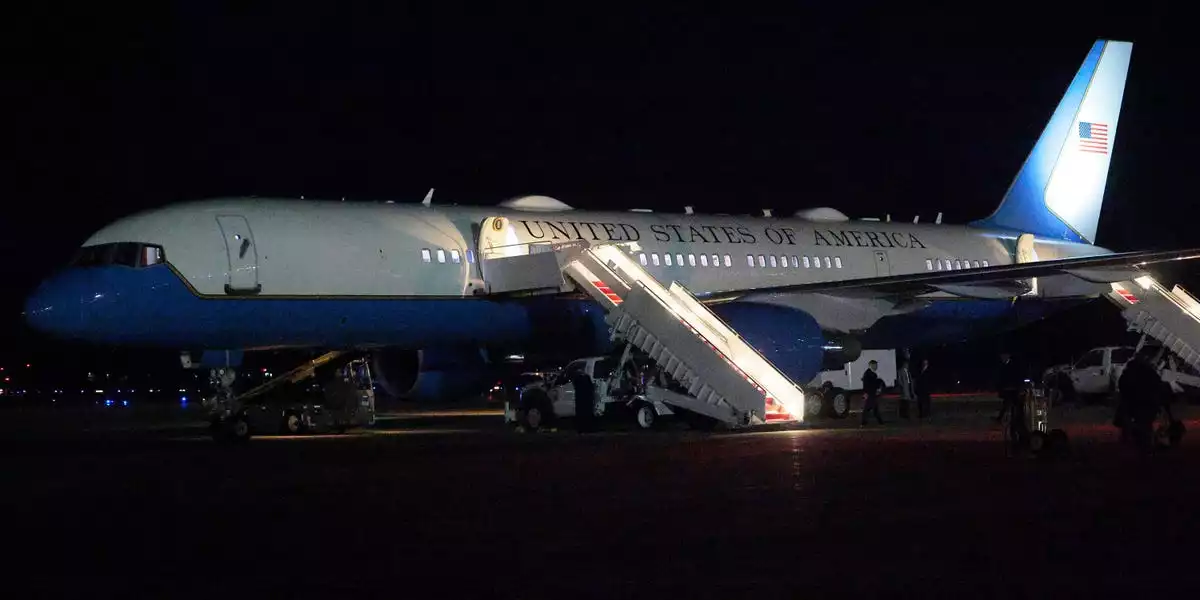
The recent forced diversion of President Trump’s Air Force One—prompted by a minor electrical malfunction en route to the World Economic Forum—offers a rare, unscripted glimpse into the intricate ballet of head-of-state aviation. What might have registered as a mere blip on an air traffic controller’s radar became, in the glare of global media, a case study in the vulnerabilities of legacy fleets, the domino effect of operational hiccups, and the evolving expectations placed upon the machinery of statecraft.
Legacy Airframes in the Age of Predictive Maintenance
At the heart of the incident lies the VC-25A, a militarized Boeing 747-200 delivered at the twilight of the Cold War. Its very presence on the presidential tarmac is a testament to both the durability and the obsolescence of late-20th-century engineering. The aircraft’s electrical architecture, conceived decades before the advent of digital twins and AI-driven diagnostics, is emblematic of a broader challenge facing government and commercial operators alike: the widening gap between platform age and modern reliability standards.
- Redundancy, Reimagined: The hasty deployment of the Boeing C-32A—a capable but range-limited surrogate—underscored the logistical gymnastics required when primary assets falter. Unlike its widebody sibling, the C-32A is optimized for regional missions, not trans-Atlantic VVIP sorties. This forced real-time recalibration of everything from secure communications to cargo handling, compressing the tightly choreographed schedules of security, media, and diplomatic staff on the ground in Davos.
- Data Blind Spots: Notably, there is no public evidence that advanced health-monitoring systems flagged the electrical anomaly pre-flight. This absence highlights the incomplete adoption of condition-based maintenance in government fleets—an area where commercial aviation, propelled by platforms like Airbus Skywise and GE’s Predix, has already set a new standard.
Economic Reverberations and Industrial Optics
Beyond the immediate inconvenience, the episode rippled through the economic and industrial strata underpinning the aerospace sector.
- Aging Assets, Escalating Costs: The VC-25B replacement program, a 747-8i conversion now exceeding $5.5 billion, has become a lightning rod for debate among defense appropriators. Incidents like this will inevitably be marshaled as evidence for accelerated funding, even as fiscal scrutiny intensifies.
- Supply Chain Fragility: The need for specialized components—often sourced from sunset production lines—mirrors a broader maintenance, repair, and overhaul (MRO) challenge. As original equipment manufacturers (OEMs) realign production, the hunt for niche parts becomes a microcosm of the global supply chain’s vulnerabilities.
- Boeing’s Brand Under Pressure: While the electrical fault may be vendor-agnostic, each high-profile mishap adds to the intangible burden on Boeing’s reputation, already strained by the 737 MAX saga and ongoing efforts to restore confidence in the 787 Dreamliner supply chain.
Diplomacy in the Age of Logistics and Perception
The symbolism of a presidential aircraft extends far beyond its technical specifications. It is a kinetic extension of national soft power—a flying embassy whose reliability is inseparable from the credibility of the office it serves.
- Compressed Diplomacy: The three-hour delay in Davos didn’t just inconvenience staff; it forced a wholesale reordering of bilateral meetings, secure communications setup, and motorcade sequencing. For multinational CEOs and world leaders, it was a vivid reminder of the fragility inherent in high-stakes summitry, even when resources appear limitless.
- Cyber-Physical Speculation: Any technical anomaly on a presidential asset, however minor, inevitably stokes speculation about sabotage or cyber intrusion. This amplifies calls for transparent, verifiable resilience audits—not just of avionics, but of the entire ecosystem of power-management and communications systems.
- Sustainability Optics: The optics of dispatching a 32-year-old, four-engine aircraft to a summit focused on sustainability are not lost on the global stage. Pressure will mount to accelerate the adoption of sustainable aviation fuels (SAF) and explore next-generation propulsion for VVIP transport.
Strategic Lessons for a New Era of Operational Resilience
The incident is more than a cautionary tale; it is a strategic inflection point for decision-makers across defense, aerospace, and corporate risk management.
- Accelerate Digital Transformation: Fleet managers must prioritize the integration of digital twin technology and AI-driven diagnostics, enabling predictive maintenance that can preempt operational surprises.
- Redefine Redundancy: Mixed fleets—combining widebody and next-generation long-range narrowbody aircraft—offer a pathway to both resilience and reduced carbon footprint.
- Stress-Test Assumptions: Corporate strategists and risk officers should incorporate quantified disruption probabilities into their planning, exploring synthetic presence solutions such as immersive telepresence when reputational stakes are high.
- Invest in Next-Gen Reliability: Policy makers and industry leaders alike must recognize that transportation reliability is now a pillar of geopolitical credibility, meriting sustained investment in cross-national standards and R&D for secure, sustainable aviation.
As the world watched a presidential aircraft circle back, the incident became a microcosm of the challenges and opportunities facing modern aviation. For those who heed its lessons—embracing predictive analytics, operational agility, and reputational stewardship—the path forward is clear: resilience is no longer optional, but the very currency of global leadership.

 By
By
 By
By
 By
By
 By
By
 By
By

 By
By