
The Federal Gambit: Engineering a National AI Rulebook
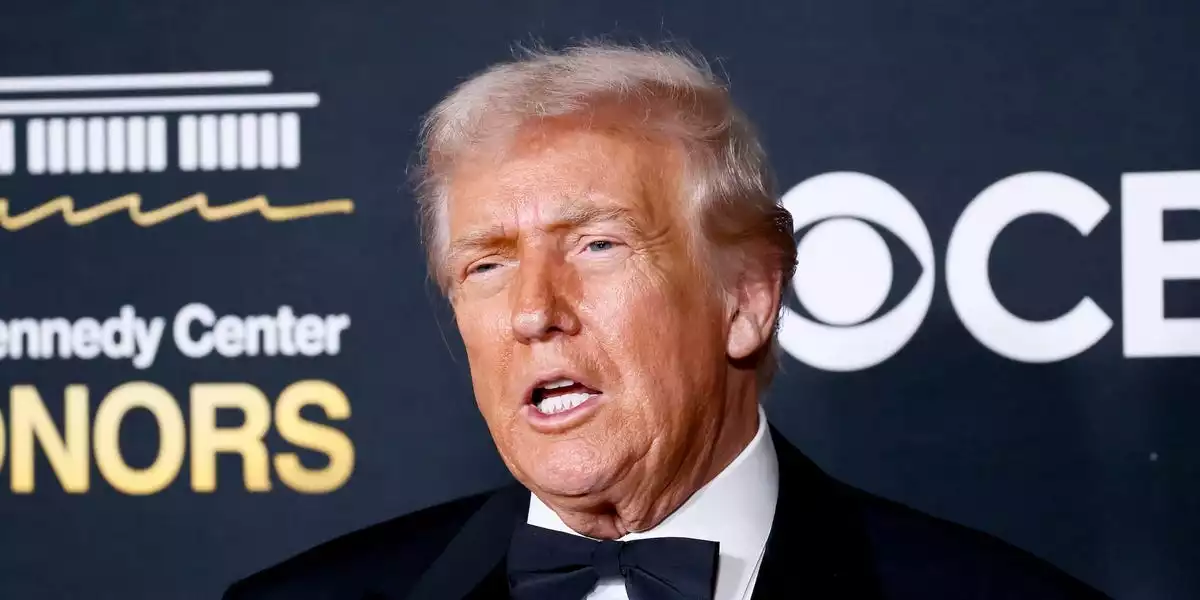
As the world accelerates toward an AI-driven future, the United States stands at a pivotal crossroads. President Donald Trump’s imminent executive order, poised to establish a single, nationwide regulatory framework for artificial intelligence, signals a dramatic shift in the balance of power between federal and state authorities. The order, if enacted, would empower the Department of Justice to challenge state-level AI rules deemed excessively restrictive, leveraging the formidable tool of federal funding to incentivize—or penalize—state compliance. This move, echoing industry complaints about a “patchwork” of state laws, aims to cement American leadership in AI by harmonizing the regulatory landscape.
Yet, the proposal is far from universally embraced. Even within Republican ranks, where states’ rights have long been sacrosanct, resistance simmers. Previous legislative attempts to pre-empt state AI laws were ultimately stripped from the Senate’s final text, underscoring the deep structural tension at play: the drive for national coherence collides with the American tradition of local experimentation.
The Tug-of-War: Federal Pre-emption and the Laboratories of Democracy
The trajectory of AI regulation mirrors that of other transformative technologies—aviation, telecommunications, nuclear energy, and digital privacy—all of which have gravitated toward federal oversight as their interstate externalities became clear. The legal foundation for this executive order will likely rest on the Commerce Clause and precedents such as *South Dakota v. Dole*, which affirmed the federal government’s power to set conditions on funding. But legal scholars anticipate swift constitutional challenges, particularly from states like California and Illinois, whose pioneering privacy and biometric statutes have set national benchmarks.
This evolving tug-of-war is defined by two competing imperatives:
- Industry’s Demand for Uniformity: AI companies, especially those operating across multiple states, decry the inefficiency and cost of navigating a mosaic of local regulations. Compliance overhead currently consumes an estimated 6–8% of large firms’ AI R&D budgets, capital that could otherwise fuel innovation and deployment.
- States’ Push for Tailored Protections: States seek to reflect local risk tolerance and political values, often enacting more stringent safeguards against algorithmic bias, deepfakes, and biometric misuse. Federal pre-emption threatens to dilute these bespoke guardrails, raising the specter of reputational and legal liabilities for both companies and consumers.
Economic Stakes and the Global Chessboard
The economic logic behind a unified AI regulatory regime is compelling. Regulatory clarity consistently ranks among the top three factors guiding venture capital and private equity investment in AI. A credible federal framework could redirect capital flows away from uncertain environments—such as the European Union, with its soon-to-be-enacted AI Act—toward the U.S., reinforcing its competitive edge.
However, the benefits are not evenly distributed. Large cloud providers and chipmakers, whose profits scale with widespread AI adoption, stand to gain disproportionately. This dynamic risks further entrenching the dominance of hyperscalers, raising fresh antitrust concerns. Meanwhile, states with unique sectoral data—think Arizona’s autonomous vehicle telematics or Iowa’s agritech datasets—may lose leverage to negotiate local value capture if federal rules override their licensing and data-sharing prerogatives.
On the international stage, the stakes are equally high. Brussels is finalizing an AI Act rooted in precaution, while Beijing enforces content-based controls reflecting state doctrine. The U.S.’s ability to articulate and enforce a coherent national standard is not just a domestic matter but a potent soft-power asset in global digital trade negotiations. Should court challenges stall the executive order, a regulatory vacuum could weaken America’s influence in international standard-setting bodies, allowing rivals to shape the rules of the game.
Navigating the New AI Regulatory Terrain
For executive decision-makers, the coming months demand a blend of agility, foresight, and engagement. The strategic calculus is complex:
- Portfolio Diversification: Hedge against regulatory uncertainty by distributing data centers and R&D hubs across both federal-dominant and state-innovative jurisdictions.
- Policy Engagement: Elevate AI governance to a board-level priority, allocating lobbying resources to both federal agencies and influential state legislatures.
- Standardization Leadership: Join cross-industry consortia to help craft voluntary certifications—early movers often set the de-facto standards regulators later adopt.
- Scenario Planning: Integrate regulatory risk sensitivities into valuation models and M&A due diligence, especially for targets reliant on data-intensive AI services.
As the United States stands on the threshold of a new era in AI governance, the outcome remains uncertain. Whether the nation consolidates around a single doctrine or reaffirms the states’ role as policy laboratories, the ability to anticipate, adapt, and engage across multiple fronts will distinguish the companies that thrive from those left navigating a maze of regulatory friction. In this high-stakes contest, strategic agility is not just an advantage—it is an imperative.

 By
By
 By
By


 By
By

 By
By
 By
By