

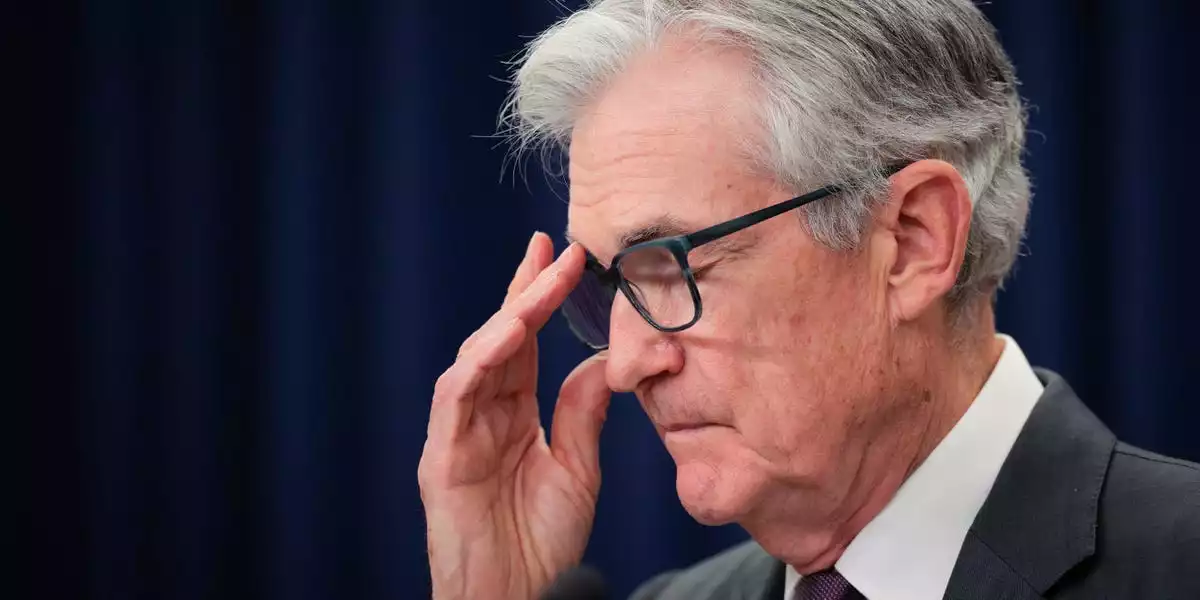

The High-Stakes Drama: Central Bank Independence in the Crosshairs
Rarely has the choreography between the White House and the Federal Reserve played out with such public acrimony. President Trump’s latest broadside—branding Fed Chair Jerome Powell a “stubborn MORON”—has transformed what is typically a measured, behind-the-scenes tug-of-war into a headline spectacle. The Federal Open Market Committee’s decision to hold rates steady, despite mounting political pressure for cuts, underscores a profound tension at the heart of U.S. economic governance: the sanctity of central-bank independence versus the imperatives of electoral politics.
This episode is more than a personality clash; it is a referendum on the very architecture of American monetary policy. Cabinet-level voices have joined the fray, hinting at the unthinkable—a move to sideline Powell before his term concludes in 2026. Such a maneuver would not merely be a break with tradition; it would send tremors through global markets, upending the delicate equilibrium that underpins the world’s reserve currency.
Inflation’s Stubborn Plateau and the Cost of Waiting
At the core of the standoff lies a stubborn economic reality. Despite some moderation, core PCE inflation remains sticky—especially in services—refusing to descend to the Fed’s 2% target. Wage growth, while slowing, still outpaces pre-pandemic trends, fueling consumer demand and complicating the case for rapid easing. The labor market, too, remains robust: unemployment hovers below 4%, bolstering Powell’s argument that rate cuts risk reigniting price pressures.
Yet, beneath the surface, subtle shifts are underway:
- Small-business hiring plans and job-switching rates are softening, often a harbinger of broader labor-market cooling.
- Corporate bond issuance has pivoted toward shorter maturities, reflecting uncertainty about the future path of rates.
- Capex and housing activity are already feeling the pinch of elevated real yields.
For investors and executives, the message is clear: the cost of capital is not just a macroeconomic abstraction—it is a daily operational constraint. The S&P 500’s gains, increasingly concentrated in AI and megacap tech, could turn frothy if a mis-timed rate cut unleashes a risk-asset melt-up. Meanwhile, any whiff of political interference could trigger a term-premium spike, repricing everything from mortgages to venture capital.
Technology’s Tightrope: Funding, Innovation, and Policy Risk
The technology sector, so often the bellwether of American dynamism, finds itself uniquely exposed to the Fed’s policy trajectory. Fab construction—catalyzed by the CHIPS Act—relies heavily on debt financing. Prolonged high rates could stretch project timelines, undercutting ambitions for domestic supply-chain resilience. For hyperscale cloud providers, the calculus is equally unforgiving: the cost of capital shapes capex discipline, which in turn governs the pace of AI infrastructure build-out and the resultant strain on energy grids.
Fintech and digital assets, too, are caught in the crosscurrents. Elevated overnight rates raise the cost of holding dollar-denominated tokens, subtly dampening speculative flows and constraining DeFi leverage. In this environment, regulatory clarity is necessary but not sufficient; the Fed’s stance is the ultimate arbiter of liquidity velocity.
Navigating the Crosswinds: Strategic Imperatives for Leadership
The present moment demands not just vigilance, but strategic agility. Leadership teams must grapple with a policy landscape where economic fundamentals and political dynamics are increasingly inseparable. The following imperatives are paramount:
- Preserve Funding Optionality: Re-open credit lines and lock in longer tenors before any term-premium shock materializes.
- Stress-Test Capital Allocation: Model both “higher-for-longer” and “lower-for-shorter” scenarios, prioritizing investments with robust real-option value—AI enablement, supply-chain digitalization, energy retrofits.
- Monitor Policy-Mix Signals: Track tariff rhetoric alongside Fed communications; the interplay between fiscal and monetary impulses will shape margins more than headline rates alone.
- Hedge Currency Exposure: A perceived erosion of Fed independence historically weakens the dollar—global tech and industrials must hedge more actively.
- Advocate for Central-Bank Independence: Industry associations should champion data-driven policy, reducing discount-rate uncertainty and supporting long-cycle investments.
The confrontation between the executive branch and the central bank is more than political theater; it is a crucible for the future of American economic leadership. As the world watches, the choices made in Washington will reverberate through capital markets, boardrooms, and innovation corridors from Silicon Valley to Shenzhen. In this high-stakes environment, the ability to anticipate, adapt, and advocate may prove the ultimate competitive advantage.

 By
By

 By
By
 By
By
 By
By


 By
By







