


The Quiet Revolution of Mood Tracking: From Colored Dots to Corporate Strategy
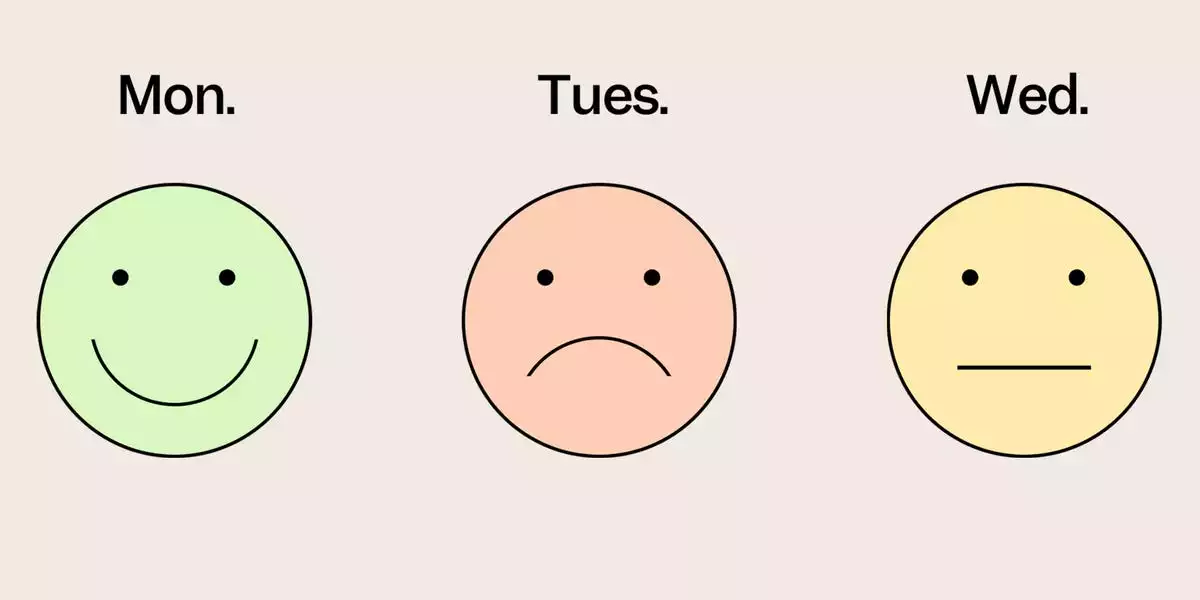
In a world awash with digital dashboards and algorithmic nudges, the most profound insights can sometimes emerge from the humblest of experiments. Over five years, a personal initiative—tracking daily mood with nothing more than colored dots in a notebook—has surfaced macro-level revelations that now ripple through the corridors of business and technology leadership. This analog exercise, while unassuming, illuminates a new frontier: the quantification of the psyche and its implications for organizational performance, product design, and the future of work.
Redefining Data Capture: Simplicity as a Force Multiplier
The experiment’s first and perhaps most disruptive insight is that low-friction, self-generated data can unlock behavioral change at a scale rivaling the most sophisticated wearables. The colored dot system, stripped of notifications, logins, or battery anxiety, achieved a level of compliance that most digital wellness apps only dream of. This is a clarion call for product designers: feature bloat is not a virtue. Instead, cognitive load reduction—the art of making self-reflection nearly effortless—should be the north star for next-generation wellness platforms.
- Micro-journaling mechanics, validated by neuroscience and championed by thinkers like Arthur C. Brooks, are quietly infiltrating productivity suites. Embedding reflective prompts into the fabric of daily workflow—think Slack, Teams, or even email—transforms idle moments into opportunities for neuroplastic growth.
- The retreat from algorithmic curation, as evidenced by the author’s social media abstinence, signals a broader reckoning. The endless scroll, once an emblem of engagement, is now recognized as a tax on executive function. “Anti-scroll” design—interfaces that prioritize completion over infinite feeds—will soon become a competitive differentiator.
- As privacy regulation tightens, on-device sentiment analysis is poised to become the new standard. Technologies such as Apple’s Secure Enclave or Gauss ML on Pixel devices are already setting the pace, ensuring that emotional telemetry remains both actionable and secure.
The Economics of Emotional Well-Being
The financial stakes are staggering. The World Health Organization estimates that depression and anxiety siphon $1 trillion annually from global productivity. For employers, the message is clear: mental health is no longer a soft metric—it’s a cost center and a strategic lever.
- Evidence-based journaling, peer-support platforms, and opt-in mood tracking are no longer perks; they are fast becoming compliance proxies, especially as regulators in the U.S. and Europe push for quantifiable human capital metrics.
- The war for talent is being fought not just on salary or perks, but on hope and meaning. Companies that operationalize these elusive assets—through career pathing, social connection, and community impact—can command loyalty premiums without escalating wage bills.
- The analog renaissance is more than nostalgia. Moleskine’s double-digit revenue growth and the rise of “paper-first” productivity influencers point to a countercyclical appetite for tactile, distraction-free tools. Hybrid solutions—smart pens, OCR notebooks—offer a bridge between the digital and the tangible, catering to a workforce increasingly wary of cognitive overload.
Platform Risk, Competitive White Space, and the Rise of Affective Data
As legacy social networks plateau in North America and Western Europe, a migration is underway. High-value professionals are gravitating toward lower-noise, purpose-built channels—from Slack communities to closed cohort platforms—that privilege reflection over virality. This exodus cracks open a monetization gap, inviting new entrants to reimagine online interaction as a source of meaning, not just dopamine.
- Proprietary, longitudinal mood datasets—collected ethically and consensually—are emerging as prized intellectual property. They serve as the training ground for the next generation of personalized AI, where affective computing moves from novelty to necessity.
- The convergence of mental-health SaaS, wearables, and HR-tech is already attracting investor attention. Vertical integration—spanning data capture, analytics, and therapeutic content—mirrors the “full-stack” playbooks that have transformed fintech valuations.
Designing for Hope: The Next Competitive Advantage
For decision-makers, the implications are profound:
- Product leaders must weave guided reflection into the fabric of workflows, transforming episodic learning into institutional knowledge.
- CHROs and CFOs should treat “hope-generation” as a measurable KPI, linking leadership incentives to mentorship and social cohesion.
- CIOs and CISOs face the challenge of governing employee-generated emotional data, balancing insight with privacy through zero-knowledge architectures.
- Investors would do well to watch for consolidation across the mental-health and HR-tech landscape, where data-driven well-being is the new currency of differentiation.
The lesson of the mood-dot journal is not merely about self-quantification, but about the strategic value of subjective well-being. As uncertainty becomes the only constant, organizations that can systematically foster optimism and meaning—while respecting the privacy and cognitive limits of their people—will define the next era of high-performance enterprise. The future belongs to those who can manufacture hope, not just efficiency.

 By
By
 By
By
 By
By
 By
By
 By
By

 By
By
 By
By












