
The New Economics of Wi-Fi 7: When Next-Gen Connectivity Becomes Ubiquitous
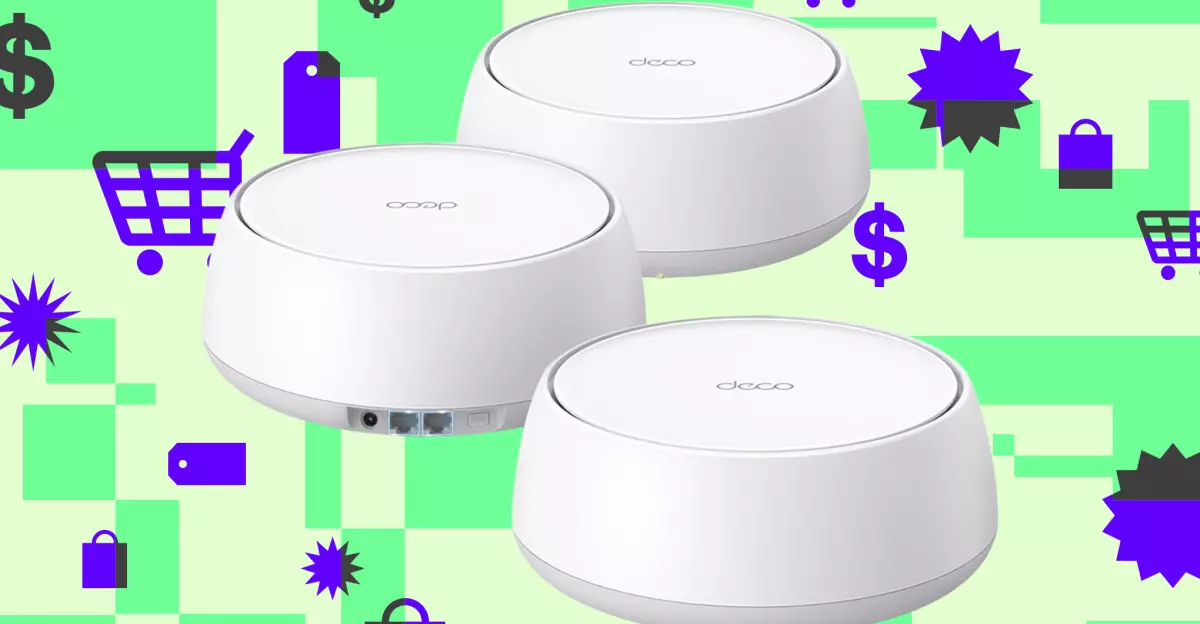
A quiet but profound transformation is underway in the fabric of the modern home. The recent, almost audacious, discounting of TP-Link’s BE25 Wi-Fi 7 mesh router—now available in a three-pack for under $200—signals not just a fleeting retail promotion, but a tectonic shift in how connectivity, intelligence, and value are being redefined at the residential edge. This is not an isolated episode: parallel deals on Ring’s Battery Doorbell Plus, Roborock’s S8 vacuum/mop, and the much-anticipated Samsung Galaxy Ring reveal a broader pattern, one in which the boundaries between infrastructure and smart devices are dissolving, and the stakes for ecosystem dominance have never been higher.
Wi-Fi 7 as the Backbone of the AI-Enabled Home
The technical leap from Wi-Fi 6E to Wi-Fi 7 is not merely incremental—it is foundational. With 320 MHz channels and Multi-Link Operation, Wi-Fi 7 routers like TP-Link’s BE25 promise theoretical peaks near 5 Gbps and, more crucially, a dramatic reduction in jitter and latency. For households now brimming with 40–80 connected devices—each demanding its own slice of bandwidth for UHD streaming, cloud gaming, or AR/VR—mesh networking has evolved from a range extender into a quasi-enterprise backbone.
- Mesh at Scale: A three-node kit spanning 6,600 square feet is no longer a luxury, but a necessity for the modern digital household.
- Silicon Economics: The rapid cost efficiencies achieved by Qualcomm and Broadcom—outpacing the Wi-Fi 6E cycle by nearly a quarter—have enabled these sub-$200 price points less than 18 months after standard ratification.
This infrastructural leap is not happening in isolation. The latest wave of smart-home peripherals is engineered to ride the bandwidth wave:
- Ring’s Battery Doorbell Plus leverages higher upstream capacity for 1536p video and real-time AI object recognition.
- Roborock’s S8 deploys on-device AI for obstacle avoidance, while offloading mapping data to the cloud—requiring multi-gig uplinks.
- Samsung’s Galaxy Ring exemplifies the move toward low-profile, multi-day wearables whose utility is magnified as data sync latency approaches zero.
Price Compression and the Battle for the Home Command Layer
The timing of these deep discounts—outside the gravitational pull of Black Friday or Prime Day—reflects more than just inventory management. It is a calculated wager by vendors: sacrificing near-term margins for rapid installed-base expansion, with recurring revenue from subscription services (think Ring Protect or Roborock consumables) as the endgame.
- Ecosystem Lock-In: Amazon, Google, Apple, and Samsung are racing to embed their platforms at the heart of the home. Affordable, high-spec routers act as Trojan horses, securing API footholds for cross-sell opportunities.
- Standards in Flux: While Matter and Thread standards are still maturing, vendors are tactically pricing Wi-Fi-centric devices to slow the pace of platform disintermediation.
Despite persistent inflation, the real cost per gigabit of home networking has plummeted by roughly a third year-over-year. This price elasticity is sustaining consumer willingness to refresh infrastructure even as broader electronics demand softens. Meanwhile, ISPs upgrading to DOCSIS 4.0 and fiber XGS-PON are relying on Wi-Fi 7 CPE to translate backend investments into customer-perceived performance, creating a pull-through effect for router manufacturers.
Strategic Imperatives: From Hardware to Intelligent Edge Platforms
For hardware vendors, the moment demands a dual-SKU strategy: flagship Wi-Fi 7 for halo branding, and aggressively-priced Wi-Fi 6E to clear channels. Embedding subscription hooks at the firmware level—security, parental controls, mesh optimization—offers a hedge against average selling price erosion.
ISPs and telecom operators, meanwhile, see a bundle opportunity: integrating Wi-Fi 7 mesh into broadband packages could reduce costly coverage-related service calls by up to 22%. The granular telemetry from in-home devices offers a tantalizing prospect for tiered QoS offerings, pending robust privacy frameworks.
Retailers and e-commerce platforms must now harness real-time demand elasticity data to recalibrate assortments ahead of the next shopping cycle, while exploring high-margin services like installation or network optimization.
For smart-home and IoT developers, the new deterministic latency windows (<5 ms) unlocked by Wi-Fi 7 open the door to more sophisticated edge inference models and energy-proportional computing—an imperative as consumers gravitate toward devices like the Galaxy Ring, where multi-day battery life is non-negotiable.
The Road Ahead: Ubiquity, Convergence, and the Rise of the Intelligent Home
Penetration of Wi-Fi 7 in North American homes is poised to surpass 20% by the end of 2025—nine months ahead of even the most bullish forecasts—propelled by the democratization of mesh kits under $200. The coming year will see tri-band Wi-Fi 7E hybrids targeting backward compatibility as legacy IoT sensors are phased out. Carriers deploying 5G home internet will increasingly rely on Wi-Fi 7 to translate mmWave throughput into seamless indoor experiences, further accelerating cross-sector chipset demand.
The M&A landscape is shifting: router OEMs may seek AI-edge software firms to differentiate, while cloud hyperscalers eye mesh players for data adjacency. Standards bodies are moving swiftly to expand Matter’s remit, anticipating the bandwidth-hungry use cases of tomorrow.
This is not merely a seasonal sales event. It is the dawn of ubiquitous, high-throughput, AI-ready home networks—a structural shift that will reverberate across hardware, services, and connectivity. For those attuned to the signals, the opportunity is not just to sell bandwidth, but to architect the intelligent edge platforms that will define the next decade of digital living.

 By
By
 By
By

 By
By
 By
By

 By
By
 By
By