
Aggressive Discounting Signals a Shifting Consumer-Tech Landscape
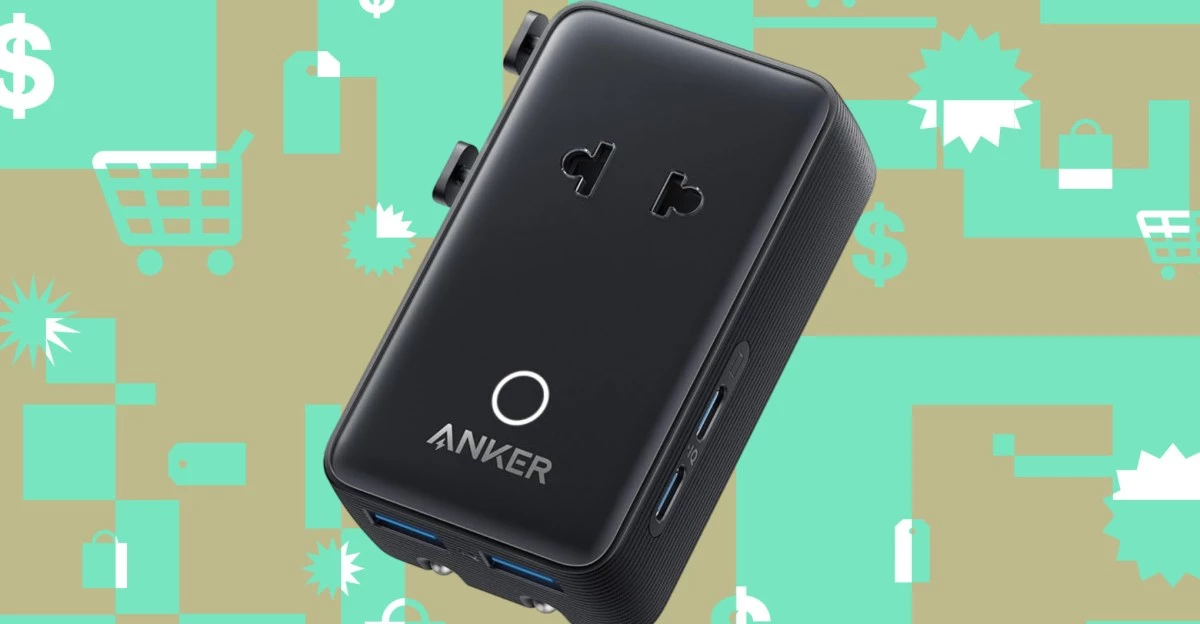
This year’s pre-Presidents Day and Valentine’s Day retail promotions have unfolded with an intensity that feels less like a seasonal blip and more like a strategic inflection point for the consumer technology sector. Across seven disparate categories—travel adapters, flash storage, televisions, creator peripherals, video-game software, home robotics, and personal audio—price tags have plunged to historic lows. Consider the $19.99 Anker Nano Travel Adapter, a $39.99 Samsung P9 256GB microSD Express card, and a $597.99 2025 Samsung Frame TV. These are not mere clearance rack oddities; they’re bellwethers of a market recalibrating in real time.
The promotional mix is telling: stalwarts like Amazon and Woot jostle with upstarts such as TP-Link’s Tapo, each leveraging the holiday “mini-peak” as both a sales driver and a laboratory for consumer elasticity. The result is a retail tableau where price points—$19.99, $39.99, $59.99—are not just psychological triggers but data-rich probes into the evolving psyche of the tech consumer.
The Technology Trickle-Down: From Premium to Ubiquitous
What’s most striking is not simply the breadth of discounting, but the depth of feature democratization. Active noise cancellation, once the province of $200 earbuds, now appears in $20 models like JLab’s Go Air Pop ANC. Sub-$200 robot vacuums, such as Tapo’s RV30 Max Plus, boast smart-mapping LIDAR—technology that, until recently, was a luxury reserved for flagship models. The rapid decline in bill-of-materials costs for MEMS microphones, low-power DSPs, and solid-state LIDAR (down 35-40% over two years) has catalyzed a new era of feature parity across the mass market.
Nowhere is this more evident than in creator peripherals. DJI’s Mic Mini, a featherweight wireless audio kit tailored for the TikTok and YouTube Shorts generation, exemplifies hardware’s pivot from legacy broadcast standards to the demands of short-form, mobile-first content creation. The sub-$100 professional audio segment is poised for double-digit growth, fueled by the migration of SMB marketing budgets into video-first channels.
Meanwhile, the storage sector is quietly undergoing its own transformation. Samsung’s P9 microSD Express card leverages PCIe/NVMe interfaces to deliver speeds up to six times that of UHS-I cards. Industry whispers suggest Nintendo’s next-generation Switch will adopt this spec—a move that could extend the relevance of removable flash storage, reshaping NAND pricing and controller roadmaps for years to come.
Retail Strategy and Economic Undercurrents
Beneath the surface, these discounts are less about clearing shelves and more about hedging against macroeconomic uncertainty. January’s 0.4% dip in U.S. core retail sales has left retailers wary, prompting deeper markdowns to de-risk Q1 inventory. The bundling of game preorders (like Capcom’s Resident Evil Requiem) with storage deals hints at a strategic shift: platform-holders are prioritizing total lifetime customer value—software and accessories—over upfront hardware margins.
For brands, this holiday window is a crucible for pricing intelligence. Each SKU sold at a psychological threshold feeds machine-learning models that will shape launch MSRPs and promotional cadence for the spring refresh. Retailers and OEMs are not just chasing sales—they’re harvesting data, refining their understanding of demand elasticity, and stress-testing their channel strategies ahead of an anticipated wave of AI-enhanced product launches.
Strategic Imperatives as the Innovation Cycle Accelerates
For hardware manufacturers, the speed of commoditization demands tighter design-to-cost cycles and a renewed focus on software ecosystems. Differentiation will hinge less on incremental hardware specs and more on AI-driven experiences—think adaptive noise cancellation, real-time translation, or object recognition in vacuums and TVs. Retail and channel partners must clear pre-AI inventory swiftly, as the next generation of “smart” devices will reset consumer expectations.
Memory and component suppliers face a pivotal moment: if microSD Express achieves mass adoption via the Switch 2, the accessory ecosystem could enjoy a renaissance, but only for those who secure supply commitments early. Gaming publishers, meanwhile, are experimenting with preorder discounting and accessory bundling as levers for revenue optimization and co-op marketing.
The current wave of deals is more than a fleeting opportunity for consumers; it’s a harbinger of the sector’s next act. As Fabled Sky Research and other industry observers note, the winners will be those who treat these promotions as market experiments—mining the data, adapting rapidly, and positioning themselves for the coming AI-driven redefinition of value. In this environment, agility is not just an advantage—it’s a prerequisite for survival.

 By
By
 By
By

 By
By
 By
By

 By
By