
The Subtle Alchemy of Costco’s Holiday Aisle: Where Technology, Value, and Authenticity Collide
Beneath the fluorescent glow of a Costco warehouse, the holiday aisle has become a stage for a new kind of retail drama—one that fuses the old comforts of bulk gifting with the sharp edge of consumer technology. This season, a 20-year Costco veteran’s curation of seven standout holiday products has quietly signaled a profound shift in how club-format retailers are engineering the shopping experience. These selections, ranging from LED-driven skincare and IoT mugs to retro-chic speakers and digital family calendars, are more than just stocking stuffers; they are a window into the evolving psyche of the American consumer and the strategic recalibrations of the retail giants that serve them.
The Rise of Tech-Infused Everyday Objects
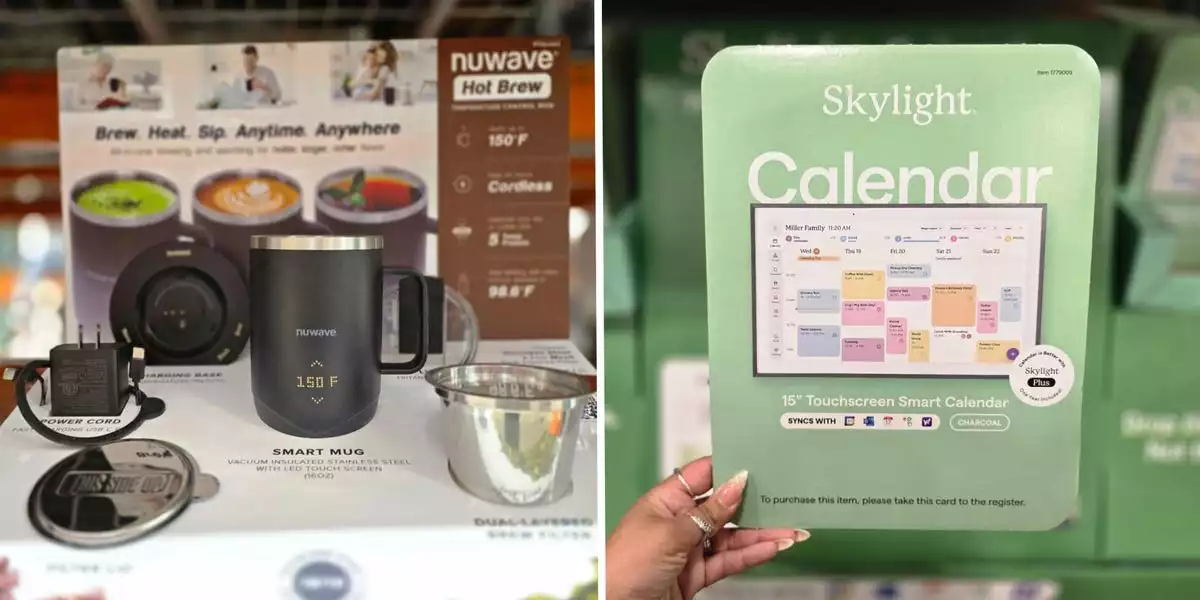
What once seemed the exclusive domain of early adopters—the marriage of technology and the mundane—has now reached the mass market. Consider the Shark CryoGlow, a light-therapy skincare device, and the Nuwave Hot Brew mug, a battery-powered vessel that keeps drinks at a precise temperature. These are not outliers. They represent a swelling tide of “legacy” objects—mugs, mirrors, shavers—now animated by affordable, energy-dense lithium-ion cells and microcontrollers.
- Beauty-tech convergence is no longer a boutique affair. The migration of LED light therapy from dermatology clinics to warehouse shelves is powered by plummeting component costs and streamlined FDA clearance pathways. For retailers, this creates a regulatory moat that rewards scale and compliance discipline, allowing them to offer high-tech wellness at a price point that feels like a steal.
- Portable energy density is the unsung hero behind this transformation. As battery costs approach the $100/kWh threshold, the marginal expense of adding hours of heat or audio playback becomes palatable for even the most value-obsessed buyers. This is why the Marshall Kilburn II speaker and the Nuwave mug can coexist in the same aisle, both promising a blend of nostalgia and modern convenience.
The implication is clear: the next wave of household innovation will be battery-native, with “smart” features quietly embedded in the familiar, ready to be discovered by shoppers on a treasure hunt.
Authenticity as the New Retail Media
Perhaps the most quietly revolutionary development is not the products themselves, but how they are being presented. Costco’s decision to spotlight recommendations from a long-tenured employee is not mere human-interest fodder—it is a calculated play in the high-stakes game of trust and influence.
- Employee-generated content functions as a high-conversion, low-cost form of influencer marketing. Unlike celebrity endorsements, which increasingly ring hollow, the voice of a veteran staffer carries the weight of lived experience and institutional memory. Recent retail studies confirm that such authenticity drives higher engagement and conversion rates, turning payroll expense into a potent media asset.
- For competitors, this presents a blueprint: institutionalize frontline curation, measure its impact with the same rigor as digital campaigns, and build incentive structures that reward staff for their role as micro-influencers.
This is retail media 2.0—an era where the most persuasive voices are not on Instagram, but in the aisles, guiding shoppers with candor and credibility.
Bundling, Value, and the Experiential Gift
In an inflationary climate, the calculus of gifting has changed. Shoppers are hunting for “affordable luxury”—products that deliver wellness, nostalgia, or convenience without breaking the bank. Costco’s strategy of strategic bundling—such as a four-piece mug set paired with Ghirardelli chocolates—caters to this impulse, allowing a single purchase to be atomized into multiple gifts. This not only stretches the holiday dollar but also aligns with the realities of multi-generational households and gig-economy peer networks.
- Fractional gifting amplifies basket size while preserving the sense of discovery that is central to Costco’s appeal. For premium brands, the warehouse channel offers a way to move volume without diluting brand equity, leveraging Costco’s negotiating power to compress prices and redirect premium spend.
- The rise of subscription overlays—as seen with the Skylight digital calendar—signals a new revenue model for consumer durables. Here, the initial sale is just the beginning; the real value lies in recurring subscriptions, a dynamic that will force retailers and manufacturers alike to rethink their agreements and capture a share of downstream flows.
The Road Ahead: Where Retail, Technology, and Psychology Intersect
The holiday aisle, once a predictable tableau of chocolates and fleece throws, has become a crucible where technology, value, and authenticity are forged into something new. For manufacturers, the message is to build modularity and subscription potential into hardware, using club retailers as launch pads for adjacent-category innovation. For retail executives, the imperative is to harness the power of employee-generated content and expand the “affordable luxury” aisle with surgical precision.
As the lines between tech and tradition blur, and as inflation nudges consumers toward ever more calculated choices, those who read the subtext—who see the convergence of psychology, supply-chain economics, and media strategy—will be best positioned to capture the next cycle of value. The future of retail is not just in what is sold, but in how, by whom, and why it resonates in the hearts and wallets of a changing America.

 By
By
 By
By

 By
By
 By
By


 By
By