

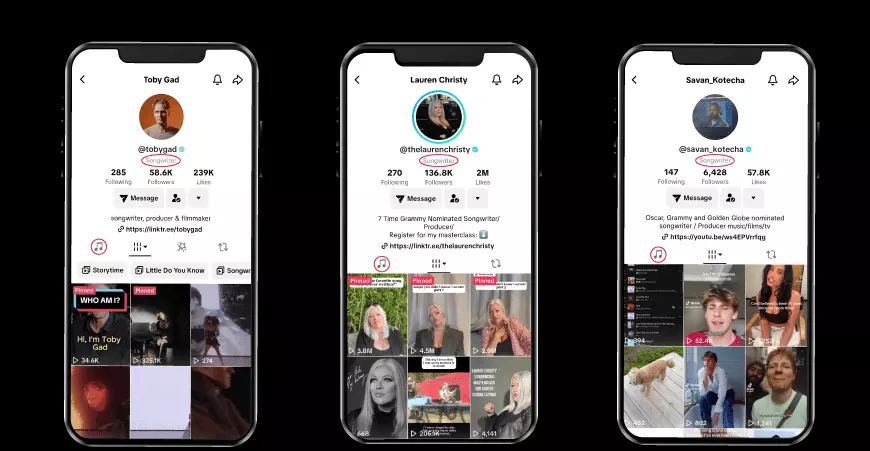

TikTok’s Songwriter Renaissance: Reframing Music Discovery and Rights in the Social Era
TikTok’s latest foray into the music ecosystem is not a mere nod to its creative community—it is a calculated, multi-pronged evolution that reverberates across the industry’s deepest value chains. With the introduction of a dedicated “Music” tab and a visible “Songwriter” badge, TikTok is quietly rewriting the playbook for how music is discovered, attributed, and monetized in the digital age. The closed beta, currently accessible to select publishers, is more than a feature update; it’s a signal flare for a platform intent on becoming the connective tissue between creators, rights holders, and the next generation of music commerce.
Building a Rights-Aware, Data-Rich Platform
At the heart of this transformation is TikTok’s deliberate construction of a first-party rights and attribution database. By empowering songwriters to self-identify and link their works directly to personal profiles, the platform is:
- Reducing dependence on external publishers for crucial licensing and attribution data, a longstanding vulnerability for user-generated content platforms.
- Enhancing algorithmic intelligence: The “Songwriter” badge is not just a vanity marker; it feeds TikTok’s recommendation engine, enabling it to surface not only trending tracks but the creative stories and collaborators behind them.
This metadata-rich approach doesn’t merely serve compliance or copyright optics. It creates a feedback loop—a data flywheel—where every tagged clip, every stem, and every collaboration becomes structured data. This trove is invaluable for TikTok’s in-house AI, which can now train on nuanced, rights-cleared content, setting the stage for proprietary generative-music engines and differentiated catalogues that resist the flattening effects of commoditization.
Economic Leverage and Strategic Positioning
TikTok’s songwriter initiative is more than a gesture of inclusion; it is a calculated move to reshape the economics of digital music:
- Supply-side network effects: By onboarding songwriters—often the unsung architects of pop culture—the platform increases the diversity and volume of licensable works. This, in turn, attracts more creators seeking fresh tracks, deepening user engagement and reinforcing TikTok’s two-sided marketplace.
- Royalty negotiation leverage: With granular, per-songwriter usage data, TikTok gains unprecedented bargaining power with major publishers and performance rights organizations. Transparent analytics can justify new, performance-based royalty structures, moving away from the inefficiencies of blanket licensing.
- Competitive insulation: Even as TikTok’s standalone music app ambitions cool, these songwriter features keep the platform at the apex of music discovery, where margins are fatter and customer acquisition costs lower than in the saturated streaming market. It’s a hedge against the razor-thin economics plaguing digital service providers (DSPs), without the capital expenditure of launching a full-fledged DSP.
For stakeholders across the spectrum, the implications are profound:
- Labels and publishers gain new storytelling channels and campaign-tracking precision, but face the risk of disintermediation as songwriters gain direct visibility.
- DSPs and rival social platforms—from Spotify’s “Songwriter Pages” to YouTube’s “Creator Music”—must reckon with TikTok’s cultural cachet, especially among Gen Z, as the platform becomes the de facto résumé for emerging composers.
- Advertisers and brands can now license trend-validated tracks earlier in their lifecycle and access richer attribution data, enhancing ROI for sync deals and branded campaigns.
- Regulators may welcome improved rights metadata but could scrutinize TikTok’s growing control over licensing data, raising antitrust questions reminiscent of other tech giants’ vertical integrations.
The Road Ahead: From Platform to Infrastructure
As streaming revenue growth plateaus in mature markets and generative AI commoditizes music production, the premium on provenance and human authorship only intensifies. TikTok’s songwriter-centric pivot positions it as an arbiter of both discovery and rights, a dual role that could reshape the industry’s architecture.
Looking forward, several trajectories emerge:
- Creator-centric royalty collection: TikTok may partner with, or incubate, direct-to-creator royalty entities, bypassing legacy intermediaries and experimenting with micro-payment models or real-time dashboards.
- Expansion into B2B music-tech services: White-label APIs for brands and agencies to source licensed snippets could transform TikTok from a consumer platform into a critical infrastructure layer for the music supply chain.
- Potential M&A activity: Acquisitions of niche rights-management SaaS firms or AI-driven catalog analytics startups could accelerate TikTok’s evolution into a rights-clearing powerhouse.
- Talent discovery arbitrage: For venture funds and label A&R teams, songwriter engagement metrics from TikTok may become a goldmine for early-stage IP scouting.
For rights holders, the imperative is clear: adopt catalog-level tagging strategies and prepare for a new era of split-sheet transparency. Brands should experiment with “behind-the-song” narratives while securing evergreen licenses before premium rates are algorithmically normalized. Tech executives, meanwhile, must anticipate both partnership opportunities and heightened compliance obligations as music metadata becomes a new battleground.
In this landscape, TikTok’s songwriter features are not just a UX flourish—they are the scaffolding for a future where discovery, rights, and data converge, and where those who adapt early will shape the next chapter of the music industry’s digital transformation.

 By
By
 By
By


 By
By
 By
By

 By
By
 By
By

 By
By
 By
By







