

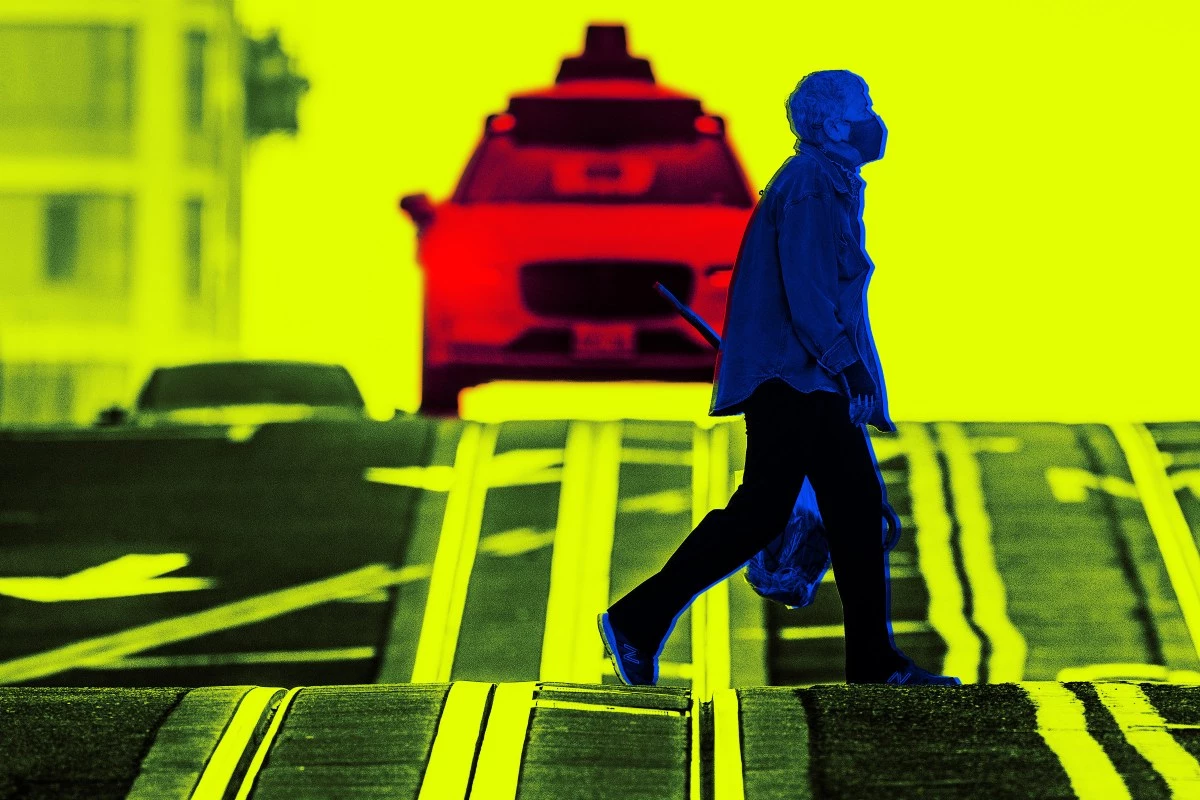

A fatal milestone that reframed autonomy as a public-street experiment
Paris Marx’s revisiting of Elaine Herzberg’s 2018 death—killed by an Uber-operated autonomous vehicle—lands as more than historical reflection. It functions as a clarifying lens on how Silicon Valley’s product-development instincts can collide with the realities of public infrastructure. Herzberg’s death became a watershed because it exposed a hard truth: when autonomous vehicles (AVs) move from controlled pilots to everyday streets, the “test environment” is no longer a lab—it is a city, with pedestrians, cyclists, first responders, and fragile systems that were never designed to absorb continuous software iteration.
In Marx’s framing, the industry’s posture has evolved from cautious experimentation to something closer to deployment-as-debugging. The logic is familiar in software: ship, learn, patch. But on city roads, the costs of learning are not confined to a company’s balance sheet. They show up as blocked intersections, delayed ambulances, and municipal staff time spent managing edge cases that the technology has not yet mastered.
This is the ethical hinge of the debate: who bears the risk during the long middle period when autonomy is commercially active but not operationally mature? The answer, increasingly, appears to be the public.
San Francisco’s robotaxi reality: operational friction meets civic capacity
By 2026, San Francisco’s experience with Waymo’s robotaxi fleet is presented as a case study in how technical promise can translate into civic strain. The headline incidents—stalled vehicles, a city-created “Driverless Car Incident” dispatch code, and emergency-call hold times averaging roughly 20 minutes—signal not just inconvenience, but institutional adaptation. When a city creates new emergency categories to manage a private technology’s failure modes, it is effectively acknowledging that the technology has become a recurring operational variable in public safety.
The reported blackout that immobilized nearly 1,600 Waymo vehicles sharpens the concern. A fleet-wide immobilization event is not merely a reliability issue; it is a systems issue—one that tests communications protocols, incident escalation, and coordination with police, fire, and transportation agencies. Marx’s emphasis on delays in corporate response underscores a recurring tension in urban tech deployments: cities operate on emergency time, while companies often operate on engineering time.
Several dynamics make this especially consequential for a dense city:
- Network effects of failure: One stalled vehicle can cascade into congestion, reroutes, and secondary risks.
- Ambiguity in accountability: When there is no human driver, responsibility shifts to remote operations, vendor hotlines, and unclear escalation paths.
- Public-safety integration gaps: First responders need predictable procedures—how to move a vehicle, disable it, or communicate with an operator—without waiting in a queue.
Waymo’s pledges to improve communications and incident-management systems are important, but the broader policy question remains: should incident response be treated as a voluntary customer-service function, or as a regulated service-level obligation akin to utilities and aviation? The San Francisco narrative suggests that cities may no longer accept informal assurances when the operational footprint is large enough to affect emergency response.
The hidden balance sheet: how cities may be subsidizing autonomy’s “test miles”
Marx’s central contention is that autonomous-vehicle development is being underwritten through municipal labor, infrastructure wear, and public-risk absorption—a form of subsidy that rarely appears in the industry’s unit economics. The argument is not that AVs cannot deliver value, but that the current cost allocation may be structurally tilted: companies capture revenue and data, while cities absorb the friction.
This “externalities” frame becomes especially potent when paired with the industry’s hunger for real-world edge-case data—the rare, messy scenarios that simulations struggle to reproduce. If public streets are the best generator of edge cases, then every incident becomes both a civic disruption and a private learning opportunity.
The economic toll is not only direct cost; it is also opportunity cost. Municipal budgets are finite, and the staffing required to manage robotaxi disruptions competes with:
- Transit reliability investments (bus lanes, signal priority, maintenance)
- Vision Zero and street-safety programs
- Road repair and accessibility upgrades
- Equity-focused mobility initiatives that serve residents who are least likely to benefit from premium-priced robotaxi services
This is where the debate becomes strategically charged. If AV deployment weakens public transit capacity—financially or politically—cities risk locking in a mobility future that is more privatized, more data-extractive, and potentially less equitable, even if it is technologically impressive.
The next regulatory frontier: from permissive pilots to enforceable civic contracts
The San Francisco experience, as interpreted through Marx’s analysis, points toward a likely shift: autonomous vehicles moving from “innovative service” to “regulated urban actor.” That shift would not be ideological; it would be operational—driven by the need to protect emergency response, manage congestion, and clarify liability.
Several policy and market mechanisms appear increasingly plausible:
- Pre-deployment safety and resilience audits that resemble aviation-style certification—less about marketing claims, more about worst-case performance.
- Cost-recovery frameworks such as per-vehicle fees, incident-response charges, or infrastructure-usage surcharges to internalize municipal burdens.
- Mandatory interoperability with first responders, including standardized disablement procedures, rapid-response hotlines, and auditable incident logs.
- Operational redundancy requirements, ranging from remote teleoperators to conditional on-board support during high-risk scenarios or grid/network disruptions.
For AV companies, the strategic implication is clear: the competitive edge may shift from “who scales fastest” to who integrates best—with cities, utilities, emergency services, and public expectations. The firms that treat civic infrastructure as a partner system, not merely a deployment surface, are more likely to sustain permission to operate.
Marx’s underlying warning is that legitimacy is not earned through miles driven or valuations achieved; it is earned through accountability under stress—the blackout, the stalled intersection, the emergency call that cannot wait. In that crucible, the future of robotaxis will be decided less by demos and more by whether autonomy can behave like a trustworthy part of the city.

 By
By
 By
By

 By
By
 By
By
 By
By
 By
By
 By
By







