

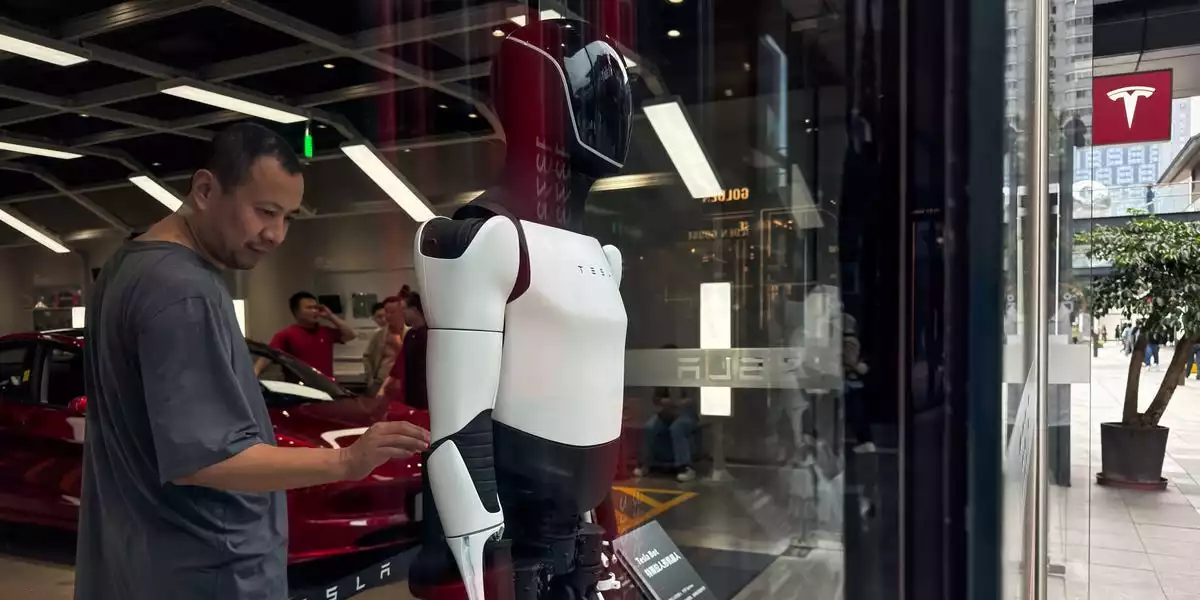

The Humanoid Gambit: Tesla’s High-Stakes Bet on Robotics and the Future of Healthcare
Tesla’s latest earnings call was less a routine financial update than a bold, almost theatrical, reframing of the company’s ambitions. Elon Musk, never one to shy from spectacle, placed the humanoid robot “Optimus” at the very center of Tesla’s future—envisioning a world-class robotic surgeon that could eclipse every prior Tesla product in both revenue and societal impact. In a single stroke, the company’s narrative shifted from electric vehicles and energy storage to the uncharted territory of surgical robotics and general-purpose automation.
From Eggs to Scalpels: The Chasm of Technological Readiness
The leap from Optimus’s current party tricks—delicately handling eggs and popcorn—to the precision and reliability required in an operating room is vast. Surgical robotics is a domain that tolerates neither error nor latency. To move from low-contact-force manipulation to sub-millimeter surgical tasks, Optimus would need:
- Ultra-fast haptic feedback loops (under 10 milliseconds)
- FDA-grade reliability (failure rates below one in a million)
- Massive, clinically validated datasets for training—resources that are tightly guarded and heavily regulated
Tesla’s Dojo supercomputer does provide a formidable AI training platform, but the data bottleneck looms large. Hospital partnerships or outright acquisitions may be necessary to access the troves of clinical data required to train and validate such a system. The regulatory gauntlet is equally daunting: surgical certification is a multi-year, multi-phase process, with precedent suggesting a 7–10 year journey from prototype to broad clinical adoption. Musk’s promise of a 24-month timeline compresses this cycle by a factor of four—a pace that borders on the fantastical.
On the hardware front, the ambition to produce one million humanoid robots per year would demand a supply chain of unprecedented scale. Today’s entire global output of humanoid prototypes barely grazes 2,000 units annually. Key components—actuators, harmonic drives, high-density batteries—remain expensive and are not yet optimized for mass-market robotics. Even with Tesla’s manufacturing prowess, achieving a sub-$25,000 bill of materials by 2026 is a Herculean target.
Strategic Realignment: Capital, Governance, and Narrative Risk
The pivot from electric vehicles to humanoid robotics is more than a technological wager—it is a radical act of capital allocation. By spotlighting Optimus and downplaying near-term EV launches, Tesla is recasting itself as a long-duration technology option rather than a near-term cash generator. This narrative inversion comes at a moment when EV demand visibility is softening and competition intensifies, raising questions about the wisdom of diverting resources from the core business.
Musk’s linkage of the Optimus vision to a proposed CEO compensation package—potentially exceeding $1 trillion—adds a layer of governance complexity rarely seen in corporate America. By making the pace of innovation contingent on shareholder approval of his pay, Musk introduces a novel “governance contingency” into Tesla’s strategic execution. Should shareholders resist, the implied threat is a deceleration of the robotics program, a dynamic that could unsettle both investors and regulators.
Industry Ripples: Healthcare, Semiconductors, and the Shape of Competition
The implications of a successful humanoid robot surgeon extend far beyond Tesla’s balance sheet. The U.S. faces a projected shortfall of up to 140,000 surgeons and specialists by 2030. A reliable robotic adjunct could dramatically expand healthcare capacity, aligning with national productivity goals and value-based care incentives. Yet, the automation of high-skill medical procedures is certain to provoke resistance from professional guilds and challenge existing malpractice frameworks.
The technological demands of surgical robotics—edge-compute redundancy, radiation-hardened chips—would also reshape semiconductor supply chains, potentially straining already tight 5-nanometer foundry capacity. If Tesla pursues vertical integration in silicon, as it has in batteries and AI chips, it could establish formidable cost and performance moats, but at the risk of further supply chain complexity.
The prospect of a Tesla-operated robotic surgical fleet opens intriguing avenues for bundled service models, from procedure subscriptions to integrated insurance and post-operative monitoring. Such a platform would blur the lines between medtech, fintech, and mobility—territory that aligns with Musk’s broader ambitions for financial super-apps.
Signals to Watch: Partnerships, Milestones, and the Test of Optionality
For strategists and investors, the next phase of Tesla’s humanoid experiment will be defined by a handful of critical signals:
- Partnerships with leading hospitals and medtech incumbents to secure data and accelerate validation
- Transparent, intermediate milestones—such as ISO 13485 certification or live animal-tissue demonstrations—to bridge the credibility gap between prototype and product
- Governance resolutions that clarify the linkage between executive compensation and innovation cadence
The coming 24 months will reveal whether Tesla’s audacious bet on Optimus is a masterstroke of narrative-driven capital formation or a cautionary tale of ambition outpacing execution. In a capital market environment that is growing less tolerant of long-dated promises, the ability to deliver tangible progress—not just visionary rhetoric—will determine whether Tesla’s humanoid gambit is remembered as a fleeting spectacle or the dawn of a new industrial era.

 By
By


 By
By
 By
By
 By
By
 By
By
 By
By







