
Tesla’s Revenue Descent and the New Economics of Electric Mobility
Tesla’s latest financial disclosure—a 16 percent year-over-year decline in automotive revenue—marks its sharpest contraction since the Model S era. The timing is not accidental. U.S. tax incentives and regulatory credits, long a tailwind for Tesla’s margins, are receding just as price wars with Chinese OEMs intensify and the elasticity of EV demand is tested by higher interest rates. The veneer of robust profitability, once burnished by emissions credits, is now stripped away, exposing the true economics of Tesla’s core business.
This contraction is not merely a cyclical tremor. It signals a deeper capital-allocation quandary: how to sustain the costly ramp of the Cybertruck and next-generation EV platforms while simultaneously underwriting ambitious, AI-driven moonshots. Free cash flow, once a badge of operational discipline, is now under siege. The company faces a triage moment—balancing the immediate demands of its vehicle roadmap against the capital intensity and long time horizons of robotics and autonomy.
The Robotics Bet: Promise, Peril, and the Limits of Execution
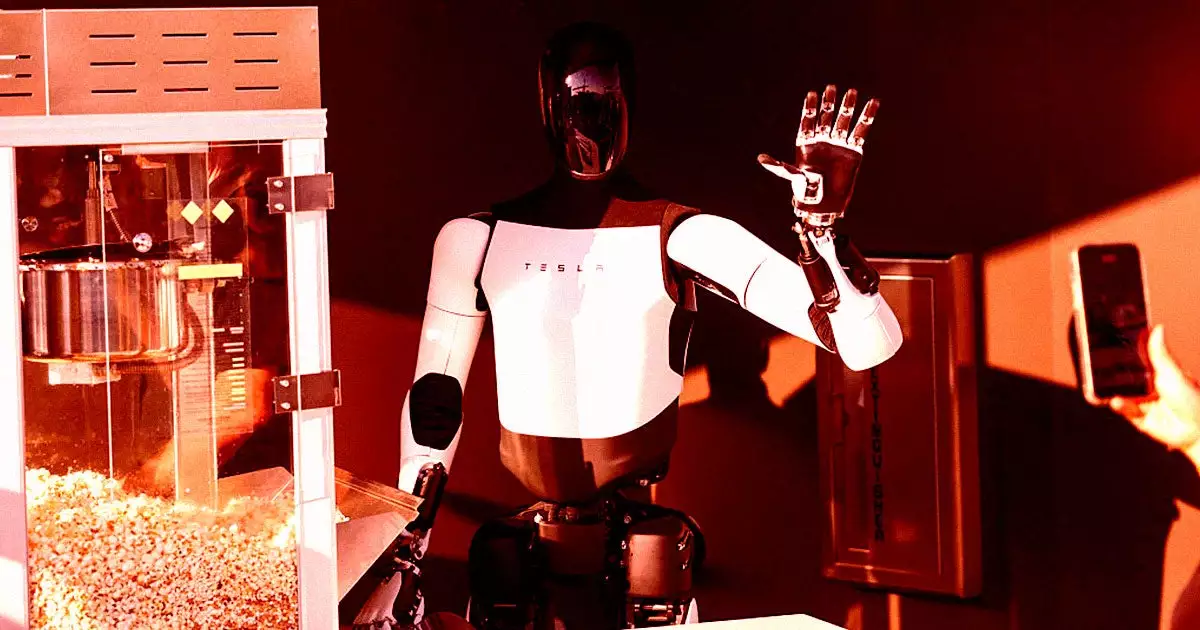
Elon Musk’s response is characteristically audacious: a strategic pivot toward two AI-centric ventures—the autonomous robotaxi network and the Optimus humanoid robot. Yet, beneath the surface, the technological and organizational realities are sobering.
Humanoid Robotics:
- Human-level manipulation remains an unsolved research frontier. Tesla’s hand actuators, which require sub-millimeter precision and robust tactile sensing, are still confined to laboratory prototypes.
- The recent departure of Milan Kovac, a key robotics leader, could not come at a worse time, as Tesla must transition from proof-of-concept to manufacturable product.
- Inventory build-ups of incomplete robots suggest an imbalance—hardware is outpacing software, a reversal of Tesla’s historic strengths.
Robotaxi Network:
- The Austin pilot, while providing incremental data, has yet to demonstrate Level 4 or 5 autonomy at scale. The hurdles are formidable: rare-event training data, regulatory heterogeneity, and the challenge of matching human ride-hailing economics.
- Nvidia compute constraints and rising inference costs in the cloud amplify the scaling risk, threatening to slow progress just as competitors circle.
Competitive Realities and the Shifting Global Landscape
Tesla’s premium positioning, once an unassailable moat, is under siege. Global EV growth is bifurcating, with volume migrating toward sub-$30,000 segments dominated by BYD, SAIC, and new entrants backed by Foxconn. U.S. industrial policy, exemplified by the CHIPS Act, may bolster domestic chip fabrication, but the supply chain for robotics actuators and precision gears remains anchored in Asia. This creates a new axis of vulnerability, as Tesla’s ambitions hinge on components outside its direct control.
Meanwhile, labor shortages in logistics and warehousing have made humanoid robotics a hotly contested prize. Amazon and Figure AI are aggressively pursuing the same total addressable market, diluting Tesla’s first-mover narrative and raising the stakes for executional missteps.
Strategic Crossroads: Brand Elasticity, Data Moats, and Talent Flight
The pivot toward general-purpose robotics is not without existential risk. Tesla’s brand, long synonymous with sustainable transport, now faces the challenge of category migration. The risk is not unlike Nokia’s ill-fated shift from networks to consumer devices—a move that, while innovative, ultimately blurred strategic focus.
Data network effects, often cited as Tesla’s enduring advantage, may not transfer seamlessly from autonomous driving to robotic manipulation. The datasets required for dexterous, human-like tasks are fundamentally distinct, eroding the time-to-scale advantage Tesla enjoyed in automotive AI. Unlike Google’s successful leverage of core search into adjacent AI domains, Tesla must build a new corpus from scratch.
The recent trade-secret litigation against a former employee’s startup is emblematic of deeper organizational stress. In Silicon Valley, IP lawsuits often spike when voluntary attrition outpaces retention—a more telling indicator of morale than any headcount disclosure.
For decision makers and capital allocators:
- Tesla’s risk profile is evolving—from a growth-with-profit narrative to a speculative call option on generalized robotics.
- Tier-1 suppliers of precision actuators and sensors are poised to gain pricing power as the humanoid race accelerates.
- Municipal partnerships may become pivotal, as city councils with congestion-pricing mandates emerge as unlikely allies for robotaxi deployment.
- Boardrooms must sharpen their focus on talent retention and IP defense, tying incentives to robotics milestones to preempt further departures.
The next five years will test not only Tesla’s technical mettle but also the market’s appetite for volatility at the intersection of AI, advanced manufacturing, and capital-market storytelling. For those tracking the evolution of smart machines, Tesla’s trajectory is less a deterministic roadmap than a live barometer of how risk capital will be allocated across the AI frontier.

 By
By
 By
By
 By
By
 By
By
 By
By


 By
By