


Navigating the Edge Cases: The Austin Robotaxi Loop and the Limits of Vision-First Autonomy
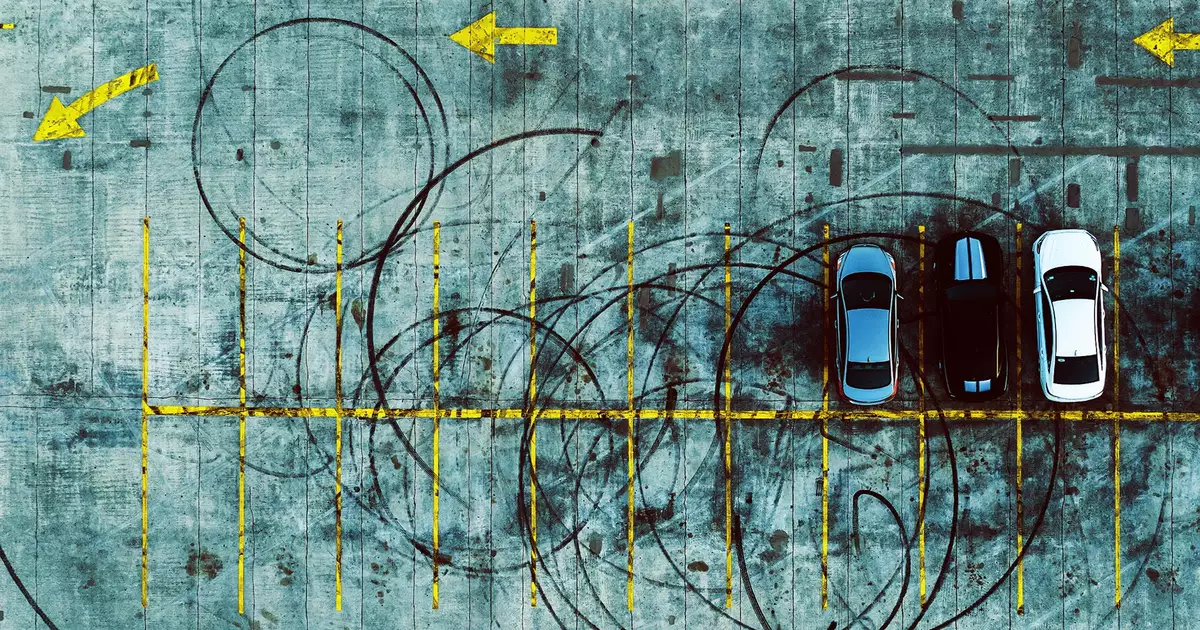
In a sun-baked Austin parking lot, a Tesla Model Y robotaxi found itself ensnared in a Sisyphean loop, circling endlessly after a line of traffic cones blocked its programmed exit. The incident, captured on video and shared by an electric vehicle enthusiast, is more than a viral curiosity—it is a telling vignette of the current state of autonomous vehicle (AV) technology, and a prism through which to view the high-stakes strategies shaping the future of mobility.
The Anatomy of a Stalemate: Where Perception Meets Planning
Parking lots, with their faded lane markings and unpredictable obstacles, are the crucible of AV system design. Tesla’s vision-centric approach—eschewing lidar and radar in favor of camera-fed neural networks—has delivered remarkable results on structured roads. Yet, as the Austin episode demonstrates, these systems are prone to falter in semi-structured environments where edge cases proliferate.
- Perception vs. Planning: The Model Y correctly identified the cones as an obstruction, a testament to its perception stack. But the tactical planning layer—the software responsible for charting a new course—refused to improvise. Safety penalties for non-standard maneuvers (like reversing or detouring through unmarked lanes) apparently outweighed the system’s confidence, resulting in a feedback loop with no exit.
- Human-in-the-Loop Reality: Eventually, remote support was summoned. A presumed teleoperator intervened, guiding the vehicle to freedom. This dependency on human oversight, though under-discussed, is a crucial safety net for what is marketed as Full Self-Driving. It is also a tacit acknowledgment that the leap from Level 2 (driver assistance) to Level 4 (true autonomy) is not a smooth continuum, but a chasm bridged by human judgment.
Tesla’s software-first, camera-only paradigm stands in stark contrast to competitors like Waymo, whose sensor-rich vehicles rely on HD maps and redundant perception. The Austin incident exposes the brittleness of Tesla’s approach in edge-case-rich environments and highlights the industry’s divergent philosophies: rapid, wide-scale deployment versus slow, meticulously geofenced rollouts.
Economic Friction: The Hidden Costs of Remote Intervention
The promise of robotaxis rests on a simple equation: eliminate the human driver, and the economics of mobility are transformed. But the Austin loop reveals a more complicated calculus.
- Variable Labor Costs: Every remote intervention incurs labor expense. If even a small fraction of rides require teleoperation, operational expenditures could approach those of human-driven fleets—the very cost Tesla aims to erase.
- Brand and Regulatory Risks: Viral incidents like this one can erode consumer trust and invite regulatory scrutiny. With federal investigations already probing Tesla’s autonomous claims, the specter of mandated safety driver or teleoperator ratios looms large, threatening the margin assumptions underpinning the robotaxi business model.
- Time-to-Market Gambit: Tesla’s willingness to deploy unfinished autonomy in real-world settings accelerates data collection, feeding the machine-learning flywheel. Yet, this same strategy amplifies the risk of publicized failures, legal exposure, and fleet downtime. Rivals, by contrast, absorb higher R&D costs but insulate themselves from high-profile missteps by constraining their operational domains.
Strategic Inflection: Hybrid Autonomy and the Business of Remote Support
The Austin incident signals a likely near-term reality: the era of “hybrid autonomy,” where driverless vehicles are shadowed by remote human overseers. This model, reminiscent of cloud computing’s elastic scalability, may become the industry’s interim standard.
- Operationalizing Teleops: Firms capable of scaling teleoperations—deploying call-center-style support in response to edge-case density—can convert safety gaps into manageable business processes. This shift will ripple through labor markets, creating a new stratum of semi-skilled jobs and raising questions about wage differentials, data sovereignty, and urban infrastructure.
- Insurance and Investment Implications: Underwriters will increasingly price risk based on intervention rates per thousand miles, rather than disengagements alone. For investors, tracking these metrics becomes essential for assessing the true maturity—and profitability—of autonomy stacks.
The strategic question for automakers and mobility platforms is whether the data flywheel—each intervention yielding valuable training data—spins faster than the drag of support costs and reputational risk. For policymakers, the challenge is to craft performance-based standards that reflect the realities of hybrid autonomy, balancing innovation with public safety.
The looping Tesla in Austin is more than a technical hiccup; it is a microcosm of an industry at a crossroads. As the race toward autonomy intensifies, the winners may not be those who promise the fastest transition to driverless fleets, but those who master the subtle choreography of human and machine—turning every edge case into an opportunity for learning, resilience, and trust.

 By
By
 By
By
 By
By

 By
By


 By
By







