

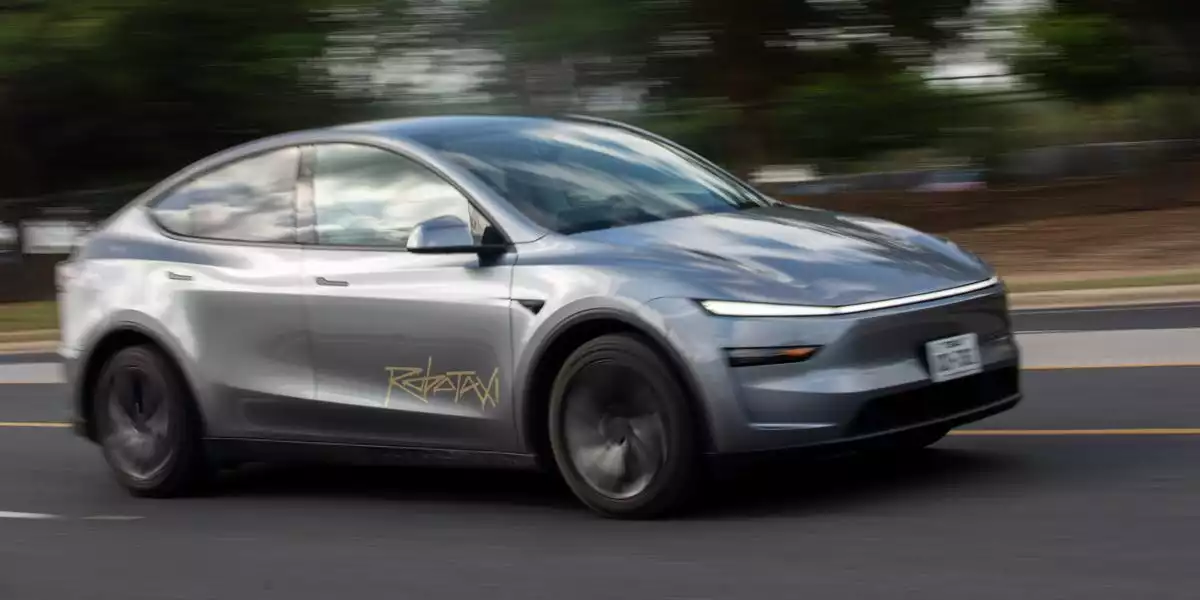

Tesla Robotaxi’s measured expansion signals a new phase for autonomous mobility
Tesla’s Robotaxi service, introduced in June 2025 with a fleet of Model Y vehicles, is now operating across seven U.S. metropolitan areas, with Orlando and Tampa among the latest additions. More consequential than geographic growth is the operational shift: Tesla says it has moved to unsupervised rides in six markets, reporting over 380,000 miles driven without onboard safety monitors and nearly 2.5 million total paid miles when supervised trips are included.
For investors, regulators, and mobility strategists, these numbers land in a nuanced middle ground. On one hand, the transition to unsupervised operation—if sustained without serious incidents—would represent a meaningful validation of Tesla’s autonomy stack in real-world service conditions. On the other, the rollout pace, while described as better than 10% weekly growth, remains below CEO Elon Musk’s earlier projection of reaching half the U.S. population by the end of 2025. That gap matters because autonomy is not merely a technical race; it is a contest of operational scaling, regulatory durability, and unit economics under public scrutiny.
A key constraint on external assessment is disclosure. Tesla has not published core operating metrics that would allow the market to model Robotaxi as a business rather than a technology demo—such as fleet size by city, utilization rates, cost per mile, average fare yield, wait times, or churn/retention. In autonomous mobility, those variables determine whether the service becomes a durable profit engine or a capital-intensive experiment.
From supervised miles to unsupervised service: what the technology claims—and what it must prove
Tesla’s move into unsupervised Robotaxi operation implicitly argues that its end-to-end neural-network approach, sensor fusion, and in-house inference hardware have matured enough to handle the long tail of urban driving with acceptable risk. The strategic advantage Tesla leans on is scale: its consumer fleet running Full Self-Driving (FSD) functions as a distributed data collection platform, feeding edge cases back into training loops and enabling rapid iteration via over-the-air updates.
Several technical implications stand out:
- Validation under service conditions: Operating a paid ride service introduces different stressors than consumer driving—repeatable routes, higher duty cycles, and a need for consistent rider experience. The reported “no notable incidents” in unsupervised miles will be watched closely, but the industry will also look for clarity on definitions, severity thresholds, and reporting practices.
- A self-reinforcing data advantage: Tesla’s FSD subscription base has reportedly grown to nearly 1.5 million paying customers, up 56% year-over-year. Even though FSD still legally requires human oversight, that installed base can accelerate scenario coverage and model refinement, creating what many analysts describe as a data moat.
- A shift toward purpose-built autonomy hardware: Tesla’s Gigafactory Texas has begun producing Cybercabs, purpose-built vehicles for Robotaxi service, with stated annual capacity exceeding 125,000 units. This is more than a manufacturing milestone—it signals a platform transition from retrofitting consumer vehicles to designing for fleet economics: easier cleaning, optimized interiors, simplified maintenance, and longer lifecycle planning.
Yet the technical story remains inseparable from governance. Unsupervised operation raises the bar on safety case transparency, incident response protocols, and validation methodology. The companies that scale autonomy fastest will likely be those that can translate engineering confidence into regulatory confidence—and do so repeatedly across jurisdictions.
The missing financial model: Robotaxi economics hinge on utilization, capex discipline, and pricing power
Robotaxi’s business case is often framed as inevitable: remove the driver, lower costs, and scale. In practice, the economics are more brittle. Without published metrics, Tesla’s break-even timeline is difficult to estimate, but the key levers are well understood across fleet businesses:
- Utilization rate: How many revenue-generating hours per day each vehicle achieves, factoring in repositioning, charging, cleaning, and downtime.
- Cost per mile: A composite of depreciation, energy, maintenance, insurance, remote operations (if any), and customer support.
- Revenue per trip: Driven by pricing strategy, local demand density, and competitive alternatives.
- Occupancy and pooling: Whether rides are primarily single-party or if pooling becomes viable at scale.
The start of Cybercab production introduces a second-order financial question: capital intensity. An annual capacity above 125,000 units implies meaningful capex and operational ramp requirements. The path to attractive margins will depend on the unit cost curve—battery chemistry and cost reductions, manufacturing automation yields, and the durability of autonomy hardware under high-mileage service.
Robotaxi scale also threatens to reshape the broader ride-hailing landscape. If autonomous fleets can sustainably undercut human-driven pricing, incumbents like Uber and Lyft may face downward fare pressure and margin compression unless they secure access to autonomous supply—through partnerships, acquisitions, or their own fleet strategies. The competitive dynamic becomes less about app distribution and more about who controls the lowest-cost, safest autonomous miles.
Competitive pressure and regulatory gravity: the real determinants of national scale
Tesla is not scaling in a vacuum. Waymo and other established autonomous-driving players operate in more regions and report substantially higher fully autonomous mileage, reinforcing that the market is not waiting for a single winner. Tesla’s differentiator is vertical integration—control over chips, software, vehicles, and fleet operations—which can compress iteration cycles but also concentrates risk: a regulatory setback, a high-profile incident, or a systemic technical flaw would reverberate across the entire stack.
For business and technology leaders, several forward-looking signals merit close monitoring:
- Regulatory posture and transparency: Proactive engagement, consistent safety reporting, and clear validation frameworks will shape how quickly new cities open—or close.
- Operational maturity indicators: Expansion pace matters, but so do rider wait times, service reliability, and the ability to manage edge cases at scale.
- Ecosystem monetization: Tesla’s growing FSD subscription revenue can function as a financing mechanism—supporting R&D and subsidizing early Robotaxi operations—while creating optionality for bundles, loyalty programs, and adjacent in-vehicle commerce.
Tesla’s Robotaxi progress now sits at the intersection of autonomy credibility, fleet economics, and regulatory legitimacy. The next chapter will be written less by headline mileage totals and more by whether Tesla can demonstrate repeatable, city-by-city scalability—turning unsupervised rides into a service that is not only technologically impressive, but operationally predictable and economically defensible.

 By
By
 By
By


 By
By
 By
By
 By
By
 By
By







