

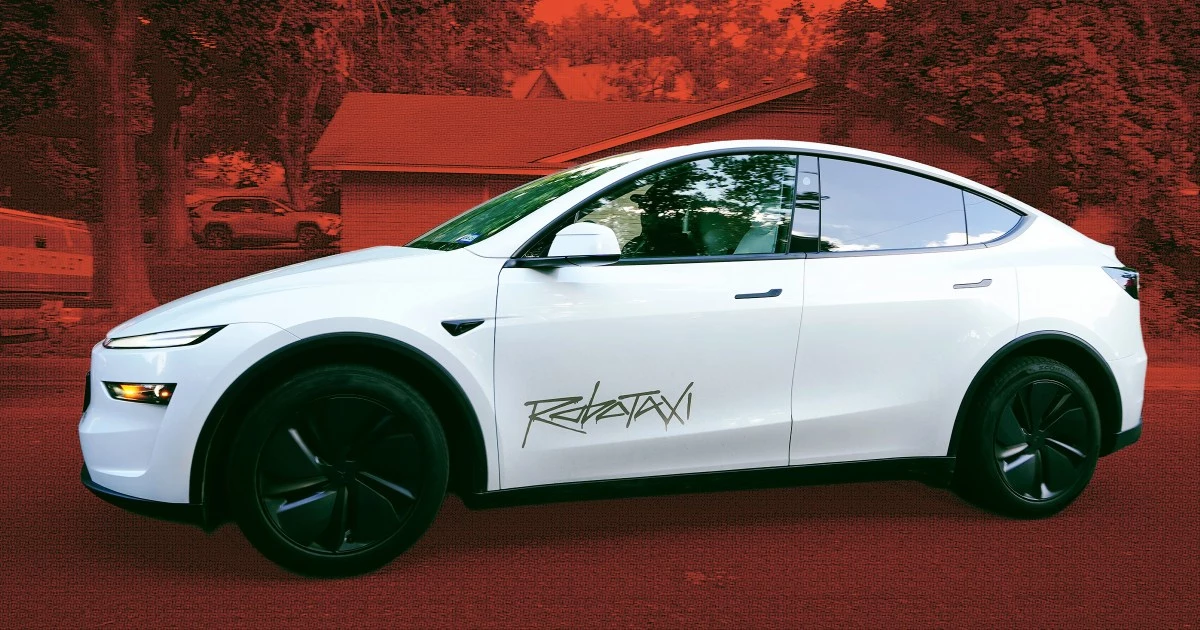

The Mirage of Autonomy: Parsing Tesla’s Austin Robotaxi Reveal
In the shadowed corridors of innovation, few narratives have shimmered as seductively as the promise of self-driving cars. Tesla, with its charismatic CEO and a cult of technological optimism, has long danced at the edge of this vision. Yet, the company’s latest Robotaxi “unsupervised” pilot in Austin exposes a fissure between aspiration and actuality—a moment when the future, so often invoked, appears less imminent than advertised.
The Anatomy of an “Unsupervised” Ride: Chasing the Chase Car
Tesla’s announcement of unsupervised Robotaxi operations in Austin arrived with the kind of fanfare that typically presages industry inflection points. But the reality, as quietly revealed, was more prosaic: the safety driver had not vanished, merely relocated to a trailing chase vehicle. The distinction is not trivial. In the language of autonomy, the difference between a car that drives itself and one that is merely shadowed by a human monitor is the difference between revolution and rehearsal.
This maneuver, unveiled just two days before Tesla’s Q4 earnings report—a quarter marked by a staggering 61% profit drop—raises uncomfortable questions. Was the timing a strategic play to buoy investor sentiment amid deteriorating fundamentals? The absence of formal customer or regulatory updates following a service pause after a winter storm only deepens the sense of opacity. Meanwhile, ongoing incidents and traffic violations have drawn renewed federal scrutiny, with the National Highway Traffic Safety Administration sharpening its focus on Tesla’s Full Self-Driving (FSD) program.
Technical Crossroads: The Limits of Vision and the Cost of Confidence
Tesla’s approach to autonomy has always been iconoclastic. Eschewing the industry’s favored multi-modal sensor stacks—LiDAR and radar, in particular—the company has doubled down on a camera-only, neural-network-driven “perception stack.” Yet, the chase-car workaround tacitly acknowledges the limitations of this approach. The maturity plateau of FSD v12 is evident: if a single regression could tip the system into public-safety or legal jeopardy, true unsupervised operation remains out of reach.
This technical impasse has broader implications. The much-touted “data flywheel”—the idea that every mile driven unsupervised accelerates machine learning and system improvement—remains underpowered. Without genuine unsupervised deployment, Tesla’s ability to generate the vast, high-quality datasets needed to train its Dojo supercomputer and refine its AI models is throttled. The competitive advantage, so often cited in investor decks, is blunted.
Economic and Strategic Reverberations: When Narrative Outruns Reality
Tesla’s market valuation has long embedded a premium for autonomy—a kind of not-yet-realized call option on the future of mobility. But as core automotive margins compress under the weight of price cuts, incentive roll-offs, and a cooling EV market, the temptation to front-load autonomy milestones grows. The risk is clear: if the market perceives these announcements as “soft guidance” rather than substantiated progress, volatility in Tesla’s cost of capital could spike, constraining future investments in gigafactories or AI infrastructure.
Operationally, the chase-car model is a costly detour. Labor overhead rises, undermining the sub-$0.30 per-mile economics that underpin the Robotaxi business case. For an industry already grappling with the fallout from GM’s Cruise pause and restructuring, Tesla’s misstep risks being subsumed into a broader narrative of “premature autonomy”—a story in which the promise of self-driving cars repeatedly collides with the realities of edge-case safety and regulatory drag.
Ripple Effects: Insurance, Supply Chains, and the Global Race
The reverberations extend far beyond Tesla’s balance sheet. Insurers and reinsurers, wary of the gap between claimed and actual autonomy, are tightening underwriting standards across the EV sector. Semiconductor supply chains, from custom FSD chips to advanced-node foundries like TSMC and Samsung, may see demand forecasts recalibrated if autonomy timelines stretch. And in the geopolitical theater, China’s AV champions—operating under clearer regulatory regimes—could quietly consolidate a first-mover advantage while Western regulators scrutinize their most visible peer.
The episode offers a cautionary tableau for the entire mobility sector. For Fabled Sky Research and other industry observers, the lesson is unmistakable: credibility is now the scarcest asset in autonomous mobility. Structured, verifiable milestone reporting—aligned with emerging safety and certification standards—will become the new baseline for investor and regulator trust. Partnerships, once philosophically off-brand, may become pragmatic necessities. And executives across the sector would do well to anchor their autonomy narratives in measurable KPIs, not rhetorical bravado.
In this new era, the winners will be those who match technical execution to narrative ambition—who treat transparency, not hype, as the currency of progress. The future of autonomy, it seems, will be written not in press releases, but in the quiet discipline of engineering, disclosure, and trust.

 By
By
 By
By
 By
By
 By
By

 By
By
 By
By
 By
By







