

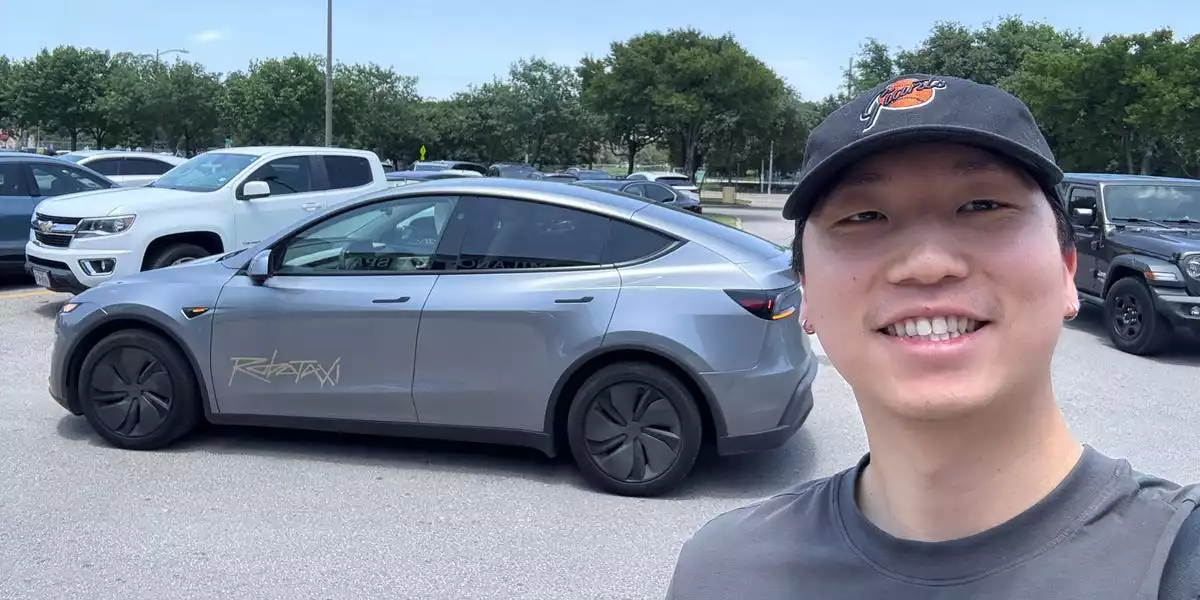

Unveiling the Austin Robotaxi Experiment: Vision-Only Autonomy Meets Urban Reality
In a city synonymous with innovation, Tesla’s nascent Robotaxi pilot in Austin offers a rare, unfiltered glimpse into the present—and potential future—of autonomous urban mobility. With just 10 to 20 Model Ys, each shepherded by a safety driver, the pilot is a study in both technological ambition and operational humility. Over five rides, the vehicles navigated city streets with a competence that, at times, lulled passengers into “forgetting they were in an autonomous car.” Yet, three disengagements—including a wrong-way incursion—served as stark reminders of the system’s current limitations.
What sets this pilot apart is not simply the spectacle of self-driving cars, but the radical bet Tesla is making on vision-only autonomy. In a landscape where rivals like Waymo and Cruise have doubled down on LiDAR and radar, Tesla’s camera-centric stack is a philosophical and economic departure. The system’s ability to handle cyclists, construction zones, and parking lots—while still faltering at ambiguous signage—underscores both the promise and the peril of this approach.
The Vision-Only Gamble: Hardware Minimalism, Data Maximalism
Tesla’s pursuit of a pure-vision stack is as much about economics as it is about engineering. By eschewing expensive LiDAR and radar arrays, the company slashes hardware costs by up to 80%, betting that the savings can be redirected into data acquisition and AI training. This is not a trivial wager. The vision-only approach demands an exponentially larger corpus of labeled video and bespoke training infrastructure—hence the investment in Tesla’s Dojo supercomputer.
- Semantic Scene Understanding: The wrong-way incident in Austin highlights a core challenge—semantic ambiguity in real-world environments. Where high-definition LiDAR maps excel at parsing signage and road geometry, vision-based systems must learn these cues from vast, messy datasets. The speed at which Tesla can close this gap will determine the scalability of its approach.
- Edge Compute Economics: All perception and planning run on in-car Full Self-Driving (FSD) chips, not the cloud. This local compute model reduces network dependencies and variable costs per mile, potentially boosting margins as volume scales. The capital intensity shifts up front—training, not hardware, becomes the primary cost center.
Yet, the system’s current aversion to highways—likely a regulatory, not technical, constraint—limits both utilization and revenue potential. High-speed disengagements are a liability Tesla is not yet willing to bear in the public eye.
Competitive Dynamics: Data Network Effects and Economic Leverage
Tesla’s Austin pilot, though small in scale, is a flywheel for a global data advantage. Every urban mile driven feeds back into a continually improving FSD dataset, compressing the time required to resolve edge cases from quarters to weeks. This data velocity is a moat that rivals, lacking a consumer fleet of similar size, will struggle to cross.
- Utilization and Pricing: Early testers reported higher fares and slower pickups than Uber or Waymo, a symptom of limited fleet size and immature app infrastructure. In the economics of ride-hailing, asset productivity is king—every 10% improvement in pickup latency can raise conversion rates by 2–3%. For now, Tesla’s utilization hovers well below the 60% threshold needed to match driver-pay economics.
- Platform Convergence: The Robotaxi is not an island. Its data and operational insights feed Tesla’s broader automotive and energy platforms, from battery life-cycle analytics to warranty modeling. The same perception stack underpins future ventures like humanoid robotics, hinting at a horizontal AI platform with multi-industry reach.
Regulatory Chess, Macroeconomic Undercurrents, and Strategic Inflection Points
Texas’ permissive regulatory environment offers Tesla a low-friction proving ground. Each disengagement and incident will inform not only state policy but also the evolving federal stance on autonomous vehicles. Rapid, transparent incident reporting could transform regulators from adversaries to collaborators, setting precedents for deployment in other states and, eventually, more tightly regulated markets.
The broader economic context is equally compelling:
- Labor Scarcity and Wage Inflation: With U.S. driver shortages and rising wage floors, the autonomous cost case strengthens—even as high capital expenditures loom.
- Energy Price Volatility: Electrified fleets insulate operators from oil price shocks, a strategic advantage over internal combustion incumbents.
- AI Hardware Sovereignty: As geopolitical tensions threaten GPU supply chains, Tesla’s vertical integration of AI hardware may prove a formidable moat.
For decision-makers, the next 12 months will be pivotal. Watch for Tesla to scale from dozens to hundreds of vehicles—a threshold where operational costs begin to converge with incumbent ride-hailing. Expect regional transportation networks to weigh partnership versus competition, and suppliers to brace for demand volatility as Robotaxi ramp decisions ripple through the value chain.
Tesla’s Austin experiment is less a finished product than a living prototype—a harbinger of how autonomy, economics, and regulation will collide in the years ahead. Those who recognize the intricate interplay of data, hardware, and policy will be best positioned to shape, or withstand, the next era of mobility.


 By
By
 By
By
 By
By
 By
By
 By
By

 By
By







